Indoor Air Quality Testing
- The Service
- Featured Project
- Insights
Indoor Air Quality Testing Service
Indoor air quality testing gives you a clear, evidence-based snapshot of what's actually in the air inside your building — so you can identify hidden pollutants, meet your compliance obligations, and protect the people who work there.
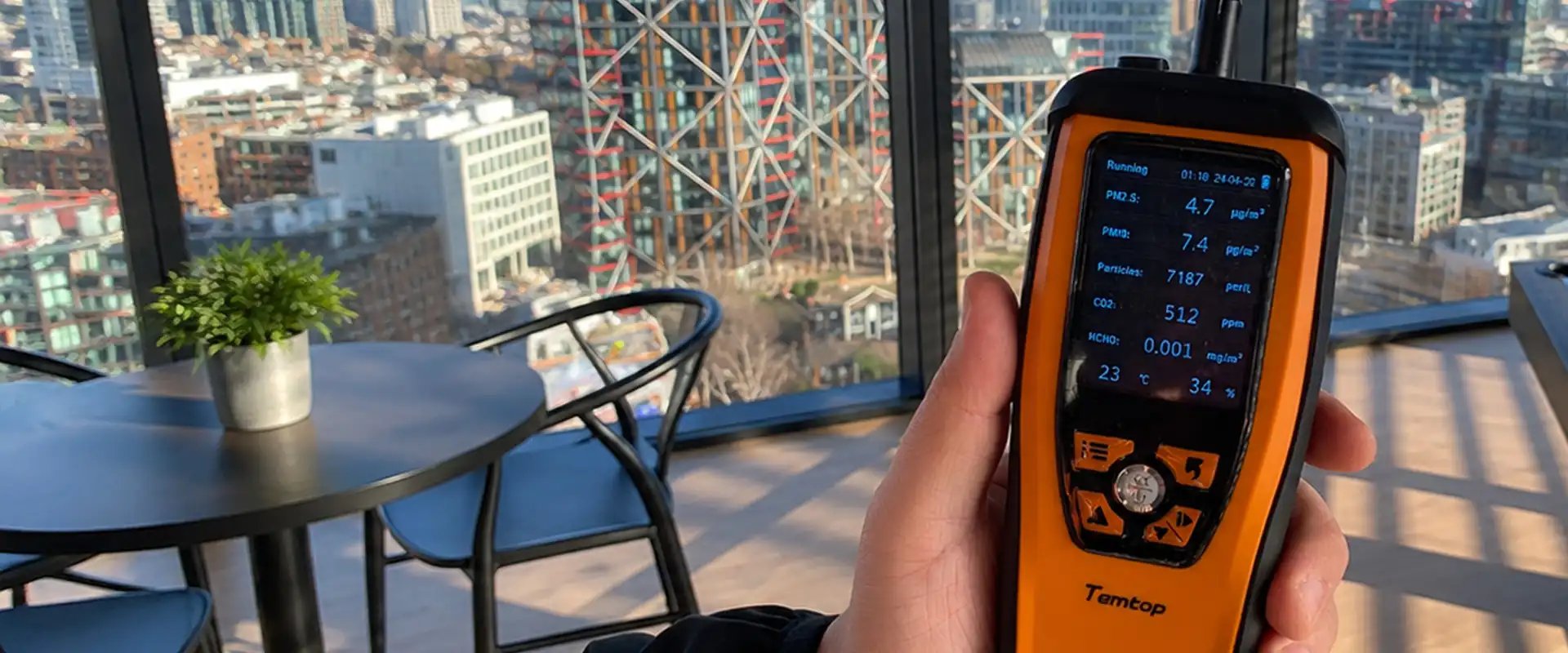
Whether you're responding to a staff complaint or staying ahead of your compliance requirements, our engineers identify the root cause of poor air quality and provide solutions that keep the air you breathe safe. We use professional-grade sampling equipment you won't find on the shelves, testing for biological, chemical, and particulate contaminants that standard checks miss.
Indoor Air Quality Testing Benefits
- Identify harmful pollutants
- Receive tailored guidance
- Ensure safety
- Useful for certification purposes
Indoor Air Quality Testing for a school's ventilation problem
Objectives
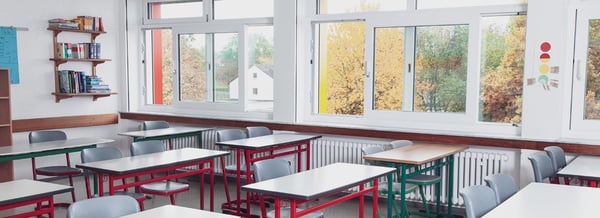
After a teacher at this school was diagnosed with long COVID in April 2024, resulting in wheelchair use, the school management team became justifiably concerned about the air quality and ventilation within their workplace. They contacted ARM Environments to request an indoor air quality (IAQ) test, in particular they wanted to know how effective their ventilation efforts were at improving air quality.
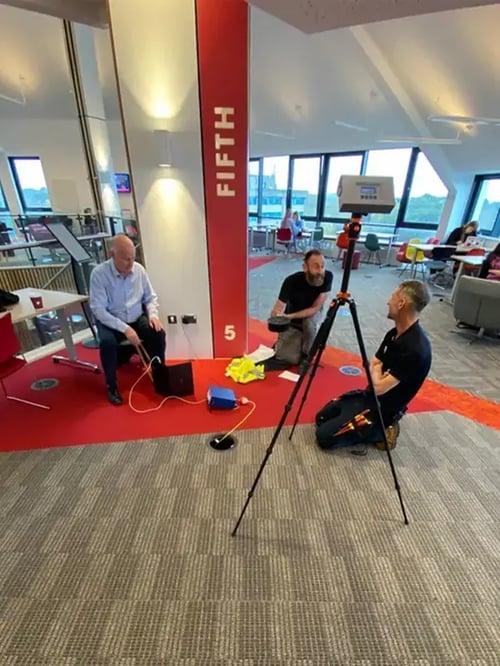
We deployed five 'Awair Omni' air quality sensors around the school, across various class rooms and a staff room. This allowed us to gather plenty of data and create a representative snapshot of the air which students and teachers are breathing throughout the day. These sensors were capable of measuring five key components of indoor environment quality (IEQ): temperature, humidity, carbon dioxide, particulate matter, and total volatile organic compounds (TVOCs).
Solutions
It's worth noting that this school is in a rather rural area, so we expected the outdoor air quality (OAQ) to be healthy. Our measurements from the sensors showed excessive levels of carbon dioxide, regularly exceeding 2000 ppm. Particulate matter remained at a healthy level, possibly due to good OAQ. TVOC levels were low during unoccupied hours, but rose significantly when the rooms were occupied. The hand sanitiser used also contributed to a spike in TVOCs during this test. Humidity was within reasonable levels, however we recorded low temperatures in all of the rooms.
Overall, we determined that the school was not being sufficiently ventilated, shown by the sharp rise in TVOCs and carbon dioxide once the rooms were populated. Due to the low temperatures in our recordings, we discovered that teachers were hesitant to open windows for ventilation, because it would exacerbate their heating issue. This created a problem, though, as poor-quality, stagnant air would fill these classrooms without any source of ventilation to circulate clean air into the space. Despite the rural location, the staff would rarely introduce the clean outdoor air into the indoor environment, meaning air quality was being significantly compromised. We discovered that staff would only open a window once the temperature was too high, meaning the only ventilation many of these rooms received was in temporary bursts dependent on the weather.
Results
Understanding the IAQ risks associated with these populated classrooms, and the data to prove it, the staff were educated on the importance of using their window ventilation in the absence of a ventilation unit. The teachers now understood that carbon dioxide and TVOC levels became a health concern when rooms were not effectively ventilated, and all agreed to 'flush out' their classrooms each day. To make this option more viable, they also agreed to turn their heating on for longer during the day to ensure the temperature within these rooms didn't drop to uncomfortable levels.
Indoor air quality standards for schools must be kept to a consistently high standard, as it's important to remember that the government's Workplace Exposure Limits (WEL) and Control of Substances Hazardous to Health (COSHH) regulation are not designed with children in mind. IAQ in schools should be routinely assessed and remediations/maintenance should be performed without delay to avoid putting children's health at risk.
Challenges
- CO2 levels above 2000 ppm
- Children are particularly vulnerable to poor IAQ
- Absence of a ventilation system
"We were very concerned when we first took those sensor readings as we know how vulnerable young children can be to poor air quality. On top of that, we spoke to a teacher at this school who was in a wheelchair due to long COVID, something that poor IAQ might only make worse. The moral of the story here is that ventilation isn't only for temperature -- it's crucial to ventilate your spaces to remove harmful pollutants as well. Despite the teachers' reluctance to open windows on cold days, they unanimously decided to flush out their spaces after we informed them of the risks of poor IAQ for them and their students."
Adam Taylor, CEO of ARM Environments
Health
Education
Productivity
Related Insights
What's Involved in Indoor Air Quality Testing?
-
 Step 1
Consultation
We start every Indoor Air Quality Assessment by first asking questions about the space, current ventilation methods, and the specific requirements and challenges our client is facing. -
 Step 2
Air Quality Assessments
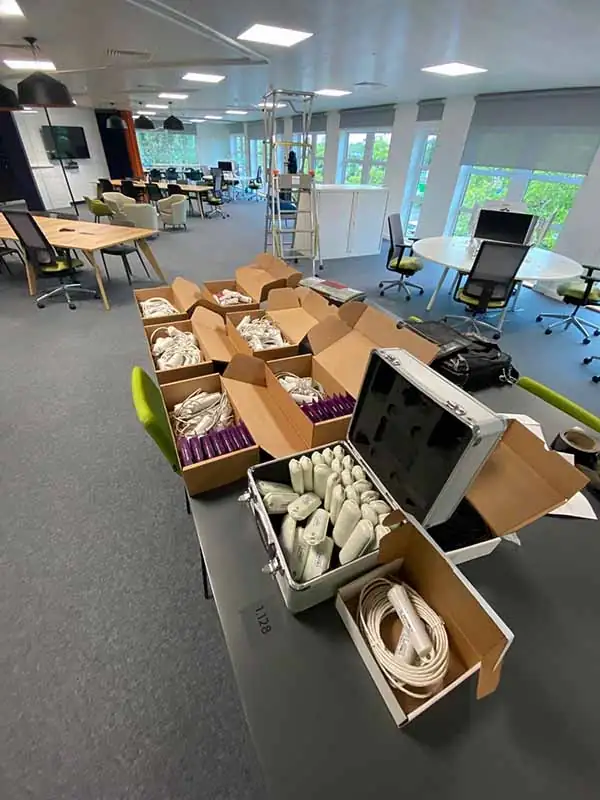
On-site, we can deploy a number of different testing methods to gather the data. Active sampling, passive sampling, and digital monitors may be deployed depending on the situation. -
 Step 3
Report Handover
We provide every client with a full post-inspection report which details exact pollutant measurements, likely causes, and tailored solutions. Every report is unique and carefully constructed.
How We Carry Out Indoor Air Quality Tests for Compliance
Testing is carried out over a short-term period (typically a few hours to a few days), under normal operating conditions. This provides an accurate, real-world picture of indoor air quality in offices, schools, hospitals, labs, and other commercial spaces.
All results are benchmarked against UK standards and health guidelines, including HSE EH40 Workplace Exposure Limits, with a clear post-assessment report outlining any issues and practical recommendations for remediation or further investigation.
Why Choose ARM for your Indoor Air Quality Testing?
We don’t offer general building services – we specialise in air quality, using the latest technology and best-practice frameworks to guide our assessments.
Our engineers are SafeContractor and BESA certified, and we play an active role in shaping UK standards like BS 40102. Whether you need a one-off air quality assessment or long-term monitoring support, we deliver insight, clarity, and meaningful results you can act on.