Bipolar Ionisation
- How It Works
- Featured Project
- Insights
About Bipolar Ionisation
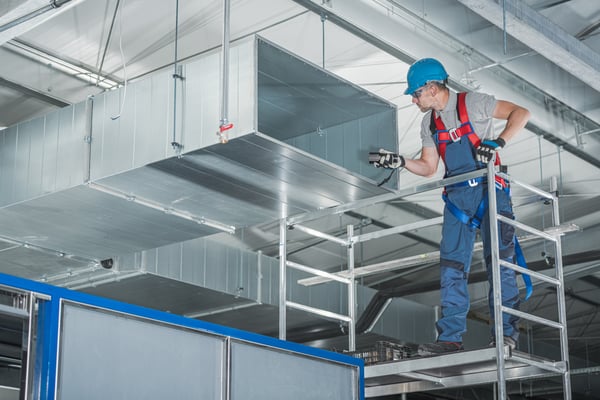
When specified correctly for a space, Bipolar Ionisation (BPI) is one of the most effective ways to reduce VOCs, particulate matter, and airborne pathogens. The technology continuously breaks down pollutants and is usually installed directly into an air handling unit, ductwork, or fan coil unit, keeping both your indoor air and your HVAC system cleaner for longer with reduced maintenance.
A BPI consultation starts with a full assessment of your HVAC system and an assessment of the pollutants throughout your space. With this information, we can go about deciding which BPI kit will work best in your space, where to position the device, and what improvements we can expect.
From there, our installation team can fit and commission the system with minimal disruption to your building, and provide full documentation confirming the equipment meets UL2998 standards for zero ozone emissions.
Benefits of Bipolar Ionisation:
- Reduced VOCs, PM, and Pathogens
- Zero ozone emissions & UL2998 certified equipment
- Specification matched to your space
- Full installation, commissioning, and documentation
- Supply only or installed
- Ongoing post-install maintenance support
Bipolar Ionisation HVAC Air Cleaning Technology for a Shropshire Food Producer
Objectives
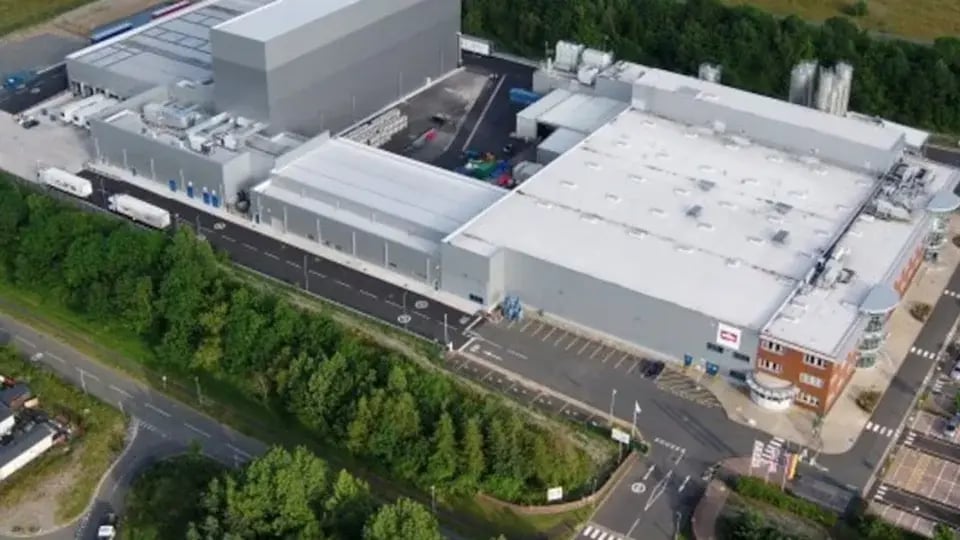
This leading UK food producer, based in Shropshire, came to us in 2019 after air quality testing confirmed that their air handling units weren't managing airborne contamination to the standard their sensitive food production environment demanded. In a facility handling dairy, meat and packaged food, persistent odours and airborne pollutants weren't just a staff comfort issue — they posed a genuine risk to product integrity and food safety. Having already identified bipolar ionisation as a likely solution, the client approached us to validate that choice and carry out the installation.
In 2020, the brief expanded. With COVID-19 now also a serious concern for staff working in close proximity across a large production facility, the client returned asking us to extend coverage and add a further layer of protection against airborne viral transmission.
Solutions
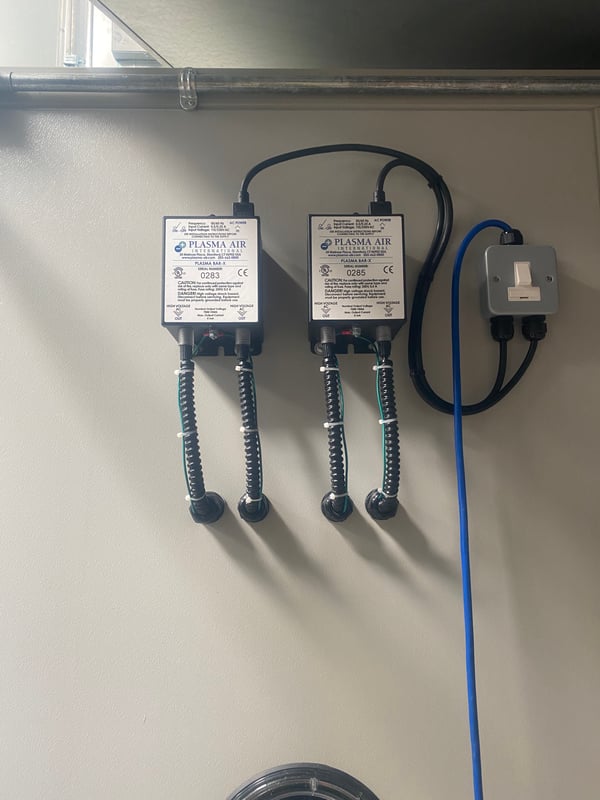
We began by assessing airflow rates, AHU sizing and existing filter configurations across the site, then specified PlasmaAir bipolar ionisation units fitted directly inside the AHUs rather than downstream — maximising ion distribution through the existing airflow while keeping the units themselves cleaner over time.
Results
The change was immediate. The odours that staff had come to treat as a normal part of the job were eliminated as the ionisers broke down the VOC and odour-causing molecules circulating through the building, with a clear knock-on effect on comfort, morale and day-to-day productivity.
From a food safety standpoint, actively neutralising airborne bacteria, fungi and viral particles reduced the risk of microbial contamination reaching packaged goods bound for shelves across the UK.
There's also been a longer-term operational benefit. Because the ionisation effect keeps the inside of the AHUs cleaner, the systems need less frequent servicing, which has reduced the overall cost of running the facility's HVAC infrastructure.
Challenges
- A large food storage and production facility with persistent IAQ problems
- COVID-19 risk to staff and risk for virus distribution
- Sensitive food products require active protection from airborne pollutants
"In this type of environment, it's crucial to keep bad odours and airborne pollutants to a minimum. Fortunately, this client already understood that bipolar ionisation would be an effective way to cleanse their air, and so they approached us ready with a solution, which really propelled these projects to be completed very quickly."
Adam Taylor, CEO
Food Safety
Wellbeing
Efficiency
Related Insights
Looking to purify your air?
Contact us today for a consultation to learn whether bipolar ionisation is right for you.
Bipolar Ionisation FAQs
What does bipolar ionisation actually do? ↓
It disperses positively and negatively charged ions into the air, which react with VOCs, bacteria, viruses and particulate matter — breaking down or clustering them so they're easier to filter out or fall out of the breathing zone entirely. It's a long-established technology, with the underlying ionisation process studied for over a century.
These various indoor air quality improvements can also lead to a reduction in energy costs, when utilised correctly. Due to the reduced need for HVAC cleaning and filter changes, ventilation systems can go longer without servicing.
The cost of worker ill-health due to workplace air quality also cannot be understated; BPI reduces the likelihood of absenteeism due to work-related health complications.
Where does bipolar ionisation get installed? ↓
Bipolar ionisation HVAC integration position depends on your HVAC system design.
AHU-mounted: treats incoming air before it reaches occupied spaces, clustering ultrafine particles that have passed through filters and breaking down VOCs as air moves through the ductwork.
Branch duct-mounted: lets you match the level of ionisation to the pollutant load in specific zones, useful where different parts of a building have different air quality demands.
FCU-mounted: ions are generated and distributed into the room almost immediately, giving the highest concentrations and strongest effect at the point of need. Maintenance can be carried out alongside routine FCU filter servicing.
Does bipolar ionisation produce ozone (O3)? ↓
Properly designed, UL2998-certified, bipolar ionisation systems don't produce any measurable levels of ozone.
Some older or uncertified ionisation devices can produce ozone as a by-product, which is exactly why certification matters when choosing equipment (but simply turning down the power level can sometimes ease this concern).
We exclusively specify and install Plasma Air systems that are UL2998 certified for zero ozone emissions, so you get the air-cleaning benefit without the risk.
What are the different types of bipolar ionisation technology? ↓
Ionisers broadly fall into two categories. Dielectric barrier discharge (DBD), which applies more energy and can produce fragmentary, reactive ions, and a small amount of ozone. Needlepoint bipolar ionisation (NPBPI) is currently the most widely used ionisation product — considered safer as it doesn't form as much ozone. It's the technology behind the systems we specify, chosen for its strong evidence base and consistent safety profile.
Bipolar ionisation vs UVC: what's the difference? ↓
The two work differently and often complement each other.
Bipolar ionisation disperses charged ions into the airstream and out into occupied spaces, reacting with VOCs, particulates and pathogens wherever air travels.
UVC (or UVGI) uses ultraviolet light, usually installed inside the AHU, to sterilise coils and break down organic matter such as bacteria, viruses, and mould as air passes directly through the light's path — its effect is largely confined to the unit rather than the room beyond it.
Many of our installations use both together: ionisation for room-level air cleaning, UVC to keep AHU components hygienic and cut maintenance. We go into more detail in our UVGI vs bipolar ionisation comparison article.
Does bipolar ionisation need ongoing maintenance? ↓
Dielectric Barrier Discharge systems require replacement tubes approximately every 24 months.
There are no consumables to replace for needlepoint systems (NPBPI).
All BPI units need periodic inspection, electrode cleaning, and ion output verification to keep performance consistent. For ionisers fitted into FCUs, this is usually carried out alongside routine filter servicing; for AHU and duct-mounted units, we can build inspection into your existing ventilation maintenance schedule.
Does bipolar ionisation replace the need for ventilation? ↓
BPI is an enhancement, not a substitute.
Ions still rely on air movement to reach contaminants, so effectiveness depends on having good air distribution alongside a correctly sized, correctly placed device. We check both as part of our assessment.
Outside of the UK, ASHRAE 62.1 you can reduce outdoor air requirements if using air cleaning technologies. Our CEO, Adam Taylor, presented at the CIBSE ASHRAE 2020 Technical Symposium; you can read the abstract below.
What are the pros and cons of installing bipolar ionising technology? ↓
Although the positives definitely outweigh the negatives, bipolar ionisation is not perfect. There are no magic bullets for improving air quality. For example, it can't break down nitrogen dioxide or carbon dioxide. Read more about the pros and cons in our blog.
Is bipolar ionisation safe? ↓
In addition, independent laboratory testing and real-world installations have consistently demonstrated that needlepoint bipolar ionisation technology does not increase ozone, carbon dioxide, volatile organic compounds (VOCs), nitrogen dioxide, or fine particulate matter. Instead, it has been shown to significantly reduce concentrations of airborne pollutants, often to levels well below those typically found in outdoor air.
Is an HVAC ioniser worth it? ↓
The majority of solutions for improving indoor air quality have a significant cost in terms of consumables and/or energy consumption.
Bipolar ionisation is an inexpensive addition to an HVAC system that costs very little to run.
Using just a small amount of electricity to run continuously, ionising units only cost a few pounds per month to keep running.
Why Choose ARM?
We don’t offer general building services – we specialise in improving indoor environment quality, using the latest technology and best-practice frameworks to guide our assessments.
Our engineers are SafeContractor and BESA certified, and we play an active role in shaping UK standards like BS 40102. No matter the air quality concern, we have solutions tailored to your budget and requirements.