
Lead (Pb)
- Sources
- Impacts
- Testing
Sources of Lead (Pb)
Lead is a naturally occurring element in Earth’s crust and has been used extensively since ancient history in areas such as construction, plumbing and manufacturing. Lead reaches the air through anthropogenic activities. Previously, the main source of this was the combustion of Tetraethyllead (or leaded petrol) by automobiles, where lead is added to act as a knock inhibitor. This was used widely in the Western world from the 1920s and started to be phased out in the 1970s, until its worldwide ban in the early 2000s. Scientists discovered that lead was highly neurotoxic to the human brain, especially in children. Some 70 years of lead exposure is seen as one of the great environmental disasters of the 20th century, even if its effects were not immediately obvious. Roughly 800 million IQ points are predicted to have been lost due to lead exposure, reduction in brain size, greater likelihoods of mental illness (this includes proclivity for violence) and increased cardiovascular disease risk. Lead exposure has been predicted to have cost the equivalent of ~ 6 trillion US dollars. It’s important to note that Lead toxicity was known before the 1920s, and its public health effects were speculated by researchers. Its toxic effects were downplayed or even censored due to its superior fuel characteristics and financial incentives. Lead exposure is now much more commonly experienced through occupational exposure in industrial processes. Some legacy materials contain lead, which can be released during refurbishment (paints, ceramics, pipes). Current UK Lead emissions stem from steel production, industrial combustion processes and hazardous waste sites. Lead has a residence time in the atmosphere of a few days or weeks, and can travel thousands of kilometres from the source. Lead levels are typically lower in indoor air than outdoor air. Indoor lead exposure can occur through tobacco smoke
Typical Sources of Lead
- Leaded Petrol
- Steel Works
- Tobacco Smoke
- Industrial Processes
Impacts of Lead (Pb)
Between 30-50% of inhaled lead is deposited in the lungs, with increased absorption rates for smaller lead particles (<1µm) and in children. This reaches the blood and, in turn, soft tissues, where it eventually accumulates within bones as lead phosphate, having a half-life of ~20 years. Acute Short-term exposure can cause severe gastrointestinal, central nervous system, hematopoietic and kidney failure. Encephalopathy (Brain dysfunction) is a common effect of high levels of exposure. This can involve alterations in intelligence and neurobehavioral effects, headaches, confusion, drowsiness, convulsions, and comas. Developing brains and central nervous systems seem to be especially vulnerable. Chronic long-term exposure results in neurotoxicity, increased blood pressure and reduced fertility in both men and women. It can also increase the risk of many adverse birth outcomes. Anaemia can also occur. Compounds of lead are also likely carcinogenic to humans. There is no threshold for the aforementioned effects; therefore, there is no safe level of lead exposure. Regardless of exposure route (inhalation, ingestion, dermal), lead accumulates within bones and teeth, where it can continuously infiltrate into blood, measured in micrograms per decilitre (mcg/dL). Although lead remains in blood for about ~2 months, its storage in bones and teeth acts as a reservoir, enabling continuous exposure into the bloodstream. Lead is one of the only common pollutants that can continue to dose you even after exposure is halted.
Common Impacts of Lead Exposure
- Gastrointestinal, Central Nervous System, Hematopoietic and Kidney Failure
- Headaches, Confusion, Drowsiness, Irritation
- Reduced IQ and Retarded Brain Development
- Mental Health, Learning, Aggression and Behavioural Problems
Testing for Lead (Pb)
Testing of Lead materials is issued in the form of a lead testing kit, which contains 5 tests. It is a do-it-yourself kit and does not require specialist training, requiring you to post results back to a laboratory for analysis. It can detect lead in material up to a 0.0001% resolution. A company called SCENTROID produces an air quality monitor which detects lead particles in the air. In most air quality sensors, this metric is not measured. For highly accurate analysis of Lead in indoor air, specialist equipment with the use of a pump would be used, such as the Gilian BDX-II.- Lead Do-It-Your-Self Test Kit
- Specialised Pumped Air Sampler.
Lead levels to be below 0.15 mg/m3 in ambient air. Removal of legacy lead materials found in the home to reduce exposure risk.
- EH40/2005 Defines Lead limits at below 0.15mg/m³ averaged over an 8-hour period
- OSHA sets a limit of 0.15mg/m³ averaged over an 8-hour period
- According to the WHO, a blood lead level of 5 micrograms per decilitre (μg/dL) or higher requires a comprehensive review of potential exposure sources
Concerned About Lead Exposure?
Contact us today for expert advice and a professional lead survey.
Lead FAQs
How Do I Remove Lead From My Indoor Air? ↓
Renovations of buildings which contain lead materials, such as lead-based paint, can produce lead dust or fumes. Identification and removal of these contaminant sources will reduce the likelihood of lead exposure via lung intake. Outdoor industrial processes are another likely source of indoor lead.
Appropriate ventilation and filtration with HEPA filters can remove lead as it enters a building. If concerned about elevated patterns of Lead from outdoor processes, installing Lead air monitors can give you continuous reassurance that lead levels are within limits.
Why Is Blood/Lead Concentration An Important Metric To Consider? ↓
Regardless of exposure route (inhalation, ingestion, dermal), lead accumulates within bones and teeth, where it can then infiltrate into blood, measured in micrograms per decilitre (mcg/dL). Blood/lead concentration is very useful in determining exposure dosage for an individual, regardless of exposure pathway.
What Legislation In The UK Specifically Points To Setting Lead Air Limits? ↓
EH40/2005.
Who is Most Vulnerable To Lead Poisoning? ↓
What Household Items Can Contain Lead? ↓
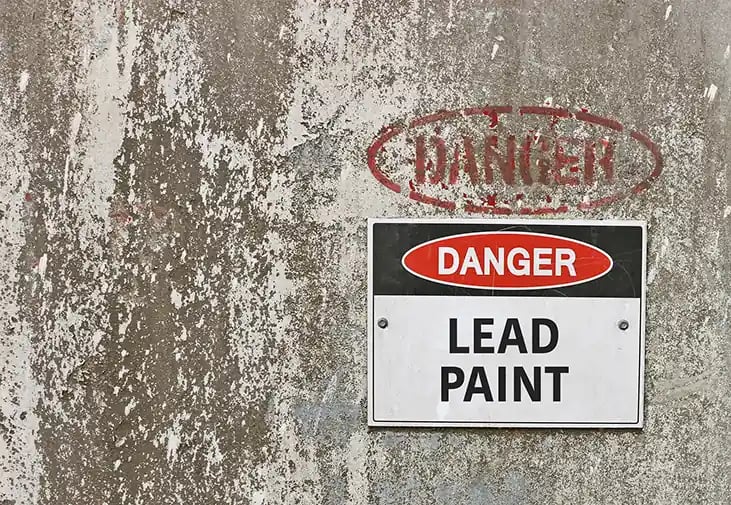
Older lead-based paint from the 1970s, some pipes installed before 1970, older ceramic pots may contain lead glazes, older toys, traditional eye cosmetics (Kohl, Tiro), and contaminated soil from past leaded gasoline air deposits.
Why Choose ARM?
Lead exposure still poses a real threat – especially during refurbishment of older buildings. ARM provides air, surface and material testing, supported by expert remediation guidance.
We’re SafeContractor certified, a BESA member, and led by Adam Taylor, Chair of BESA’s Indoor Air Quality Group – ensuring our work meets the highest standards for safety, health and compliance.