.webp)
UV-C Installed on AHU Coils in Central London: Case Study
The Brief: Can UV-C Improve HVAC Energy Performance?
A London office fit-out with six air handling units (AHUs) wanted to reduce the risk from re-circulated airborne pathogens without pushing energy costs in the wrong direction. Approved Document F recommends UV-C as a mitigation measure, but UV-C is still relatively new to the UK market, and the client wanted evidence, not assumption, before committing to it across the estate.
That meant proving two things: that UV-C actually controlled biofilm growth on the coils, and that doing so translated into measurable energy savings rather than just a compliance tick.
See our UVGI (UV-C) installation service here if you're interested in air cleaning technologies for your building. Not sure how UV air cleaning works? Check out our UVGI Explainer.
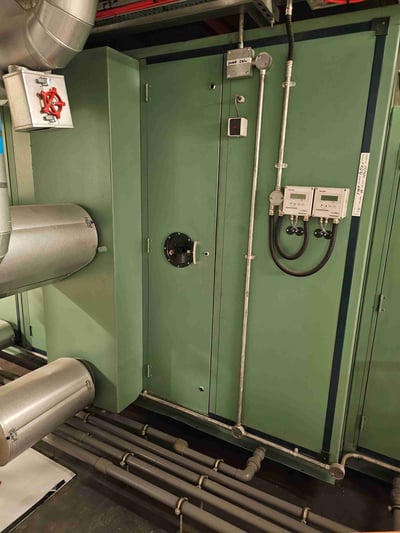
Installing UV-C on AHUs in London
We installed UV-C on the coils of all six AHUs and fitted 30 sensors across the units to track performance before and after. Rather than take a single snapshot, we committed to a full year of testing to account for seasonal variation in temperature, humidity, and system load — a short-term reading can flatter or unfairly penalise a system depending on when it's taken.
Within that programme, we ran a focused four-week validation window: two weeks of baseline monitoring before remediation, and two weeks after. Across that period we measured:
- Pressure drop across the coil
- Chilled water temperature
- Supply and return air temperature
- Humidity, pre- and post-cooling coil
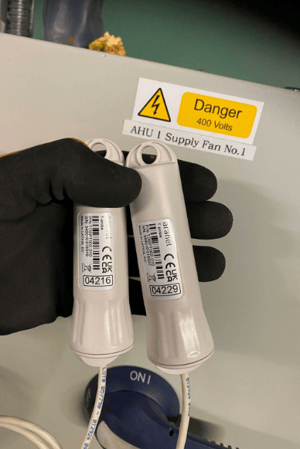
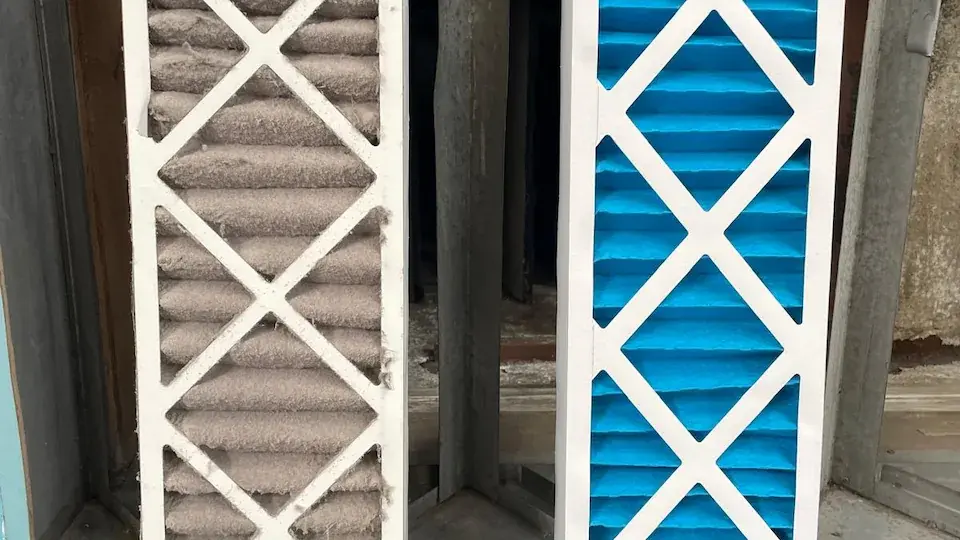
When biofilm builds up on a coil, it restricts airflow and increases pressure drop, forcing the system to work harder for the same output. Temperature performance either side of the coil gives a second, independent signal of whether biofilm is interfering with heat transfer.
If UV-C is doing its job, both temperature performance and pressure drop should improve.
UV-C study results
Heat-transfer performance across the coils improved by 11.95%, consistent with findings from comparable studies elsewhere in the industry.
Coil pressure drop improved by -4.73% — a smaller improvement than some published studies report. Our reading on this is that the two-week pre-remediation baseline may simply not have been long enough for biofilm to accumulate to the levels seen in longer-running studies. It's a useful reminder that validation windows matter as much as the intervention itself, and it's part of why we favour longer testing periods where the programme allows for it.
Taken together, we found that our results prove UV-C to be a genuinely effective tool for maintaining coil efficiency over time, not just a theoretical Part F box-tick.
"Everyone hears a manufacturer's claims — reduced friction, extended coil life, lower energy use — but very few of those numbers come from independently validated field data. We built this trial to actually test them, before and after, across a full seasonal cycle. That's the difference between a plausible pitch and an evidence base you can put in front of a client. If we're recommending something, we need to be able to prove it works, in this building, under these conditions, not just point to a manufacturer's brochure."
Adam Taylor, Managing Director & Air Quality Expert
Why this study matters
UV-C is being adopted faster than the independent evidence base for it is growing. Studies like this one exist to close that gap — giving building owners and facilities teams a real basis for deciding whether an intervention is worth the investment, rather than relying on manufacturer claims alone.
This kind of independent field validation sits alongside formal testing standards like BS 8628, which governs how UV-C disinfection efficacy is tested and reported.
For estates considering UV-C or already running it, ventilation validation provides the same before-and-after evidence base applied here, tailored to your system and your seasonal profile. Sustained coil performance like this depends on keeping lamps on schedule, see how often UVGI actually needs maintenance.
If you're interested in learning more about UV-C for your commercial building or considering taking the leap, get in touch with our experts here or visit our UVGI service page.