
Innovate UK Trustworthy AI: Case Study
Most companies that invest in air quality sensors end up with the same problem: a dashboard full of numbers and nobody with the time or expertise to turn them into action. That gap between data and decision was exactly what this project set out to solve.
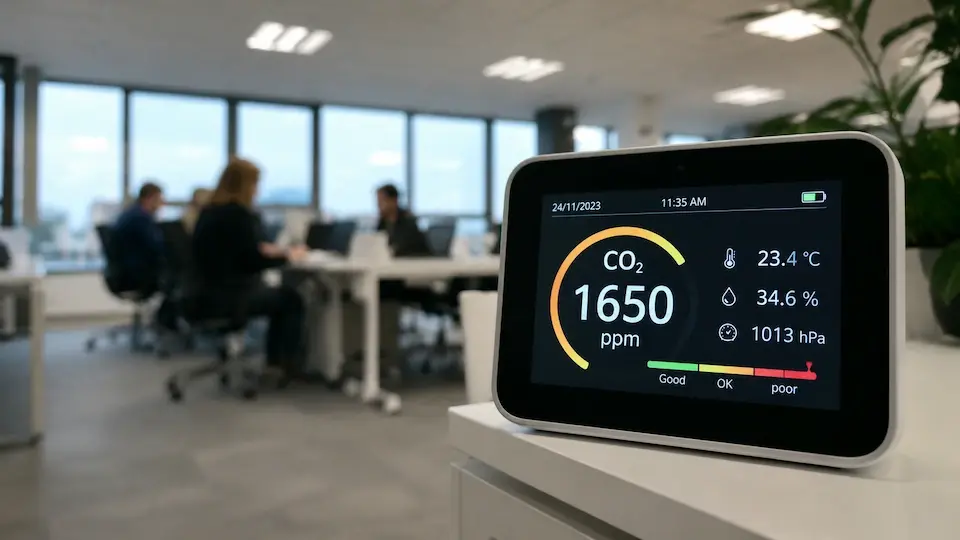
Between February 2024 and March 2025, ARM Environments worked alongside DIREK and a broad group of academic and industrial partners on Innovate UK's Trustworthy AI Phase II project. Together, the team deployed more than 200 indoor environmental quality (IEQ) and energy sensors across three UK office sites in London, Leatherhead and Manchester to power an AI-driven recommender platform for facilities management teams.
The project formed part of UK Research and Innovation's (UKRI) investment in trustworthy artificial intelligence, with £19 million awarded to accelerate trustworthy and responsible AI across the UK. This initiative highlights the growing importance of UK R&D in HVAC, energy efficiency research and intelligent building management.
"The UK’s innovative approach to AI regulation has made us a world leader in both AI safety and AI development. AI is moving fast, but we have shown that humans can move just as fast. By taking an agile, sector-specific approach, we have begun to grip the risks immediately, which in turn is paving the way for the UK to become one of the first countries in the world to reap the benefits of AI safely."
Michelle Donelan, Secretary of State for Science, Innovation, and Technology
Read more about the programme here:https://www.ukri.org/news/19-million-to-accelerate-trustworthy-and-responsible-ai/
Turning Building Data into Action
Collecting environmental data isn't difficult. Turning it into meaningful action is.
Many organisations already have sensors monitoring air quality, occupancy and energy use, but the information often ends up sitting in a spreadsheet that nobody opens. Facilities managers rarely have the time to manually review thousands of readings, identify trends and decide what action should be taken.
Working alongside DIREK, ARM Environments helped close that gap by contributing environmental expertise, validated datasets and practical engineering knowledge to an AI recommender platform capable of analysing indoor environmental quality, occupancy and energy performance automatically.
ARM's Role in the Project
ARM Environments played a central role throughout the project. Our team selected suitable monitoring equipment before deploying around 200 sensors across the three office locations. Once the data collection infrastructure was in place, ARM trained the AI using historical air quality datasets from previously completed projects where experienced consultants had already produced validated assessments.
That human expertise was critical. Rather than learning from raw sensor readings alone, the AI was trained against real-world environmental assessments, giving it a far stronger foundation for producing reliable recommendations.
ARM also helped shape how the platform presented information. Drawing on years of experience delivering ventilation investigations, indoor air quality assessments and HVAC energy optimisation projects, the team ensured facilities managers could quickly understand the recommendations without needing specialist environmental knowledge.
Transforming Raw Data into Practical Decisions
Raw environmental data rarely means much on its own, so to make the information useful, ARM developed three bespoke scoring methodologies:
- Health Score
- Comfort Score
- Productivity Score
These scores transformed hundreds of environmental measurements — including CO2, temperature, humidity and particulate matter — into clear indicators that facilities managers could interpret at a glance.
The same practical approach underpins ARM's work across indoor air quality monitoring, HVAC energy optimisation and commercial building performance, where the goal is always to convert complex technical information into clear, actionable recommendations.
AI Identifies Hidden Opportunities for HVAC Energy Optimisation
By November 2024, the Leatherhead office was already demonstrating the value of combining AI with environmental monitoring. The platform identified:
- Overall building utilisation of just 18.33%
- Desk utilisation averaging 17.76%
- Meeting room utilisation of 15.27%
- Peak occupancy between 10:00 and 16:00
- Significant areas receiving unnecessary ventilation despite very low occupancy
Perhaps most importantly, it identified fan coil units heating and cooling simultaneously while ventilation systems continued supplying conditioned air to largely empty spaces — an issue that wastes energy without improving occupant comfort!
The AI recommended moving from fixed ventilation schedules to CO2 demand-controlled ventilation (DCV), allowing fresh air delivery to respond to actual occupancy rather than predetermined time clocks. It also highlighted opportunities to rebalance ventilation serving heavily occupied meeting rooms.
Why This Matters for UK HVAC Research
The findings from Leatherhead reflect a challenge found across many commercial buildings.
Buildings can be fully compliant yet still waste considerable amounts of energy because ventilation strategies no longer reflect how occupants actually use the space. Hybrid working has changed occupancy patterns dramatically, but many HVAC systems still operate on schedules designed years earlier.
Projects like this show how UK energy efficiency research is increasingly combining AI, environmental monitoring and engineering expertise to improve building performance. Rather than replacing experienced consultants, AI helps identify patterns much earlier, allowing specialists to focus on delivering the right engineering solutions.
Key Takeaways
- AI delivers the greatest value when combined with validated engineering expertise — not sensors alone.
- Around 200 sensors provided the data needed to build meaningful health, comfort and productivity scores.
- Building utilisation data can significantly improve HVAC energy optimisation strategies.
- CO2 demand-controlled ventilation offers substantial opportunities to improve energy efficiency in underutilised buildings.
- High-quality training data is essential for producing trustworthy AI recommendations that facilities teams can rely on.
Looking Ahead
This project demonstrates how artificial intelligence can help facilities managers make faster, better-informed decisions about indoor environmental quality, HVAC energy efficiency and building performance.
For ARM Environments, it also showcases how practical engineering expertise can help translate cutting-edge UK research into real improvements for commercial buildings. By combining validated environmental monitoring with intelligent analysis, organisations can reduce unnecessary energy consumption, improve occupant wellbeing and make smarter decisions about how their buildings operate.
DIREK has also shared more about the collaboration and the Trustworthy AI project in this LinkedIn post:
https://www.linkedin.com/posts/direk_trustworthy-ai-workshop-activity-7089995872872067073-31iz
Enhance Your HVAC System Today
If your HVAC strategy hasn't been reviewed since it was first commissioned or you're collecting data but don't know what to do with it, ARM Environments can help transform vague spreadsheets into practical improvements that reduce energy use, improve indoor air quality and optimise building performance. Just get in touch with our expert team and ask how we can help.

![Your Guide to Indoor Air Quality Testing [2026]](https://www.arm-environments.com/hubfs/iaq%20testing%20in%20an%20office%20(1).webp)