
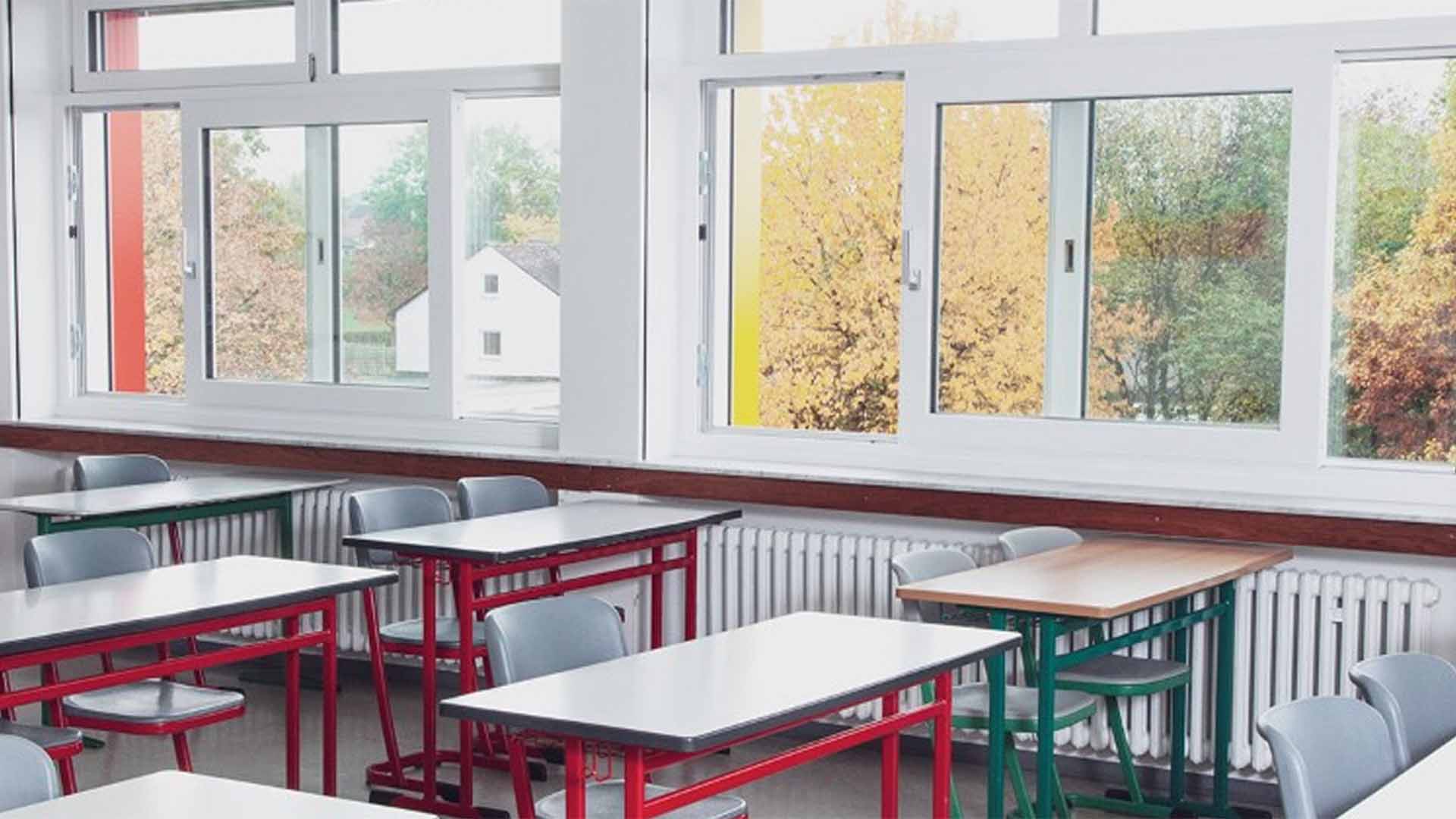
Indoor Air Quality Testing in a Surrey School: Case Study
When a teacher at a Surrey school was diagnosed with long COVID in April 2024 — leaving her reliant on a wheelchair — the school's management team began asking difficult questions about the air their staff and students were breathing every day. They reached out to ARM Environments to carry out a professional indoor air quality (IAQ) test, with a particular focus on whether their ventilation efforts were actually working.
What followed was a data-driven investigation that uncovered a significant and correctable problem — and led to immediate, practical changes that improved conditions for everyone in the building.
View our Indoor Air Quality Testing service page or our Education Sector page to learn more.
Why Indoor Air Quality Testing Matters in Schools
Education facilities present a unique IAQ challenge. Classrooms are densely occupied, windows are the primary (and often only) source of ventilation, and the people most exposed — children — are precisely those most vulnerable to the effects of poor air quality. It's also important to note that the government's Workplace Exposure Limits (WEL) and Control of Substances Hazardous to Health (COSHH) regulations are not designed with children in mind, meaning schools must hold themselves to a higher standard than the legal minimum.
This Surrey school had no mechanical ventilation system. Their ability to control air quality depended entirely on the behaviour of their staff and, as our testing would reveal, that behaviour was being shaped by a very understandable but ultimately harmful concern: the cold.
How ARM Environments Conducted the IAQ Assessment
We deployed five Awair Omni air quality sensors across the school, covering multiple classrooms and a staff room. These sensors continuously monitored five key indicators of indoor environment quality (IEQ):
- Temperature
- Humidity
- Carbon dioxide (CO₂)
- Particulate matter (PM2.5)
- Total volatile organic compounds (TVOCs)

Because the school is located in a rural part of Surrey, we anticipated that outdoor air quality (OAQ) would be healthy — and our data confirmed this. That made any indoor air quality problems easier to attribute clearly to the building itself, rather than external pollution sources.
What the Air Quality Data Revealed
The results painted a clear picture of a school that was not being adequately ventilated. Here is what each metric showed:
Carbon dioxide: CO₂ levels regularly exceeded 2,000 ppm — well above the recommended threshold of 1,000–1,500 ppm for occupied spaces. Elevated CO₂ is a reliable indicator of stale, under-ventilated air, and at these concentrations it can cause fatigue, difficulty concentrating, and headaches.
Particulate matter: Particulate levels remained within healthy limits, likely thanks to the rural Surrey location and the absence of significant outdoor pollution sources nearby.
TVOCs: Total volatile organic compound levels were low during unoccupied hours, but rose sharply once rooms were in use. The hand sanitiser used throughout the school was identified as a notable contributor to TVOC spikes during occupied periods.
Humidity: Humidity readings were broadly within acceptable ranges.
Temperature: Low temperatures were recorded consistently across all monitored rooms — a finding that turned out to be central to understanding why the ventilation problem existed in the first place.
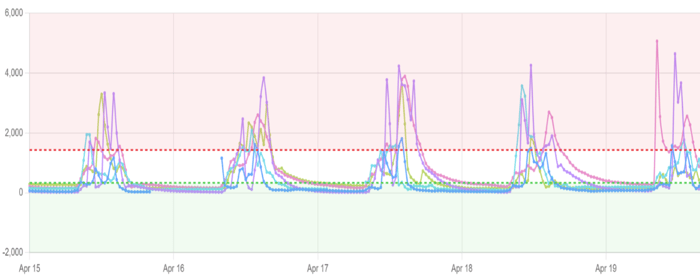 Pictured: Daily TVOC spikes from our monitoring
Identifying the Root Cause: A Heating vs. Ventilation Conflict
The data told us that rooms were not being ventilated, but the more important question was why. When we spoke to staff, the answer became clear: teachers were reluctant to open windows because doing so made the rooms uncomfortably cold. In the absence of a mechanical ventilation system, windows were the only way to introduce fresh air. But with no way to heat a room while simultaneously ventilating it, staff faced an impossible choice and consistently chose warmth over air quality.
The result was that classrooms filled with stagnant, increasingly poor-quality air throughout the school day. The only ventilation most rooms received came in brief, weather-dependent bursts — when a teacher decided the room had become too warm to bear. For the rest of the time, CO₂ and TVOCs were building up in enclosed spaces occupied by children and staff for hours at a time.
The Solution: Education, Behaviour Change, and a Simple Heating Adjustment
Armed with concrete data, we were able to have an honest and evidence-backed conversation with the school's staff about what was happening in their classrooms. Once they understood the health implications of sustained high CO₂ and TVOC exposure, the response was unanimous and immediate.
The staff agreed to:
-
Flush out classrooms daily by opening windows at the start and end of the school day, and during breaks, to clear accumulated pollutants
-
Run heating for longer periods so that rooms could reach a comfortable temperature before windows were opened, making ventilation a viable option rather than a reluctant last resort
These changes required no capital investment and no new equipment, just an understanding of why ventilation matters and a practical adjustment to existing routines.
"We were very concerned when we first took those sensor readings, as we know how vulnerable young children can be to poor air quality. On top of that, we spoke to a teacher at this school who was in a wheelchair due to long COVID — something that poor IAQ might only make worse. The moral of the story here is that ventilation isn't only for temperature control. It's crucial to ventilate your spaces to remove harmful pollutants as well. Despite the teachers' reluctance to open windows on cold days, they unanimously decided to flush out their spaces after we informed them of the risks of poor IAQ for them and their students."
Adam Taylor, CEO
The Outcomes: Better Air, Better Learning Conditions
-
Health: IAQ made safer for children and staff, including those with existing health vulnerabilities
-
Education: Teachers and students gained a lasting understanding of why ventilation matters beyond just temperature
-
Productivity: Reduced CO₂ levels support better concentration, mood, and performance throughout the school day
Indoor Air Quality Testing for Schools
This case study is a strong reminder that poor IAQ in schools is often not a structural or financial problem but an information problem. Staff cannot act on risks they don't know about, and IAQ risks are largely invisible without proper monitoring.
If you manage or work in a school and have concerns about ventilation, CO₂ levels, or the general air quality your students and staff are exposed to, ARM Environments can help. Our IAQ assessments provide actionable data, clear reporting, and practical remediation guidance tailored to your building and its occupants.
Get in touch with our team to discuss an indoor air quality assessment for your school or education setting.
See next: Air Cleaning Technologies & AHU Installation in Northamptonshire: Case Study
Find more air quality resources in the education sector.

![Your Guide to Indoor Air Quality Testing [2026]](https://www.arm-environments.com/hubfs/iaq%20testing%20in%20an%20office%20(1).webp)