UV-C Germicidal Irradiation
- How It Works
- Featured Project
- Insights
UVGI Air Cleaning Technology
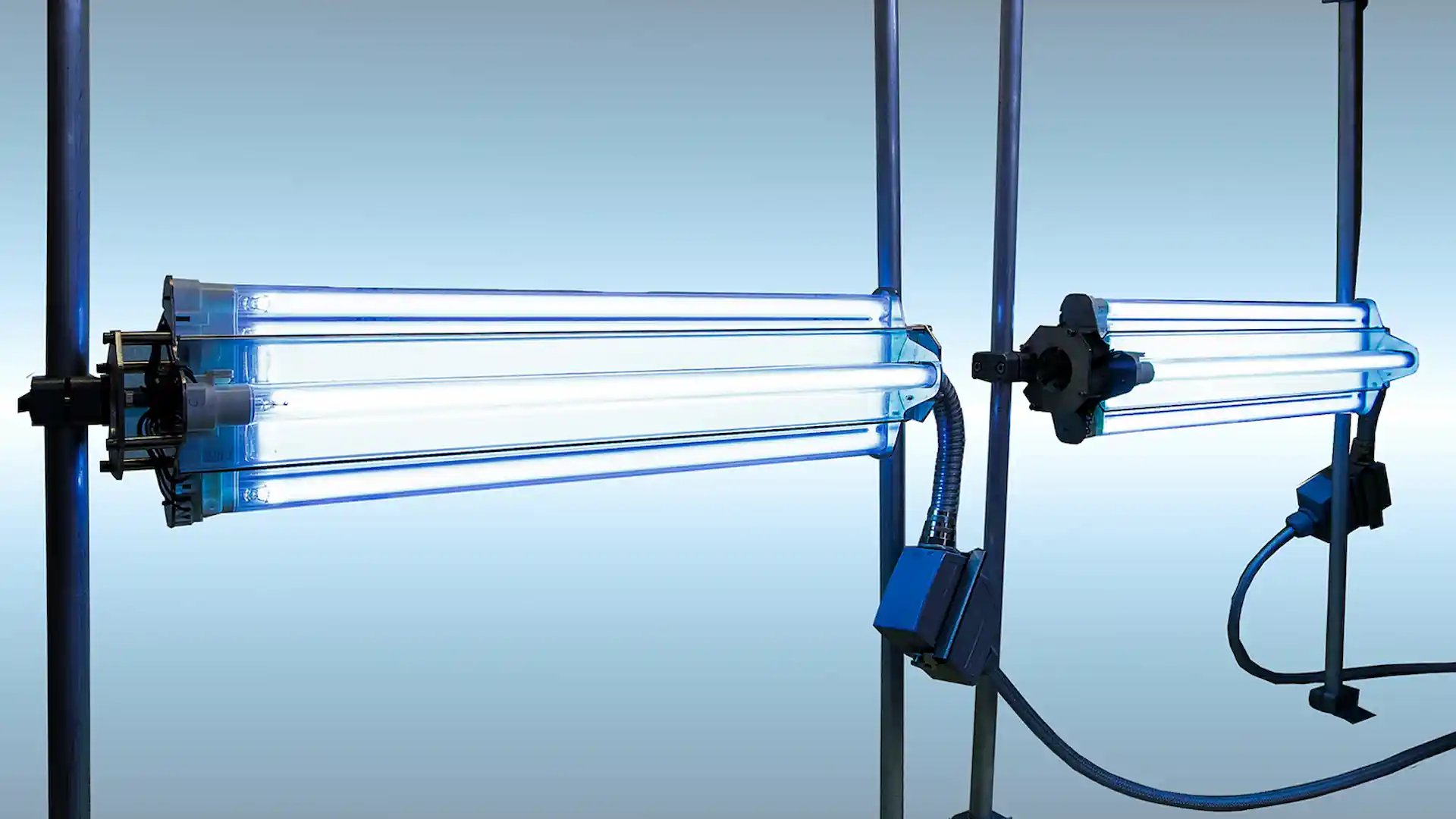
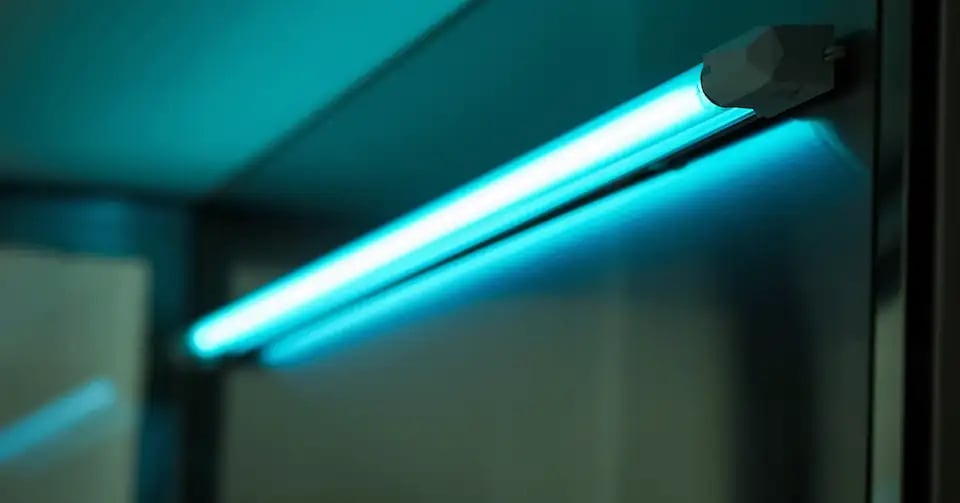
Ultraviolet germicidal irradiation (UVGI) uses UV-C light to inactivate bacteria, viruses, mould and other pathogens before they can spread, without introducing any chemicals into your airstream. Get the specification right and it runs quietly in the background for years, keeping coils clean and recirculated air biologically safe.
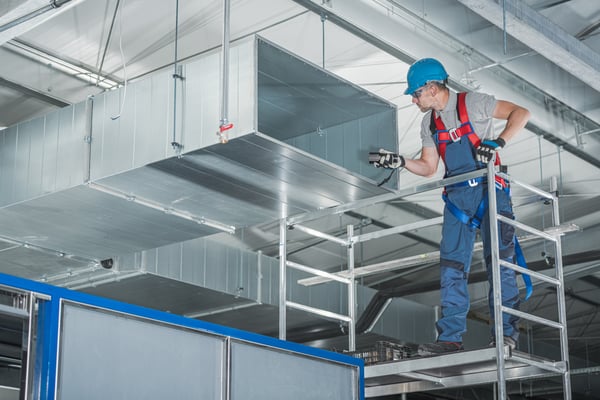
We start with a full survey of your HVAC system, airflow speeds and the pathogens you need to control, then specify and supply the right UV-C solution for the job. For most centralised systems that means AHU-mounted lamps, since slower-moving air gives the UV-C far more contact time with pathogens and biofilm on the coils to achieve the required dosage.
Benefits of UVGI:
- Inactivates bacteria, viruses, mould and other pathogens
- Chemical-free — no by-products introduced into your airstream
- Recommended under ASHRAE 62.1 and named in UK Approved Document F
- Low maintenance — lamps run for about two years before replacement
- Maintains heat exchanger efficiency
- We offer full specification, supply, installation and commissioning
Case Study: UV-C Installed on AHU Coils in Central London
.webp?width=960&height=540&name=image%20(7).webp)
Objectives
A London office fit-out with six air handling units wanted to reduce the risk from recirculated airborne pathogens without pushing energy costs in the wrong direction. UK Approved Document F recommends UV-C as a mitigation measure, but the technology is still relatively new to the UK market, and the client wanted evidence rather than assumption before committing to it across the estate. That meant proving two things: that UV-C actually controlled biofilm growth on the coils, and that doing so translated into measurable energy savings rather than just a compliance tick.
Solutions
We installed UV-C on the coils of all six AHUs and fitted 30 sensors across the units to track performance before and after. Rather than take a single snapshot, we committed to a full year of testing to account for seasonal variation in temperature, humidity and system load. Within that programme we ran a focused four-week validation window — two weeks of baseline monitoring, two weeks after — measuring pressure drop across the coil, chilled water temperature, supply and return air temperature, and humidity either side of the cooling coil.
Results
Heat-transfer performance across the coils improved by 11.95%, consistent with comparable studies elsewhere in the industry. Coil pressure drop improved by -4.73%, a smaller gain than some published studies report — likely because the two-week baseline wasn't long enough for biofilm to build up to the levels seen in longer-running trials. Taken together, the results confirmed UV-C as a genuinely effective tool for maintaining coil efficiency over time, not just a theoretical Part F box-tick.
Challenges
- Six AHUs to monitor across a live central London office fit-out
- Manufacturer claims for UV-C lacked independent, building-specific field validation
- A full seasonal cycle was needed to rule out short-term bias in the readings
Everyone hears a manufacturer's claims — reduced friction, extended coil life, lower energy use — but very few of those numbers come from independently validated field data. We built this trial to actually test them, before and after, across a full seasonal cycle. That's the difference between a plausible pitch and an evidence base you can put in front of a client.
Adam Taylor, Managing Director at ARM Environments
11.95%
Evidence
Compliance
Related Insights
Why Choose ARM?
We don’t offer general building services – we specialise in improving indoor environment quality, using the latest technology and best-practice frameworks to guide our assessments.
Our engineers are SafeContractor and BESA certified, and we play an active role in shaping UK standards like BS 40102. No matter the air quality concern, we have solutions tailored to your budget and requirements.