What Causes a 'Toxic Smell' in a Building? Common Sources Explained
A tenant, employee, or occupant reporting a "toxic smell" is one of the more anxiety-inducing complaints an estate agent, facilities manager, or building owner can receive — mostly because the phrase says nothing about the actual cause. It could be a one-off from a cleaning product. It could be airborne mould spores. It could be a ventilation system that's stopped doing its job properly.
The "toxic" smell is a symptom, not a diagnosis, and treating it as one usually means the real issue goes unresolved. Getting to the source reliably means indoor air quality testing rather than guesswork — but it helps to know what you're likely dealing with first.
Mould and damp
A musty, earthy smell is one of the most common "toxic smell" complaints, and it's almost always mould. Mould releases microbial volatile organic compounds (MVOCs) as it grows, which is what produces that distinctive odour, often before any visible staining appears.
It thrives wherever moisture is present: poor ventilation in bathrooms and kitchens, condensation on cold external walls, leaking pipework, or damp building fabric. If the smell is worse in one room, or stronger after rain, mould hidden behind a wall or under flooring is a strong candidate. A mould survey will confirm the extent and source rather than just the presence of a smell.
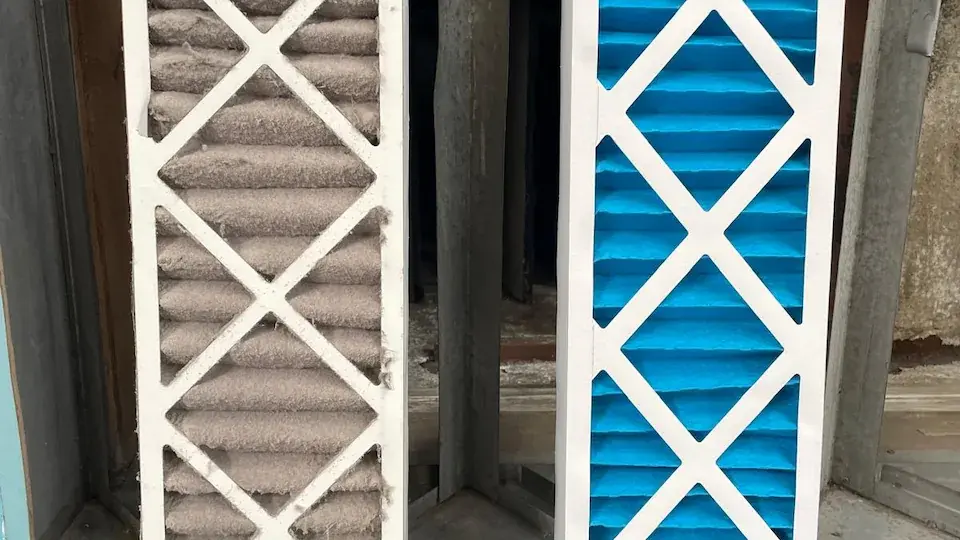
It's also not uncommon for mould to grow within mechanical ventilation systems, as we saw on this healthcare site in Southampton. Tucked away in MVHR units or ductwork, mould can grow undetected for long periods of time before the complaints start to arise.
If you suspect mould is the culprit of concerning smells in your space, here are some more resources for you to dive into:
- Mould Surveying in London Care Home: Case Study
- Mould Survey in Salisbury School: Case Study
- Mould Surveys Service
Volatile organic compounds (VOCs)
New carpets, paint, furniture, adhesives, and cleaning or air-care products all off-gas volatile organic compounds (VOCs). These are chemicals that evaporate at room temperature and are often described as exhibiting a "chemical" or "toxic" smell.
Formaldehyde, commonly found in pressed-wood furniture and some insulation, is a frequent culprit and is arguably the most notorious VOC. In older or poorly ventilated buildings, this off-gassing has nowhere to go and can build up to levels that irritate eyes, throat, and airways. Recently renovated or refurbished spaces are particularly prone to this. Where VOC exposure is a concern, VOC surveying gives a measured answer rather than a subjective one.
BTEX are a volatile category of VOC known for their distinct smells, harm to human health, and ability to produce secondary pollutants. They can occur naturally, but are more commonly produced during manufacturing processes. This is why these compounds all have explicitly stated limits under EH40/2005 Workplace Exposure Limits.
Relevant resources:
- TVOCs: Sources, Impacts & Testing
- BTEX VOCs: Sources, Impacts & Testing
- Formaldehyde: Sources, Impacts & Testing
Failing ventilation
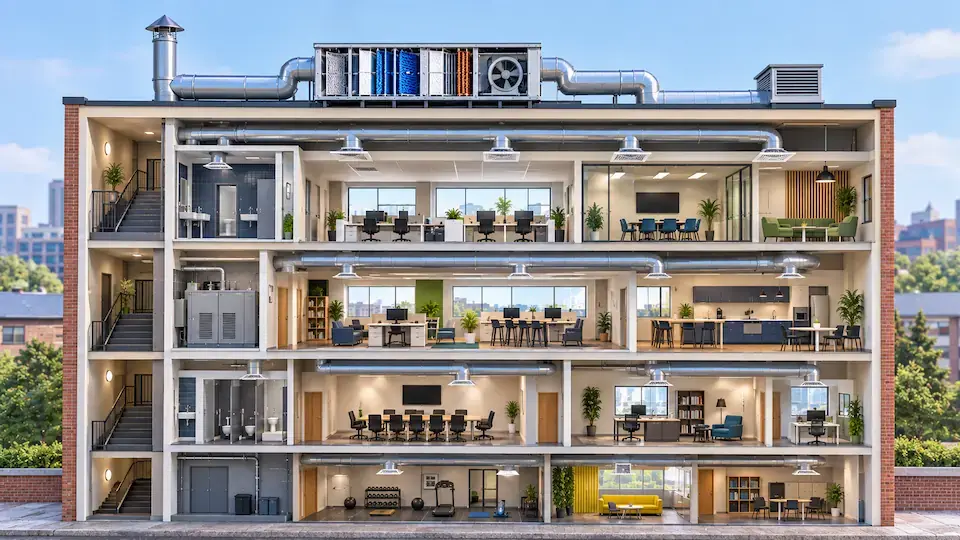
Sometimes there's no single "bad" pollutant — there's just not enough fresh air moving through the space to clear out everyday emissions from people, equipment, and furnishings. This presents itself as a stale, stuffy, or heavy smell that tends to build over the course of the day and clear when windows are opened. In mechanically ventilated buildings, this is often a sign the system is undersized, poorly balanced, or simply not performing to design.
Ventilation validation checks whether the system is actually delivering the airflow it's supposed to, and can quickly determine whether your ventilation strategy is working or not.
Relevant resources:
- Airflow Testing: When Does Your Building Need It?
- Why do homes need ventilation?
- The Hidden Costs of Poorly Balanced Ventilation Systems
- Part F 2026: What the Ventilation Update Means For You
Blocked or contaminated ventilation systems
Air handling units (AHUs) and ductwork accumulate dust, grease, and microbial growth over time, especially without regular servicing. Once contaminated, they don't just fail to clean the air — they actively distribute odours (and pollutants) throughout the building every time the system runs. A smell that seems to come from the vents themselves, rather than any specific room, usually points here.
To keep your AHU working as intended and distributing clean air around your space, look into our AHU servicing page.
Ductwork cleaning is a similar problem located in a different part of your ventilation system, but legislation and guidelines refer to these two areas separately, so it's important to check your responsibilities and ensure your ductwork is receiving the same attention that your AHU is (which is hopefully plenty!). For businesses seeking TR19 certification for their ductwork, check out our dedicated TR19 Air Ductwork Cleaning page.
Relevant resources:
- Duct Cleaning: UK Laws and Guidelines
- How Often Should You Clean Your Air Ducts?
- 5 Signs You Need to Clean Your Air Ducts (2026)
- HVAC Servicing Guide: Why Maintenance Matters
Drainage, sewer gas, and combustion by-products
Not every "toxic smell" is elaborate airborne chemistry taking place or a confusing mechanical ventilation issue — rather boringly, a dry or faulty trap in a drain can let sewer gas into a building to produce bad smells. Combustion appliances (boilers, gas heaters) that aren't venting correctly can also produce noticeable odours alongside more serious risks like carbon monoxide, which is dangerous specifically because it usually has no smell at all and can quickly become fatal.
Any complaint alongside symptoms like headaches, dizziness, or nausea should be treated as a potential safety issue first and investigated via HSE guidance and appropriate engineering checks, not just an air quality survey.
Relevant resources:
-
Indoor Pollutants: Information & Air Quality Testing Procedures
- Carbon Monoxide: Sources, Impacts & Testing
How to identify a toxic smell
The common thread across all of these ideas is that a "toxic smell" is just a starting point — not a conclusion. To reliably identify an air quality issue, you need to properly measure the air. Whether you start with VOC surveying, mould testing, or airflow testing is the tricky part. Getting in contact with one of our air quality experts at ARM Environments is a great way to start.
Indoor air quality testing offers a snapshot of your air in the moment as we sample the most common pollutants for a few minutes to a few hours, providing an almost immediate insight into whether the indoor environment has an indoor pollution problem.
More useful, however, is indoor air quality monitoring, which allows us to track and monitor how pollutants move over long periods of time, across weather changes, activities performed, and varying room occupancy levels.
| Smell described as... | Possible cause | Urgency |
|---|---|---|
| Musty, earthy | Mould/damp | Investigate if it doesn't improve |
| Chemical, "new carpet" | VOCs (paint, furnishings, adhesives) | Ventilate now, test if persistent |
| Stale, stuffy, heavy | Failing/inadequate ventilation | Investigate if it doesn't improve |
| Rotten egg | Gas leak (mercaptan) or sewer gas | Very urgent - seek professional advice immediately |
| Metallic, ozone-like | Printers/photocopiers, some HVAC faults | Low - but worth monitoring |
Get in touch
If a tenant, employee, or occupant has reported a smell you can't immediately explain, it's worth getting it properly investigated rather than guessing. Get in touch with ARM Environments to discuss your concerns and what you think could be the problem. We'll do the rest from there.