
Airflow Testing: When Does Your Building Need It? (2026 Guide)
Airflow testing, also called ventilation validation, confirms that a mechanical ventilation system is delivering the air volumes it was designed to deliver. In the UK, building owners and duty holders must demonstrate that their systems meet Building Regulations, support indoor air quality (IAQ), and, in some cases, comply with health and safety law. This guide explains what airflow validation involves, the warning signs that suggest you need it, when it's required by law, and what it costs.
If you'd rather skip straight to booking a test, speak with a qualified ventilation validation specialist at ARM Environments.
This guide explains when airflow validation is required, what it involves, and how it supports regulatory compliance.
What Is Ventilation Validation?
Ventilation validation (also called airflow validation, air balancing, or ventilation performance testing) confirms that a ventilation system is delivering the air volumes it was designed for at each space. As studies have shown, higher ventilation rates per person can reduce the prevalence of sick building syndrome (SBS) symptoms — highlighting the importance of adequate ventilation in any space.
As ventilation systems age, a performance gap tends to open up between the original design intent and what's actually happening on site, which is why routine ventilation testing matters.
Ventilation validation usually involves:
- Measuring supply and extract air volumes
- Verifying air changes per hour (ACH)
- Checking pressure differentials where required
- Comparing results against design specifications and regulatory standards
Five Warning Signs Your Ventilation System Needs Testing
Airflow problems are often ignored, or simply go unnoticed, until they start affecting energy bills, air quality, or equipment. Watch for these five signs.
1. Uneven heating or cooling
If some rooms are consistently warmer or cooler than others, your system isn't distributing air properly. This usually points to a building layout change that happened without the ventilation system being updated to match, so the HVAC is trying to maintain settings that no longer suit the physical space.
2. Poor air circulation or stale air
Stuffy or stagnant air is a clear sign of poor ventilation. Contaminants like dust, pollen, and VOCs (volatile organic compounds) can build up without adequate airflow, leading to headaches or respiratory discomfort. Even a low-cost air quality monitor can flag this: compare pollutant levels with the ventilation on versus off. Little to no change suggests the system isn't doing its job.
3. Rising energy bills
A sudden spike in energy costs often means your system is working harder than it should. Blocked ducts, closed dampers, or unbalanced airflow all make fans and HVAC units strain to compensate.
4. Excessive dust or condensation
More dust settling on surfaces, or unusual condensation around vents, points to an airflow problem. Left unchecked, this can lead to humidity build-up and early mould risk.
5. Strange noises from ducts or vents.
Rattling, whistling, or banging usually signals a blockage, a leak, or a fan fault. These are mechanical risks worth investigating quickly, since they tend to get worse (and more expensive) the longer they're left.
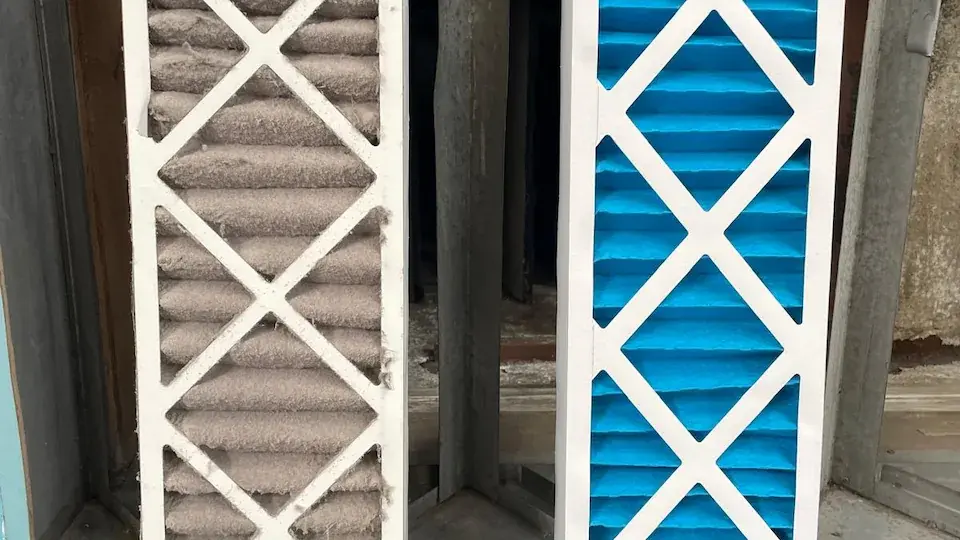
Pictured: a filter long past its replacement date (and now very much useless)
When is Airflow Validation Required?
1. Upon Completion of New Build Projects
Under Approved Document F (Ventilation) of the Building Regulations in England, mechanical ventilation systems must be commissioned and tested to confirm they achieve minimum airflow rates. A commissioning certificate is typically required before sign-off. This applies to:
- Commercial buildings
- Residential developments
- Schools and healthcare settings
- Mixed-use properties
See more information on the 2026 update to Part F, Volume 1.
2. After Refurbishment or System Alterations
If ductwork is modified, fans are replaced, layouts are altered, or occupancy density increases, the original airflow design may no longer be accurate. Airflow validation is advisable when:
- A new air handling unit (AHU) is installed
- Extract or supply systems are extended
- Heat recovery systems are upgraded
- Space usage changes significantly
3. When Required by Industry Standards
Certain environments have specific ventilation performance criteria. In these cases, airflow testing forms part of a broader compliance framework. This includes:
- Healthcare facilities (HTM guidance)
- Laboratories and cleanrooms
- Commercial kitchens
- Workplaces under COSHH
4. If Indoor Air Quality Concerns Arise
Poor ventilation typically goes unnoticed until someone has already fallen ill. An IAQ Testing survey alongside airflow validation can produce an Airflow Report and AHU Condition Report to help diagnose the root cause, whether that's:
- Elevated CO2 levels
- Condensation and mould growth
- Odour complaints
- Thermal discomfort
- Increased airborne contaminant concentrations
5. As Part of Ongoing Compliance and Risk Assessment
After a building is constructed, validated, and confirmed safe to inhabit, employers still have health and safety responsibilities under:
- The Health and Safety at Work etc. Act
- Workplace (Health, Safety and Welfare) Regulations
- COSHH (Where hazardous substances are present)
Routine validation and airflow testing supports due diligence by confirming systems continue to perform as intended, which is particularly important in higher-risk environments.
Best Practice for Airflow Testing
There is no universal statutory retesting interval for general ventilation, but at ARM we suggest:
- At commissioning
- After major alterations
- If occupancy levels change
- If indoor environment quality complaints occur
- Periodically in critical environments such as healthcare or laboratories
For buildings featuring Local Exhaust Ventilation (LEV), examination and testing (referred to as a Thorough Examination and Test, or TExT) is required at least every 14 months under COSHH, and records must be kept for at least 5 years.
How Much Does Airflow Testing Cost and How Long Does It Take?
Airflow testing typically costs £250 to £1,000 + VAT for standard facilities, such as domestic spaces, rising to around £1,500 for large facilities with multiple rooms, zones, or days on site. The number of engineers required, travel time, equipment used, and any overnight stays can all affect the final cost.
For most spaces, testing itself takes a few hours; larger facilities with many rooms can take a day or more. We generally hand over post-assessment reports within a few working days, so the total lead time is typically under two weeks.
How do I book Airflow Validation?
If your building has undergone recent changes, houses complex mechanical systems, or must meet sector-specific guidance, airflow validation is likely necessary. Even where not explicitly mandated, it forms part of responsible building management and risk control.
Professional testing ensures your ventilation system meets regulatory requirements, supports healthy indoor environments, and operates efficiently. To book a service or request advice on ventilation testing, air balancing, or compliance assessments, speak with a qualified HVAC compliance specialist at ARM Environments to review your system and confirm performance against current UK standards.
Frequently Asked Questions
Is airflow testing a legal requirement?
Yes, in many cases. Mechanical ventilation systems must be commissioned and tested under Approved Document F of the Building Regulations, with a commissioning certificate typically required before sign-off, particularly for new installations, refurbishments, or system alterations.
How often should airflow testing be repeated?
There's no single fixed interval, but retesting is advisable whenever ductwork is modified, fans are replaced, layouts are altered, or occupancy density increases, since any of these can open a gap between the original design intent and how the system actually performs. Sectors like healthcare and education may have their own recommended re-validation schedules.
Who carries out airflow testing?
Airflow testing should be carried out by a certified engineer working to recognised industry standards, not just anyone with a flow hood. ARM Environments' team operates under BESA and SafeContractor accreditation, so results and reporting stand up to regulatory scrutiny.
Do you need professional equipment for airflow testing?
Yes. Accurate airflow testing relies on calibrated instruments, such as flow hoods, hot-wire anemometers, or balometers (ARM uses the Testo 420), not estimation or guesswork. Without calibration, readings can be significantly out from actual airflow rates, risking a masked compliance or performance issue. This is also why testing is best left to a certified engineer: the equipment needs regular calibration, and results need to be interpreted against the system's original design specification to mean anything.
What's the difference between airflow testing and ventilation validation?
They're generally the same process referred to by different names. Airflow testing (or airflow validation) is one part of a broader ventilation validation exercise, which can also include pressure measurements, system balancing, and air quality checks alongside the airflow readings themselves.