
Air Quality Management in Gyms and Leisure Facilities: An FM Guide
Gyms and leisure centres put more strain on air quality than almost any other building type you're likely to manage. Hundreds of people exerting themselves at once, showers and pool halls adding humidity, and often a café or kitchen running alongside it all.
This guide covers who's most affected, what you're legally required to do versus what's simply good practice, and which indoor air quality testing and maintenance services cover each risk, so you know what to book and roughly how often.
Why Leisure Facilities Are a Different Challenge
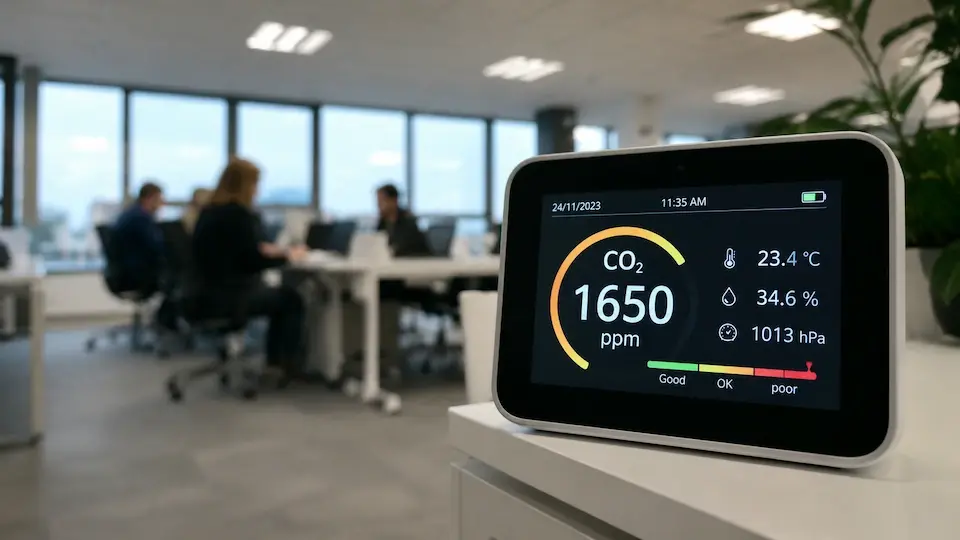
When people exercise, their breathing rate climbs and so does the CO2 they exhale. In a busy gym floor without effective ventilation, CO2 can build up fast enough to leave members with headaches, fatigue, or reduced concentration — hardly the outcome anyone's paying a membership for. Add a pool hall's humidity and chloramine off-gassing, changing rooms prone to damp, and a kitchen or café producing grease-laden extract air, and a leisure facility ends up juggling several distinct air quality problems under one roof.
Gym-goers feel the effects of poor ventilation first and most acutely when they're exercising. Staff working long shifts in the same environment are close behind. And anyone with asthma or a respiratory condition has a much lower tolerance for elevated CO2 or airborne irritants than a healthy adult at rest.
Legislation vs Guidance: Know the Difference
Two things get lumped together here that shouldn't be.
Legislation is legally binding. The Regulatory Reform (Fire Safety) Order 2005 requires fire dampers to be maintained and tested so they'll operate correctly in a fire. The Workplace (Health, Safety and Welfare) Regulations 1992 require effective ventilation in any workplace, gyms and leisure centres included.
Guidance tells you how to meet that legal bar, without being law itself. The most relevant standard for leisure facilities is BESA TR19, the industry standard for ventilation hygiene, which specifically covers grease removal from kitchen extract ductwork. CIBSE guidance on ventilation rates is also a useful reference point for gym floors and communal spaces, particularly where occupancy is high and variable.
The Key Risk Areas
- CO2 buildup on the gym floor. High occupancy, high exertion, and inconsistent airflow are a bad combination.
- Humidity and chloramines in pool halls. Poorly controlled humidity accelerates mould risk and corrodes building fabric over time, while chloramine off-gassing needs proper extraction.
- Grease-laden kitchen extract. If there's a café or kitchen on site, grease accumulation in ductwork is one of the leading causes of commercial fire, and it's a compliance requirement under BESA TR19 to keep it clear.
- Fire dampers left untested. Easy to overlook until an inspection or, worse, an actual fire, at which point it's too late to fix.
Common IAQ Services for Leisure Facilities
- Indoor air quality monitoring: ongoing, to track CO2 and other pollutants across gym floors and communal areas as occupancy changes throughout the day.
- Ventilation validation: after refurbishment, plant replacement, or whenever you can't confirm airflow rates match what the building was designed for. Verify that the airflow rates are suitable for the space.
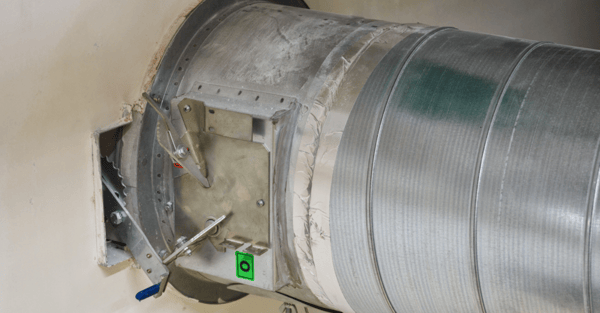
- Fire damper testing: a statutory annual requirement, non-negotiable regardless of how the rest of your maintenance schedule looks. Test whether your fire dampers would close properly in the event of a fire to keep people safe.
- Ductwork cleaning, including kitchen extract: scheduled under BESA TR19 Air and TR19 Grease, more frequently where a kitchen is in continuous use. BESA guidelines are not mandatory but do help to ensure you are meeting UK legislation by staying on top of your responsibilities.
- AHU servicing: regular maintenance to stop biological build-up degrading both air quality and system efficiency. Crucial for keeping ventilation systems running efficiently long into the future — a neglected and broken HVAC will quickly cost more in energy expenditure and repairs than a service every year or two.
A Simple Schedule for Facilities Managers
- Annually: fire damper testing (statutory), AHU servicing.
- On a TR19 schedule: kitchen extract and ductwork cleaning, more frequently for heavily used kitchens.
- Ongoing: air quality monitoring on the gym floor and in communal areas.
- After refurbishment or plant changes: ventilation validation to confirm the system performs as designed.
Talk to an Expert
If you manage a gym, leisure centre, or health club and want to get ahead of your air quality and fire safety obligations, get in touch with ARM Environments. We provide indoor air quality testing, monitoring, and full ventilation hygiene programmes for leisure facilities across the UK.
Read more on our Portsmouth Leisure Facility case study in which we conducted a range of HVAC services to keep the building running well.

![Your Guide to Indoor Air Quality Testing [2026]](https://www.arm-environments.com/hubfs/iaq%20testing%20in%20an%20office%20(1).webp)