Bipolar Ionisation vs UVGI: How Often Does Each Need Maintenance?
Bipolar ionisation (BPI) and UVGI both need far less maintenance than most HVAC equipment — but "less" isn't "none," and skipping it can kill performance long before either system visibly fails.
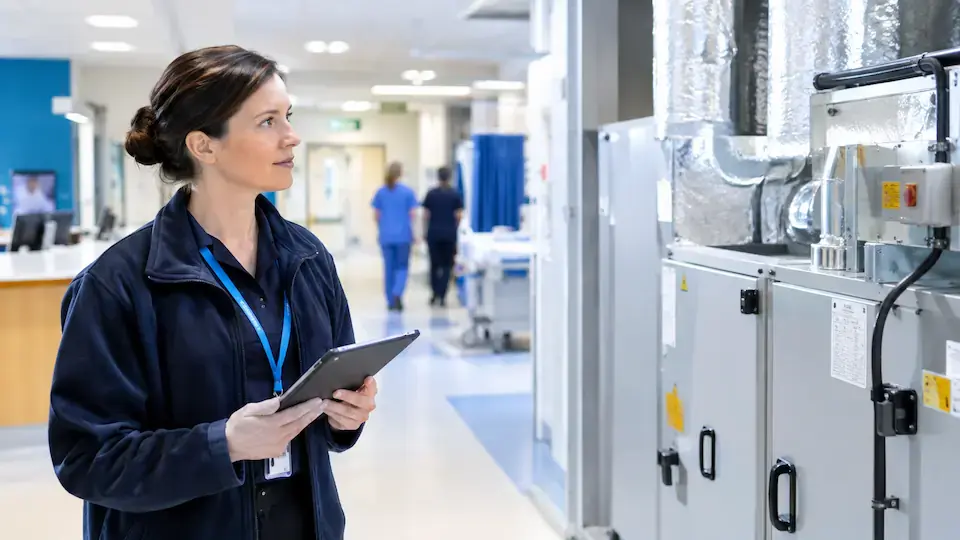
Here's what each actually air cleaning technology needs, how often, and how that stacks up against other HVAC service maintenance requirements, like ductwork cleaning, AHU servicing, and filter replacement. For the full picture on either technology, see our bipolar ionisation solutions or UVGI solutions.
UVGI and BPI overview
UVGI (Ultraviolet Germicidal Irradiation, also referred to as Germicidal UV-C) uses UV-C light, typically mounted inside an AHU, to inactivate bacteria, viruses, and mould spores as air passes through. Learn more in this UVGI explainer article.
Bipolar ionisation generates positive and negative ions that attach to airborne particles and pathogens, making them easier to capture or neutralise. See how it works.
Both are active, always-on technologies — unlike a filter, they don't get "full," but their output does degrade over time, which is what drives their maintenance needs. For a full pros-and-cons comparison, see UVGI vs Bipolar Ionisation in Non-Residential Buildings.
What kind of maintenance is required?
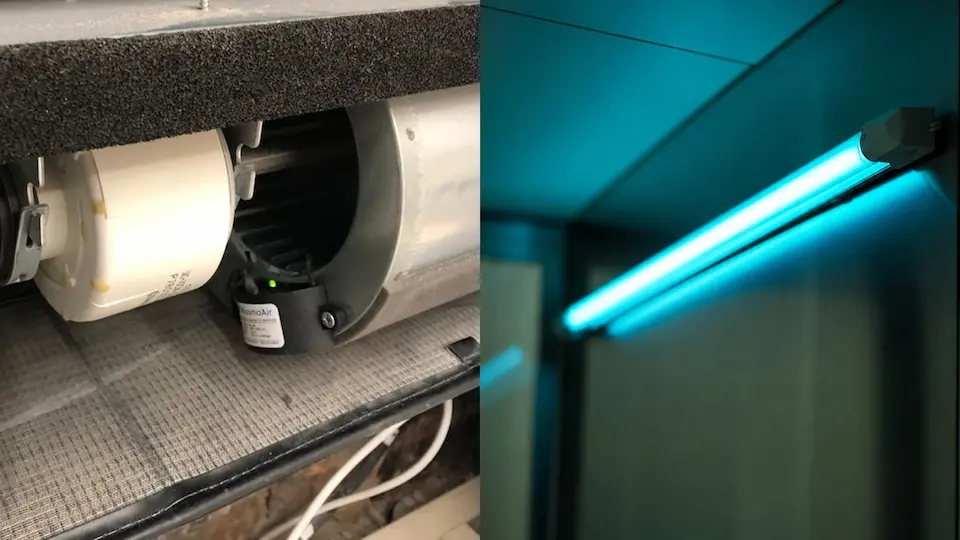
UVGI maintenance centres on the lamp: UV-C output drops steadily from the day it's switched on, and well before the lamp actually fails, so maintenance means scheduled lamp replacement, not fault-finding. Quartz sleeves also need periodic wiping, since dust build-up blocks UV transmission.
Getting the lamp count and placement right from the start also reduces how much maintenance drift you'll see over time. See our guide to selecting and installing UVGI.
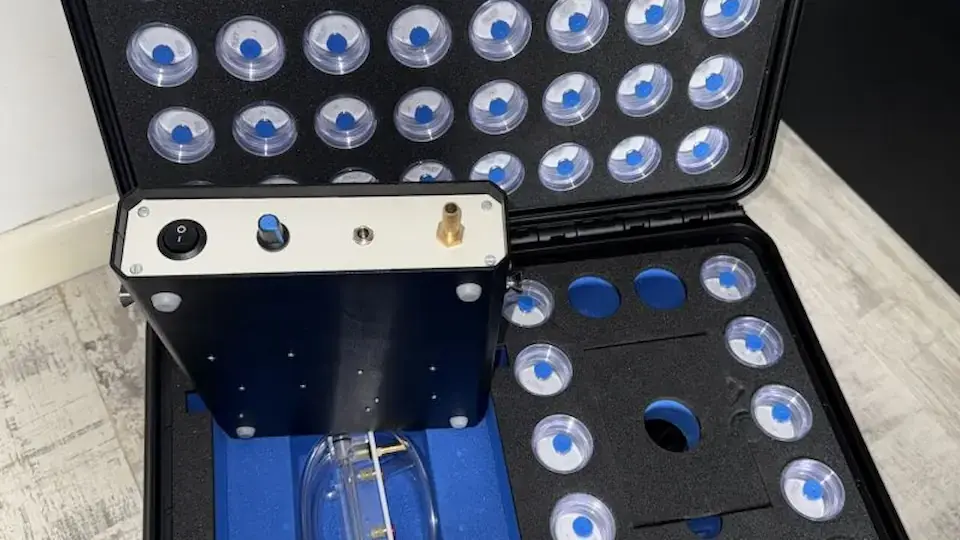
BPI maintenance depends on the device type. Needlepoint ionisers (the type ARM supplies via Plasma Air) are largely self-cleaning, so maintenance is mostly a visual inspection of the needlepoint tubes and output check, done alongside the fan coil unit (FCU) or AHU they're fitted to.
Neither technology needs the hands-on cleaning that ductwork, AHUs, or filters do — but both need someone checking they're still doing what they're installed to do.
How often is maintenance required?
- UVGI: lamp replacement roughly annually (lamp life is typically rated around 9,000–12,000 hours of runtime — confirm against your specific unit), with sleeve cleaning at the same visit.
- Needlepoint BPI: annual visual inspection and output check is generally sufficient; tubes rarely need replacing.
- Tube-Style BPI: ionising tube replacement roughly annually, tied to usage.
How this compares to other HVAC services
Ductwork cleaning, AHU servicing, and filter replacement follow a different logic entirely: they're condition-driven, not fixed-interval. Ductwork cleaning frequency depends on grease loading, occupancy, and system type (kitchen extract needs far more frequent attention than office supply ductwork).
AHU servicing is typically scheduled quarterly to bi-annually depending on how critical the system is, and covers a much wider scope — belts, bearings, coils, controls — than BPI or UVGI touch.
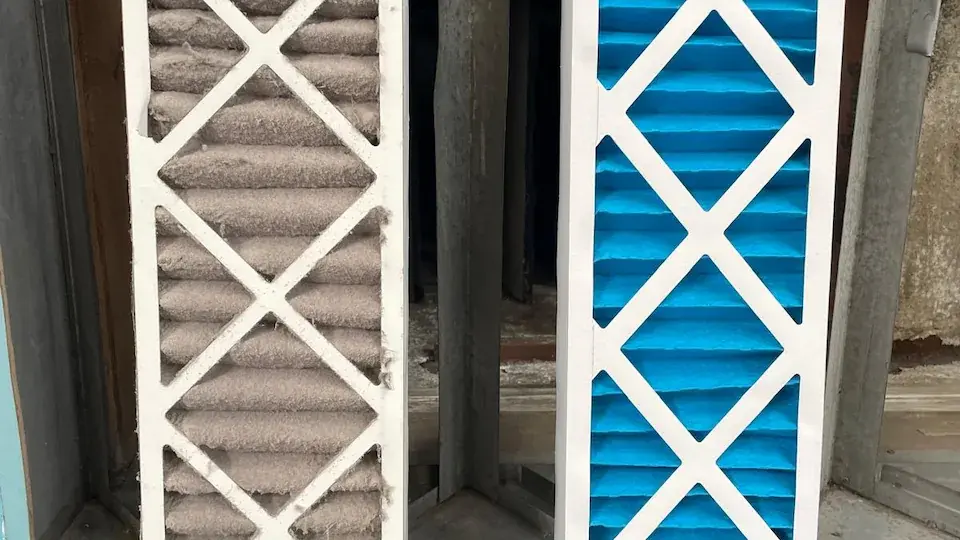
Filter replacement is usually triggered by differential pressure readings rather than the calendar, though higher ISO 16890 filter classes load up faster and need checking more often.
In short: BPI and UVGI are the low-maintenance end of the spectrum, but they still need a place on the same schedule as everything else, not an "install and forget" mentality. Our UV-C on AHU Coils case study is a good illustration of why lamp upkeep matters.
Tips to make HVAC maintenance simpler
The easiest way to avoid missed servicing is to stop treating BPI and UVGI as a separate task altogether. Because both are typically installed inside or alongside an AHU or FCU, their checks can be bundled into the same visit as filter changes and AHU servicing, rather than scheduled separately.
A maintenance plan tailored to your building — factoring in system criticality, occupancy, and filter class — means fewer site visits overall and less chance of a lamp or ioniser quietly underperforming for months before anyone notices.
UVGI vs BPI Maintenance at a Glance
| Task | Typical frequency | Trigger |
|---|---|---|
|
UVGI lamp replacement
|
~Annually | Fixed interval (runtime-based) |
|
BPI (needlepoint) inspection
|
~Annually | Fixed interval |
|
BPI (tube-style) replacement
|
~Annually | Fixed interval |
|
Filter replacement
|
Varies (3 months – 2 years) | Differential pressure |
|
AHU servicing
|
Quarterly – bi-annually | Fixed interval, scaled to criticality |
|
Ductwork cleaning
|
Varies (6 months – a few years) | Grease loading / usage / TR19 |
Get in touch
BPI and UVGI need less attention than the rest of your HVAC system, but "less" still means a plan. Get in touch with ARM Environments to build a maintenance schedule that covers everything — from ionisation and UV to AHU servicing and filter replacement — in one place.