Bipolar Ionisation HVAC Air Cleaning Technology for a Shropshire Food Producer: Case Study
Why a Leading Food Producer in Shropshire Needed Cleaner Air
In the food production and storage industry, indoor air quality isn't just a staff welfare concern — it's a product quality issue. Airborne odours, bacterial contamination, fungal spores, and volatile organic compounds can all affect the integrity of food and the safety of the people handling it. For dairy, meat, and food packaging operations in particular, the consequences of poor air quality extend from staff health all the way to production efficiency, bacterial counts, and the condition of the end product reaching consumers.
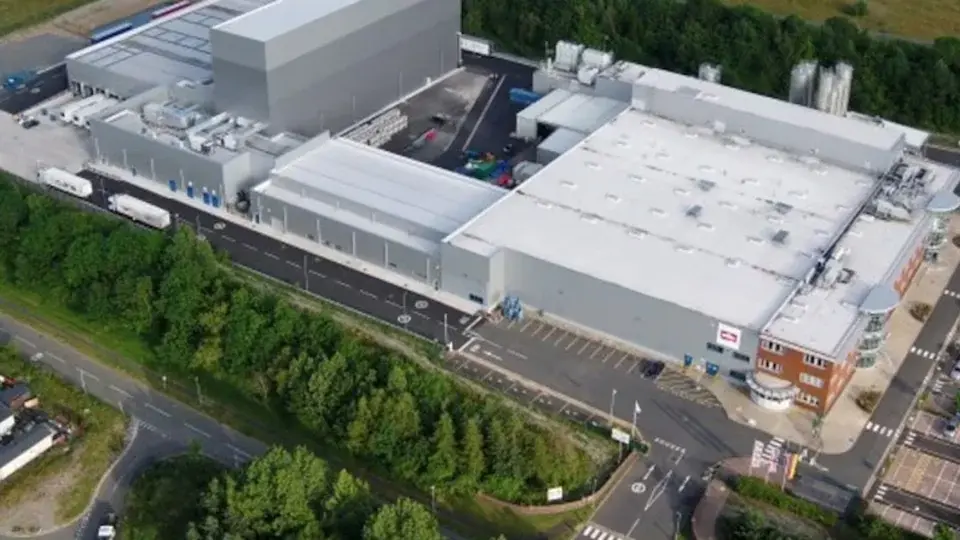
When a leading name in UK food production based in Shropshire began experiencing concerns about the effectiveness of their air handling units, the impact was being felt across the board: staff were working in a stuffy, odorous environment, and there were legitimate concerns about whether airborne pollutants could be affecting the food itself. Poor air quality tests confirmed that the facility's AHUs were not purifying the air or managing odours to the required standard.
ARM Environments was first contacted in 2019. Our client had already identified bipolar ionisation as a potential solution and approached us to validate that assessment and carry out the installation. Then, in 2020, they came back — this time with COVID-19 added to the list of concerns.
Learn more about our Bipolar Ionisation offering.
See our HVAC and AHU Refurbishment service page.
Key challenges:
- A large food storage and production facility with persistent odour and air quality problems
- COVID-19 risk to staff, and the potential for viral contamination of packaged goods
- Sensitive food items requiring active protection from airborne pollutants and microbial matter
What Is Bipolar Ionisation — and Why Does It Work in Food Production?
Bipolar ionisation is a well-established air cleaning technology with a strong track record in the United States, and one that is increasingly being adopted across the UK for demanding commercial and industrial environments. It works by interacting with oxygen atoms to generate positively and negatively charged ions, which are released into the air — typically propelled throughout the space by the existing airflow from the AHU.
Once airborne, those ions work through four distinct mechanisms:
- Airborne particles are electrically charged by the ions, causing them to cluster together into larger groups that can be caught far more effectively by physical filters within the AHU.
- Bacteria and virus cells bond with oxygen ions as they attempt to divide and reproduce — destroying them in the process.
- Odorous gases and aerosols oxidise on contact with the oxygen ions and are neutralised.
- VOCs undergo a chemical reaction with the ions that breaks down their molecular structure.
This combination of mechanisms makes bipolar ionisation particularly well suited to food production environments, where the challenges of odour control, microbial contamination, and particulate matter all need to be addressed simultaneously. The specific benefits for food industry applications include better production efficiency, a healthier end product, reduced bacterial counts, reduced mould, and improved air quality for the people working in the space.
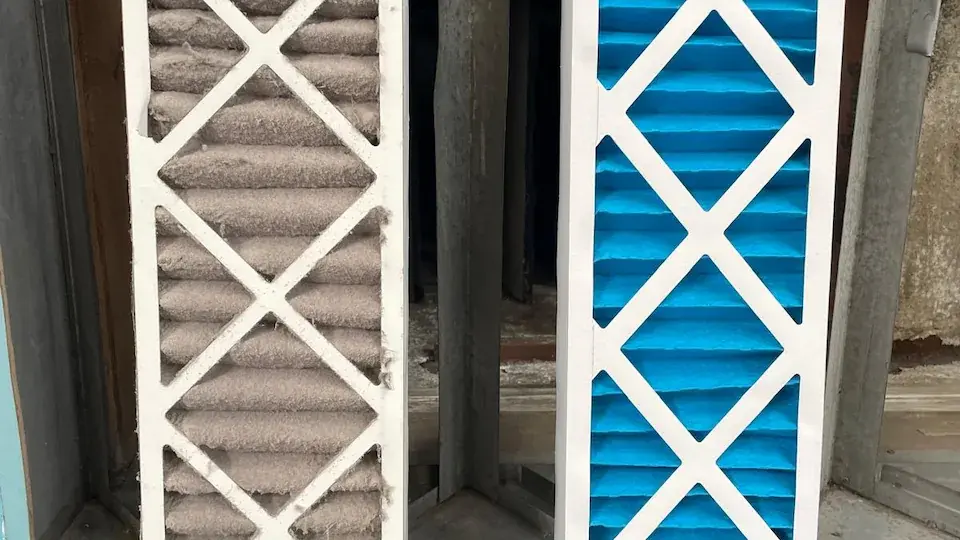
Bipolar ionisation also works synergistically with existing physical filtration. ePM10 and molecular filters can struggle to capture very fine particles independently — but with bipolar ionisation causing those particles to clump together first, the filters become significantly more effective.
See our professional filter change service.
The Installation: Bipolar Ionisation Units Across the Shropshire Facility
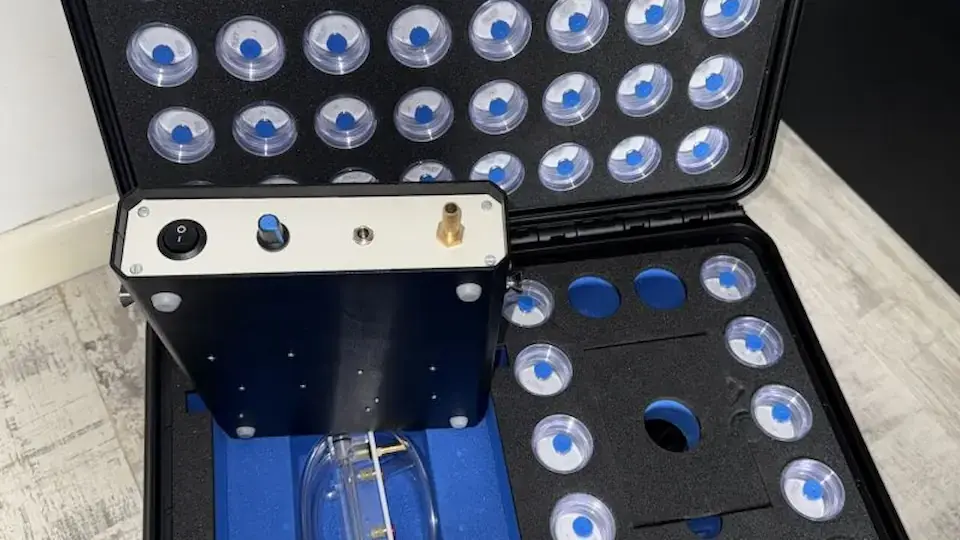
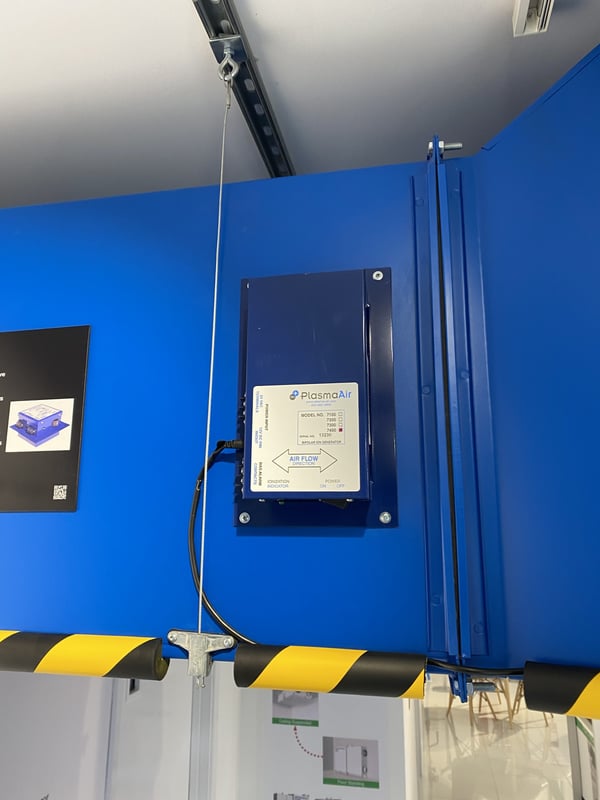
Before specifying the units, we assessed the size, airflow rates, and existing filter configurations across the facility's AHUs. We selected PlasmaAir — a leading brand in bipolar ionisation technology — to ensure the installation would deliver the highest standard of air cleaning for a food production environment where there is little margin for underperformance. The devices we use are also UL2998 certified, meaning no ozone is produced.
The units were fitted directly inside the AHUs themselves, rather than downstream. This positioning maximises the distribution of ions throughout the space via the system's existing airflow, and has an additional benefit: it keeps the interior of the AHU cleaner. Biological matter that would otherwise accumulate on internal components is neutralised before it can settle, reducing the frequency and cost of servicing over time.
When the client returned in 2020 requesting expanded coverage to address COVID-19, the second phase of installations was completed quickly. Having already mapped the site and the existing system, we were able to specify and fit four additional units with minimal disruption to the facility's operations.
Results: From Stuffy and Odorous to Clean, Safe, and Efficient
The transformation following the installations was immediate. The persistent odours that had become a background feature of the working environment were eliminated as the bipolar ionisation units broke down the VOC and odour-causing molecules in the air. A space that staff had simply come to accept as unpleasant became noticeably cleaner — with a direct impact on morale, comfort, and day-to-day productivity.
From a food safety perspective, the active neutralisation of bacteria, fungi, and airborne viral particles reduced the risk of microbial contamination reaching packaged goods — a critical outcome for a facility whose products reach consumers across the UK. The COVID-19 installations extended that protection further, reducing transmission risk within the workforce and providing the client with confidence that the facility's air was not a vector for viral spread into the supply chain.
As a longer-term operational benefit, keeping the interiors of the AHUs clean through the bipolar ionisation effect means the systems require less frequent maintenance intervention — lowering the overall cost of running the facility's HVAC infrastructure over time.
Learn how bipolar ionisation compares to UVGI.
"In this type of environment, it's crucial to keep bad odours and airborne pollutants to a minimum. Fortunately, this client already understood that bipolar ionisation would be an effective way to cleanse their air — particularly when COVID was so concerning — and so they approached us ready with a solution, which really propelled these projects to be completed very quickly. Following the installations, we set the facility back on track to ensure their food quality wasn't hindered by bad smells, and we kept staff safe by reducing the quantities of bacteria, viruses, and fungi in the air."
Adam Taylor, CEO
Bipolar Ionisation and HVAC Cleaning Technologies in the Food Industry
Operating a food production, packaging, dairy, or meat processing facility and concerned about odours, microbial contamination, or the performance of your existing HVAC systems? ARM Environments provides bipolar ionisation installations, AHU refurbishments, and AHU servicing for food industry clients across Shropshire and the wider UK. Contact us to discuss your requirements.
See next: Indoor Air Quality Monitoring in Retail Stores Across England: Case Study.