HVAC Filters for UK Legislation: A Guide to Compliant Filtration
You probably already know that UK air filtration requirements aren't set out in one tidy rulebook; they're scattered across Building Regulations, health and safety law, CIBSE guidance, and a handful of voluntary wellbeing certifications — and each one expects something slightly different from the filters sitting inside your AHU or MVHR unit.
This guide pulls together the filtration-relevant requirements from each of the major UK standards, so you can work out which filter class, efficiency rating, or maintenance schedule actually applies to your building.
For help specifying or replacing filters to any of the standards below, see our filter replacement service.
Please ensure you verify any figures or claims made against current, up-to-date guidance, as wording can change between iterations and updates.
HVAC Filters for Building Regulations Part F - Ventilation

Let’s work out what Approved Document F actually demands of a filter. The document splits into Volume 1 (dwellings) and Volume 2 (buildings other than dwellings), and System 4 — Mechanical Ventilation with Heat Recovery (MVHR) — is the only one of the four ventilation systems that relies on a filter to deliver its "fresh, filtered air" promise.
The part of Doc F most relevant to HVAC filter selection is Section 2, "Minimising the ingress of external pollutants." It sets thresholds for pollutants including PM2.5, PM10, NO2 and benzene, and states that where outdoor levels exceed these limits, or where a building sits near a significant local pollution source (a busy road, a railway, a construction site), the ventilation system should be designed to keep that pollution out. In practice, particulate filters handle dust and PM, while activated carbon (molecular) filters are brought in to deal with gaseous pollutants like nitrogen dioxide and sulphur dioxide.
We've covered a real case where a Central London residential block came right up against this requirement in our ePM10 & molecular filters case study, where high outdoor NO2 readings meant the only route to Part F compliance was upgraded indoor filtration rather than relying on outdoor air quality improving.
HVAC Filters for Building Regulations Part L - Conservation of Fuel and Power
 If Part F tells you to filter more, Part L is the document quietly asking you not to spend too much energy doing it. Approved Document L sets maximum Specific Fan Power (SFP) limits for ventilation systems — and higher-efficiency filters generally mean higher resistance, which means more fan power, which is exactly what Part L is trying to limit.
Part L adds a small number of allowances for components that add resistance: a HEPA filter, for example, is given a 1.0 W/(l·s) addition to the maximum permitted SFP. Notably, no such allowance exists for the particulate or molecular filtration that Document F Section 2 may require — which is the exact tension we explored in our resource piece, Part L vs Part F: Battle of the Regulations.
The good news for anyone looking for low pressure drop ePM1 filters or just energy efficient HVAC filters is that filter grade and pressure drop aren't always linked the way people assume. A basic 8-pocket ePM1 60% filter can carry a higher initial pressure drop than a better-built 10-pocket ePM1 85% filter — meaning a higher filtration grade doesn't automatically mean higher energy use, provided the filter itself is well-designed. We go into the numbers behind this in the same Part L vs Part F article above.
HVAC Filters for the Health and Safety at Work Act 1974
 The Health and Safety at Work etc. Act 1974 sets the general duty: employers must protect, so far as is reasonably practicable, the health and safety of everyone affected by their work. HSWA 1974 doesn't specify filter classes itself; the detail sits in regulations made under it.
The most relevant of these for HVAC filtration is Regulation 6 of the Workplace (Health, Safety and Welfare) Regulations 1992, which requires "effective and suitable provision" to ensure every enclosed workplace is ventilated by a sufficient quantity of fresh or purified air. It applies whether ventilation is achieved through opened windows or, in buildings with mechanical systems, through a properly filtered and maintained AHU, FCU, or MVHR unit(s). Employers also have a duty to maintain these in efficient working order, which in practice means a documented filter replacement schedule.
Our AHU servicing and filter replacement services support this ongoing duty.
HVAC Filters for COSHH
 COSHH — the Control of Substances Hazardous to Health Regulations 2002 — is where filtration meets occupational exposure law directly. Under COSHH, employers must control exposure to hazardous substances, including dust, fumes, and gases, to as low as is reasonably practicable, and exposure to substances with a Workplace Exposure Limit (WEL) (published in EH40) must not exceed that limit. Therefore, HVAC filters for EH40 WELs aren’t independently assessed or regulated, but the workplace itself must not exceed WEL thresholds.
In mixed-use or industrial buildings, particulate and molecular filtration in the general ventilation system can form part of the wider control strategy, particularly where dust or fume sources aren't fully captured at source. Where workplace exposure monitoring shows control measures aren't keeping concentrations below the WEL, that's the trigger for reviewing filtration methods.
See our related resource on HSG258 guidelines for LEV operators.
HVAC Filters for CIBSE Guide B2
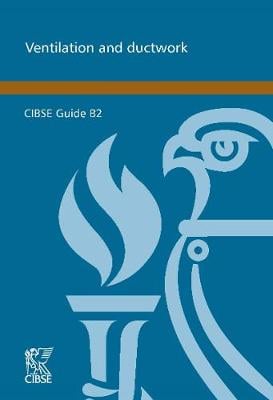 CIBSE Guide B2, Ventilation and Ductwork is the engineering reference most UK building services consultants design filtration against, even where it isn't a legal requirement in itself. It builds on the indoor air quality categories (IDA1 to IDA4) and outdoor air quality classifications originally set out in BS EN 13779 and now carried forward in EN 16798-3, and gives practical filter selection guidance based on both.
For buildings in polluted urban locations, CIBSE technical guidance increasingly points toward ePM1-rated filters used at high efficiency, since the smallest particles (PM1 and below) penetrate deepest into the lungs and bloodstream and are the hardest to filter out.
Guide B also covers maintenance and commissioning of filtration as part of the wider ventilation system lifecycle. See our AHU Servicing page for a more holistic approach to maintaining your HVAC system.
HVAC Filters for Schools and the DfE
 School ventilation sits across two DfE documents, and filtration searches usually relate to one or the other. Building Bulletin 101 (BB101) is the technical design standard architects and M&E engineers use, setting CO2 limits of 1,000ppm (mechanical systems) or 1,500ppm (natural ventilation) and supporting Part F compliance for new builds and refurbishments.
The Department for Education's ‘Ventilation and Air Quality in Education and Childcare Settings’ guidance (2026) is the operational companion document for day-to-day use by school staff and caretakers, and it's the one that specifically addresses filtration: it states that Air Cleaning Units (ACUs) should not be treated as a substitute for ventilation, but where ACUs are used as a temporary or supplementary measure, the DfE recommends HEPA filtration units only.
Air filters in school ACUs and MVHR units typically need replacing every 6 to 12 months, and most units flag when a change is due — but in our experience, a flagged warning light and an actually-changed filter are two very different things.
We covered the difference between BB101 and the 2026 operational guidance, including where air cleaning units do and don't help, in New Ventilation Guidance for Schools VS BB101.
HVAC Filters for BREEAM
BREEAM's Hea 02 Indoor Air Quality (soon to be Hea 04) credit requires a site-specific Indoor Air Quality Plan and, within that, ventilation filtration that meets specific minimum standards. Under the current BREEAM knowledge base guidance, non-residential assets are assessed against EN 16798-3, with a minimum required supply air quality of SUP2 — the filtration grade needed to achieve this depends on the outdoor air quality category (ODA1, ODA2, or ODA3) at the site, with more polluted locations needing higher-efficiency filtration to reach the same indoor air quality target.
Getting the filtration strategy wrong at design stage is one of the more common reasons Hea 02 credits are missed or contested at the assessor review stage. We support both ends of this: our BREEAM Indoor Air Quality Plan service builds the filtration and ventilation strategy into the plan from concept design, and our BREEAM testing service verifies post-construction air quality against the targets the plan set out.
HVAC Filters for WELL
 The WELL Building Standard's Air 05 (Air Filtration) feature sets a specific, checkable threshold: media filters rated MERV 13 or higher are typically required to filter outdoor air entering the ventilation system, with carbon filtration also recommended to address gas-phase pollutants that particulate filters can't capture.
WELL also requires documented filter maintenance records as evidence under this feature, so a paper trail of replacement dates matters as much as the filter spec itself. Our WELL testing service covers both the air quality verification and the supporting documentation WELL assessors expect to see.
HVAC Filters for Fitwel
 Fitwel doesn't set a single hard filtration threshold the way WELL does, but ventilation and filtration sits within its Indoor Air Quality scorecard category, alongside source control and occupant transparency strategies. Fitwel's IAQ policy requirement (strategy 6.3) explicitly references filtration as one of the best-practice elements a building's air quality policy should cover, alongside source control, maintenance, and ventilation, and high-efficiency filtration, often equivalent to MERV 13 or higher, can support a building's wider indoor air quality strategy under Fitwel.
Because Fitwel certification is documentation-led rather than requiring on-site testing, having clear records of filter grade, replacement frequency, and air quality monitoring data tends to be more valuable than chasing a single filtration number. See our Fitwel testing service for help building that evidence base.
Other Relevant Standards for HVAC Filters
What is EN 1822?
EN 1822 is the European classification standard for high-efficiency particulate filters — EPA, HEPA, and ULPA grades. It classifies filters based on their efficiency at the Most Penetrating Particle Size (MPPS), where a filter's performance is at its weakest. The classes run from E10 through E12 (EPA filters, 85–99.5% efficiency), H13 and H14 (HEPA filters, 99.95% and 99.995% efficiency respectively), up to U15–U17 (ULPA filters, exceeding 99.9995% efficiency).
It’s a standard in HTM 03-01 for healthcare ventilation filtration due to the high-risk environment.
What is ISO 16890?
ISO 16890 is the international classification standard for general ventilation filters, and it replaced the older EN 779 system (G1–F9 classes) in 2018. Rather than rating filters against a single test particle size, ISO 16890 classifies filters by their efficiency against the same particulate matter size fractions used in air quality monitoring and legislation: PM1, PM2.5, and PM10. A filter classed as ePM1 60%, for example, captures at least 60% of particles 1 micron and smaller — the same fine particulate fraction referenced in Part F's Table 2.1 limits and CIBSE's ePM1 recommendations for polluted locations.
Because ISO 16890 efficiency bands map fairly directly onto the pollutant categories used across Part F, BREEAM, and CIBSE Guide B, it's usually the first place to start when translating a regulatory requirement into an actual filter spec.
Getting Your Filters Right, Whichever Standard Applies
Most buildings have to satisfy more than one of these standards at once — a school under BB101 and Part F, an office under BREEAM and the Workplace Regulations, a healthcare site under HTM 03-01 and COSHH — and the filter sitting in the AHU is often expected to do all of that work simultaneously. If you're not sure which filter class your building actually needs, or your filters haven't been reviewed against current standards in a while, get in touch with the ARM Environments team for a site assessment. We can help you figure out exactly what your ventilation system needs, and how often they’ll need to be changed.
Get your filters checked today.

![Your Guide to Indoor Air Quality Testing [2026]](https://www.arm-environments.com/hubfs/iaq%20testing%20in%20an%20office%20(1).webp)