
BREEAM V7: RFO vs NC — What's Actually Different
BREEAM New Construction (NC) recently moved to Version 7, Refurbishment and Fit-Out (RFO) has only just caught up, and half the guidance online doesn't say which scheme it's talking about... If you're reading this, you've probably hit the same wall many of our clients have. Here's the straightforward BREEAM versions breakdown, including what it means if you're planning BREEAM testing on a live project right now.
In short: BREEAM New Construction is on Version 7 (mandatory since January 2026), and BREEAM Refurbishment and Fit-Out V7 just launched in July 2026. Which one applies depends on whether you're building new or working within an existing structure — see below.
BREEAM NC vs RFO at a Glance
| BREEAM New Construction (NC) | BREEAM Refurbishment & Fit-Out (RFO) | |
| Version 7 Release Date | 27.01.2026 (V7 becomes mandatory) | 15.07.2026 (V6 may still be available during the ongoing transitional period) |
| Applies to | Ground-up new builds | Refurbishments, fit-out, or partial works to existing buildings |
| Scope | Whole building | Can target relevant scope of works only |
| Typical 'Excellent' achievement rate | Higher | Lower (Existing buildings are a difficult starting point) |
BREEAM NC V7: where things stand in 2026
BREEAM NC V7 launched in September 2025 and became mandatory for all new registrations from January 2026 — if you're registering a new project today, you're on V7, no choice about it. RFO, on the other hand, is undergoing a transitional period at the moment as V7 gradually gets rolled out.
In NC V7, whole-life carbon now sits at the centre of the assessment rather than the periphery, Life Cycle Assessment is mandatory for an Excellent rating, and Outstanding-rated buildings must eliminate on-site fossil fuel combustion entirely. The old Excel-based calculator tools have also been folded into a single digital BREEAM Platform.
For IAQ specifically, the Indoor Air Quality category (Hea 04 in V7 and Hea 02 in V6) has had its requirements tweaked in NC V7 — VOC emissions testing now extends to on-site applied paints, coatings, adhesives and sealants used for M&E work, where previously finished M&E products could be excluded. If you're pursuing NC V7 and need this documented properly, a BREEAM Indoor Air Quality Plan is where that starts — it sets out the ventilation, VOC and off-gassing strategy from design stage rather than trying to retrofit compliance later. To learn more about what's changed in V7, read our update blog here.
BREEAM RFO: Just Updated to V7
Here's the bit that trips people up: BREEAM Refurbishment & Fit Out V7 is now here, and it's not simply an update to the old RFO 2015 framework. BRE has split the standard into two distinct pathways: BREEAM Refurbishment V7 and BREEAM Fit Out V7, designed to reflect the very different scopes and responsibilities involved in upgrading existing buildings.
BREEAM Refurbishment V7 is intended for projects where the works extend beyond individual interiors and may involve the building fabric, structure, core services, local services, and wider operational performance. BREEAM Fit Out V7, meanwhile, is focused on interior-led projects, particularly tenant or occupier fit outs, where the wider building structure and core systems are largely outside the project scope.
This distinction matters when you're deciding what needs to be assessed. For example, a refurbishment involving upgrades to the building envelope and mechanical services may fall under BREEAM Refurbishment V7, while a tenant fitting out several floors of an existing office could be more appropriately suited to BREEAM Fit Out V7. The V7 framework is deliberately modular, allowing the assessment to reflect the actual scope of the project rather than requiring every part of an existing building to be assessed.
Which scheme applies to your project?
-
New build, ground-up construction → NC V7, no alternative.
-
Refurbishment, fit-out, or partial works to an existing building → Refurbishment V7 or Fit-Out V7.
-
Occupied building, ongoing operational performance → BREEAM In-Use, a separate scheme entirely and awaiting its own V7 update.
IAQ credits don't wait for the version number
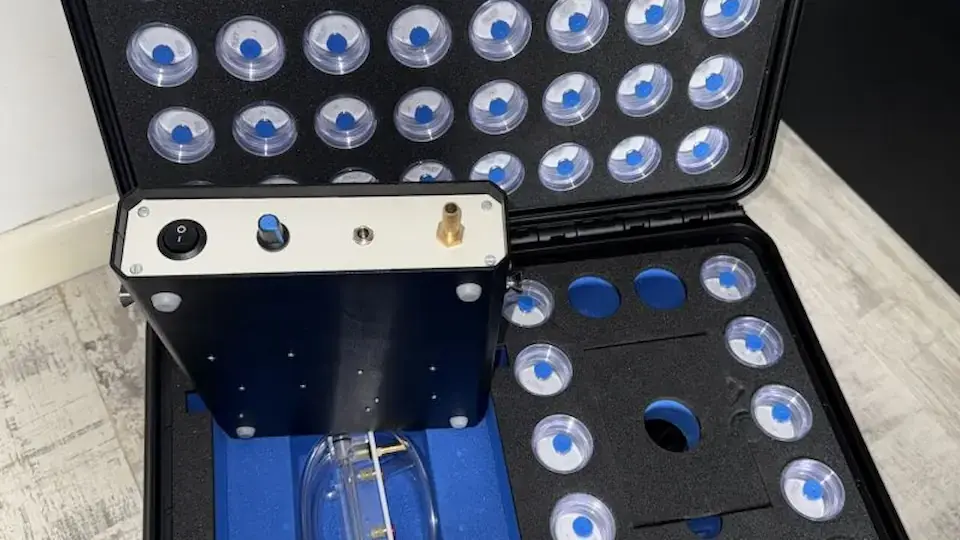
Whichever scheme you're on, the fundamentals of BREEAM's Indoor Air Quality category Hea 02/04 stay the same: demonstrating fresh air provision, minimising VOC emissions from specified materials, and — where mechanical ventilation is involved — showing it's been commissioned and validated to do what the design intended. Our ventilation validation service exists specifically to evidence that last point, and it applies equally to BREEAM NC and RFO assessments.
Whether you need a fresh BREEAM Indoor Air Quality Plan or testing against an existing one, get it scoped against the correct scheme version — NC V7's tightened VOC criteria and RFO's 2015 criteria aren't interchangeable, and an assessor will flag evidence gathered against the wrong one.
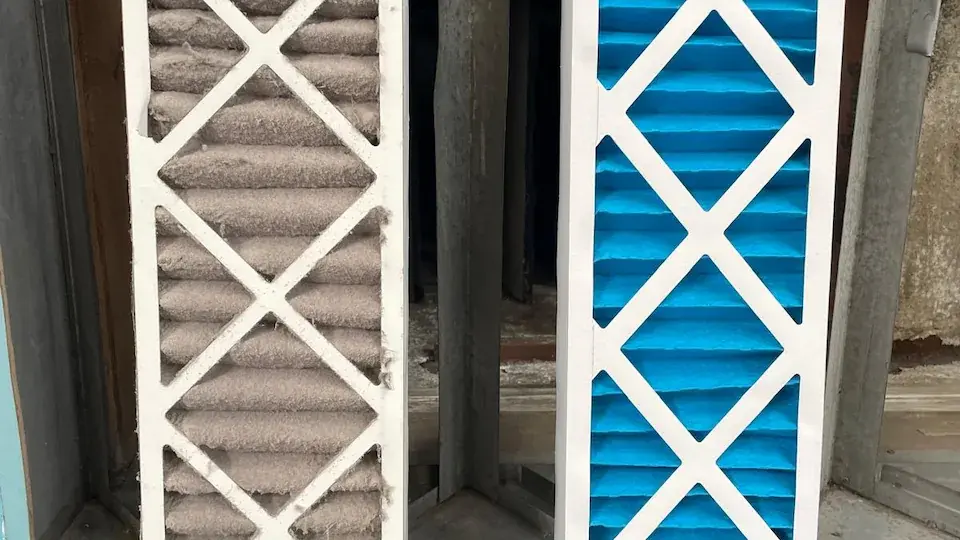
With BREEAM certification, the version number attracts most of the attention, but in reality we find projects lose BREEAM credits for the same reasons they always have: ventilation isn't commissioned properly, evidence is incomplete, or air quality assessment is left until the final weeks of the programme. The scheme may evolve, but good planning and forward-thinking remain the biggest factor in achieving all of the available IAQ credits.
BREEAM air quality testing done right the first time.
Don't let scheme confusion cost you a credit. Get in touch with our team for BREEAM testing scoped correctly to NC V7 or RFO V7, or contact us to talk through where your project sits. Our team are fully trained, certified, and experienced in conducting BREEAM Air Quality Assessments in the south of England.
Standards and version dates move quickly — always check current guidance on the BREEAM Knowledge Base or with your assessor before finalising a compliance strategy.