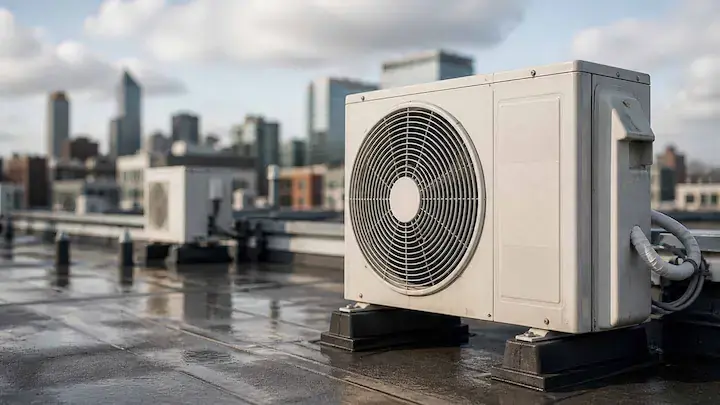
TM44 Regulations 2026: Latest Rules & Requirements
If you’re worried you’ve missed regulatory changes to TM44 in 2026, you’re not alone. There’s growing attention on compliance, energy efficiency, and enforcement, which has led many building owners to assume the rules have changed.
In reality, the core TM44 requirements haven’t been rewritten, but expectations around compliance seem to have tightened. If you’re responsible for a commercial building, it’s worth understanding what this means in practice.
If you’re unsure where you stand, start with our full TM44 Inspection Guide 2026, or speak directly to our team via our TM44 service page.
What is TM44 and why does it matter?
TM44 refers to guidance developed by the Chartered Institute of Building Services Engineers, supporting the inspection of air conditioning systems under the Energy Performance of Buildings Regulations.
If your system has a combined cooling capacity of over 12kW, you are legally required to have it inspected at least every five years.
A TM44 inspection isn’t just about compliance. It helps identify inefficiencies, reduce energy consumption, and improve overall system performance.
For a full breakdown of requirements, timelines, and costs, visit our TM44 Inspection Guide.
What’s changed for TM44 in 2026?
Increased enforcement and scrutiny
While the legislation itself hasn’t changed, enforcement activity has become more visible. More organisations are being asked to produce valid TM44 reports, particularly during audits or property transactions.
Greater focus on energy performance
TM44 inspections are increasingly being used as a tool to improve building efficiency. With rising energy costs and ESG pressures, businesses are paying closer attention to the recommendations within their reports.
Stronger link to wider compliance
TM44 now sits more firmly alongside other building compliance requirements. If you’re already managing certifications like EPCs, it’s important to understand how they differ.
You can read more in our guide: TM44 vs EPC: Building Compliance Made Simple
What hasn’t changed?
Despite the noise around “updates”, the core rules remain the same:
- The 12kW system threshold still applies
- Inspections are required every 5 years
- Reports must be carried out by an accredited energy assessor
If your last inspection is out of date, you are already at risk of non-compliance
Why TM44 is more important than ever
For many organisations, TM44 used to be treated as a tick-box exercise. That’s changing.
A well-executed inspection can help you:
- Reduce unnecessary energy spend
- Identify system faults early
- Improve occupant comfort
- Support sustainability targets
We explore this in more detail in What Are the Benefits of a TM44 Inspection?
Penalties for Non-Compliance
Failure to comply with TM44 regulations can result in enforcement action. In England and Wales, local authorities are responsible for enforcement and can issue penalties if:
- You fail to provide a valid TM44 report when requested
- Your inspection is overdue
- Your report is not compliant with regulations
Fines can cost hundreds of pounds per offence, with the added downside of a business taking a hit to their reputation for neglecting to keep their HVAC systems running safely and efficiently.
Do you need a TM44 inspection in 2026?
Ask yourself:
- Does your building have air conditioning systems over 12kW?
- Has it been more than five years since your last inspection?
- Can you provide a valid TM44 report if requested?
If the answer to any of these is “no”, it’s time to act.
You can find everything you need to know in our TM44 Inspection Guide, or arrange an inspection directly through our TM44 service page.
TM44 Service Providers in England and Wales
TM44 hasn’t changed dramatically in 2026, but the way it’s being enforced and applied has.
Staying compliant doesn’t need to be complicated. With the right support, you can meet your legal obligations while improving the performance and efficiency of your building.
If you need guidance or want to book an inspection, our team is here to help.