Indoor Air Quality Monitoring in Bournemouth University: Case Study
A Campus Questioning Its Air Quality
By January 2022, the question of indoor air quality in educational settings had moved firmly into mainstream consciousness. Universities across the UK were navigating a difficult balance — keeping campuses open and operational while managing the ongoing risks of COVID-19 transmission in shared, high-occupancy spaces.
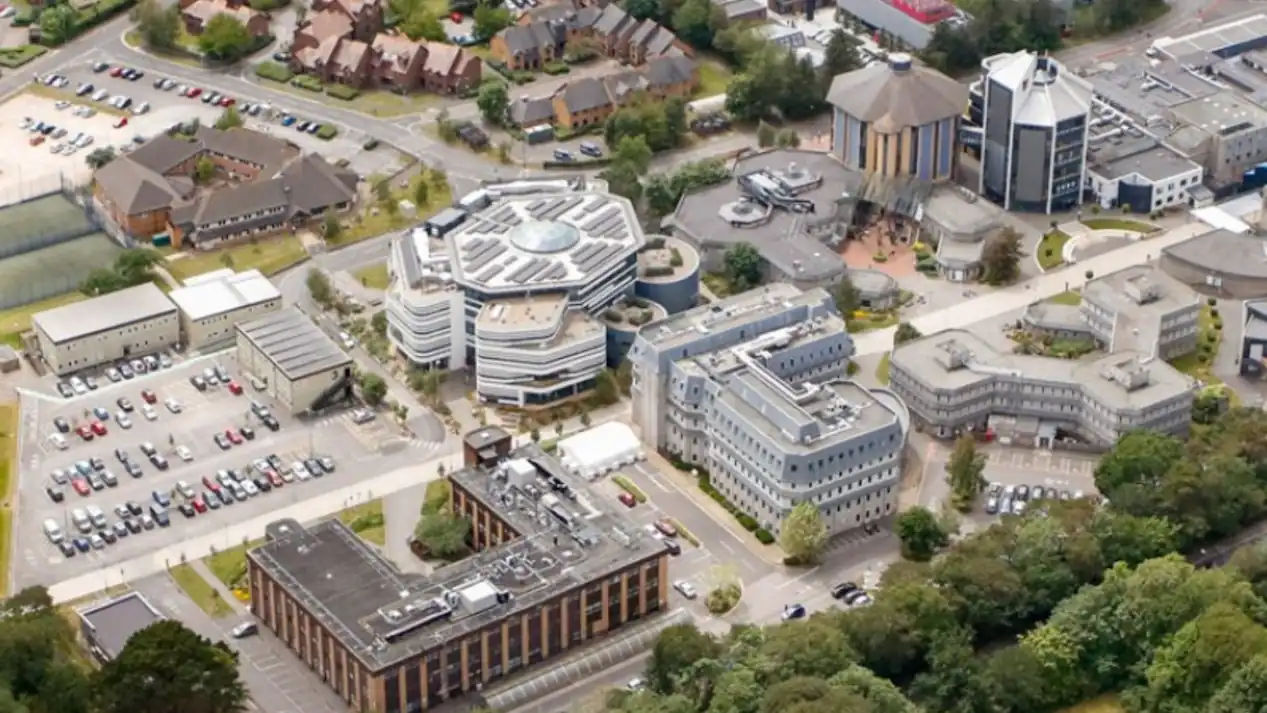
Bournemouth University's Talbot Campus was no exception. With lecture theatres, seminar rooms, and common areas seeing significant student occupancy throughout the day, the facilities team wanted confidence that the air their students and staff were breathing was safe. They approached ARM Environments with a specific request: CO₂ sensors.
It was an understandable ask. CO₂ monitoring had become the default shorthand for ventilation adequacy during the pandemic, and the Department for Education had been distributing free CO₂ monitors to schools across England as part of its ventilation response. Carbon dioxide is a useful proxy for how well a space is being ventilated — if levels are climbing, it suggests the air is not being replaced quickly enough.
But CO₂ is only one piece of the picture. And in a busy university environment, it is far from sufficient on its own.
Key Challenges
- High occupancy, varied spaces: Talbot Campus encompasses a wide range of building types and uses, each with different ventilation characteristics and occupancy patterns.
- CO₂ tells you about ventilation, not contamination: Elevated CO₂ indicates that air is not being refreshed — but clean-looking, well-ventilated air can still contain harmful levels of particulate matter, microbial load, VOCs, and other pollutants that CO₂ monitoring will never detect.
- DfE's misguided approach: Handing out CO₂ monitors gave institutions a single data point and, in many cases, a false sense of security. Facilities that passed a CO₂ threshold had no visibility of mould spores, fine particles, or pathogens circulating in their air.
Our Approach: Full-Spectrum IAQ Monitoring
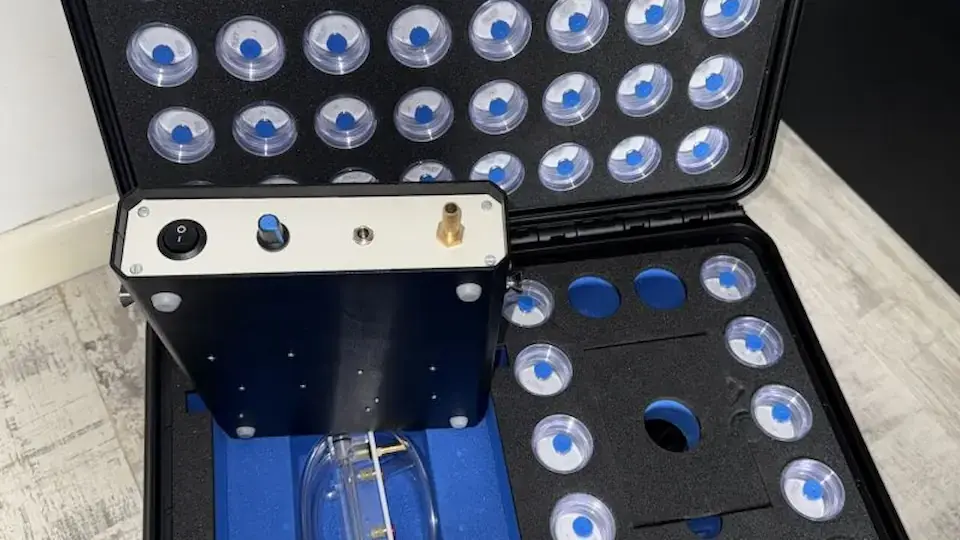
We recommended against a CO₂-only deployment. Instead, ARM Environments designed and installed a comprehensive IAQ monitoring programme across Talbot Campus — covering not just carbon dioxide, but particulate matter (PM2.5 and PM10), total volatile organic compounds (TVOCs), temperature, relative humidity, and microbial indicators.
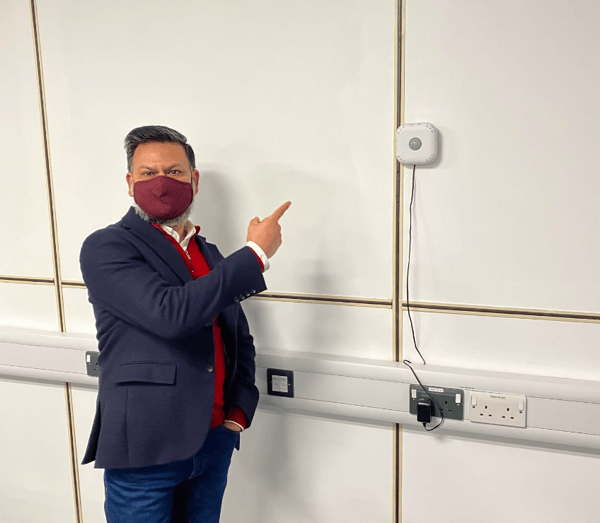
Ten professional-grade sensors were deployed across the campus, positioned to cover a representative cross-section of space types — lecture rooms, offices, social areas, and corridors. The monitors ran continuously over a two-week period, generating a reliable long-term dataset rather than a snapshot reading that could be distorted by a single unusual day.
Two weeks matters in environments like this. Occupancy patterns vary across the week, ventilation performance changes with outdoor conditions and system load, and some pollutants accumulate gradually in ways that a single day's reading would miss entirely.
See more: IAQ Monitoring Service | Pollutants information
What the Air Quality Monitoring Data Showed
The full-spectrum approach revealed a more nuanced picture than CO₂ alone would have provided.
Particulate matter levels in certain spaces showed patterns linked to occupancy that were not reflected in the CO₂ data — areas that appeared adequately ventilated by CO₂ standards were nonetheless accumulating fine particles during peak use. Humidity readings in specific zones also flagged conditions that, if left unaddressed, would be conducive to mould growth — an issue invisible to any CO₂ sensor.
The university received a detailed report across all monitored parameters, with space-by-space analysis and recommendations for targeted ventilation improvements and ongoing monitoring priorities.
See VOC Sampling Vs Real-Time Monitoring.
The Outcome of our IAQ Monitoring in Bournemouth
The case for full-spectrum monitoring is straightforward: if you are only measuring one thing, you only know one thing. CO₂ is a useful ventilation indicator, but it is not a proxy for air quality. A space can be adequately ventilated and still contain particulate matter at levels that affect respiratory health, VOCs from building materials and cleaning products, or microbial content that no amount of fresh air data will reveal.
The DfE CO₂ monitor initiative was well-meaning, but it directed attention — and reassurance — toward a single metric in environments where the full picture was considerably more complex. Institutions that acted on CO₂ data alone were, in many cases, blind to the real issues in their air.
Read more on IAQ in the Education Sector.
"CO2 became the pandemic-era shorthand for safe air. It's measurable, cheap, and easy to communicate. But it is a ventilation indicator, not an air quality indicator. During a period when the health of students and staff was genuinely on the line, that distinction mattered enormously."
Adam Taylor, CEO
IAQ Monitoring in Bournemouth
For educational facilities, commercial offices, and any high-occupancy environment in Bournemouth and across Dorset, ARM Environments provides professional IAQ monitoring that goes beyond CO₂ to give you the complete picture of what your occupants are breathing.