.webp)
Workplace HVAC Not Cooling? Causes, Consequences, and What to Do Next (June 2026)
If your commercial or workplace HVAC system is running but failing to cool the space, something has gone wrong — and you shouldn't expect it to fix itself. Whether it's a single stuffy office or an entire floor that won't reach temperature, the causes are usually identifiable and the solutions straightforward, provided you act early before the problem compounds.
See our sectors pages for tailored advice.
For residential properties, see our guide 10 Tips for Keeping Your House Cool in a Heatwave.
Why Is The HVAC Not Cooling My Workplace?
There is rarely a single cause. Commercial HVAC systems that stop cooling effectively usually have one or more of the following issues:
-
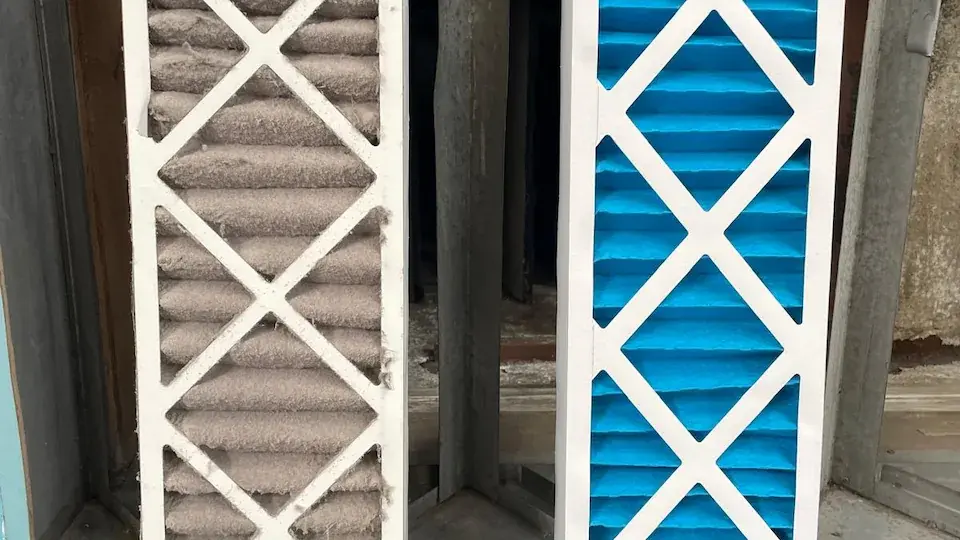
Blocked or overdue filters. When filters haven't been replaced on schedule, airflow is restricted. The system works harder, consumes more energy, and delivers significantly less cooling to the space. This is the most common cause of workplace HVAC cooling failure — and the cheapest to resolve. See our filter replacement service.
-
Fouled coils. Heat exchange coils accumulate dust, grease, and debris over time. Once fouled, they can't transfer heat effectively, and the system loses cooling capacity. In kitchens, manufacturing environments, or high-footfall commercial spaces, coil fouling happens faster than most maintenance schedules account for. See AHU Servicing.
-
Unbalanced airflow. If some areas of a building are overcooled while others remain warm, the issue is often distribution rather than output. Dampers may be incorrectly set, ductwork may be partially obstructed, or the system was never properly commissioned for the current layout. A ventilation validation survey will confirm whether air is reaching each zone in the correct volumes.
-
Blocked or deteriorating ductwork. Ductwork that hasn't been cleaned or inspected accumulates debris that restricts airflow and redistributes it unevenly. In older commercial buildings, duct degradation can mean air is being lost before it reaches the occupied space at all. Ductwork cleaning is often the missing piece.
-
Increased heat load. If occupancy has grown, heat-generating equipment has been added, or the building has been reconfigured since the system was installed, the HVAC may simply be undersized for what it's now being asked to do. This is especially common in offices that have been subdivided or had server equipment added.
-
Poorly performing AHUs or FCUs. Air Handling Units and Fan Coil Units degrade without regular servicing. Internal components accumulate contamination, fan performance drops, and the unit loses its ability to condition air to the required setpoint. An AHU condition report will give you a clear picture of where the system currently stands.
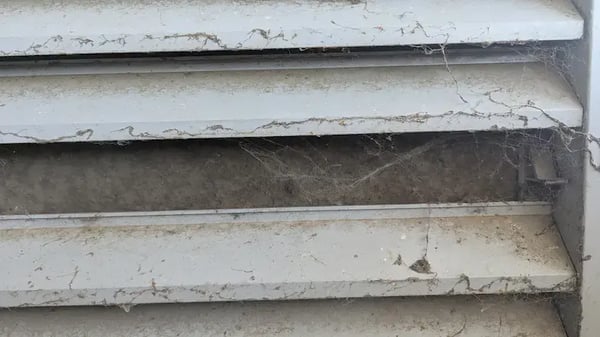
Signs Your Office HVAC Has a Cooling Problem Worth Investigating
Some HVAC cooling issues are obvious. Others present more subtly. Watch for:
- Rooms or zones that consistently fail to reach the set temperature
- The system running continuously without ever satisfying demand
- Uneven temperatures across floors or between different areas of the same building
- Energy bills rising without a change in usage or occupancy
- Unusual noise from AHUs or ductwork
- Ice forming on unit pipework or internal components
None of these resolve on their own. A system running under strain accelerates wear on fans, motors, and heat exchangers, meaning the repair cost at the end of the process is considerably higher than early intervention.
The Knock-On Effect: HVAC Cooling Failure and Impacts on Indoor Air Quality
A workplace HVAC system that isn't cooling properly is usually also ventilating poorly. Temperature control and air quality are not separate functions — they are often delivered by the same system. When that system underperforms, the consequences extend well beyond thermal discomfort.
Elevated CO₂ accumulates in poorly ventilated spaces. Humidity rises when air change rates drop. Airborne pollutants including VOCs and particulate matter concentrate rather than being diluted and exhausted. Staff in those environments experience reduced concentration, increased fatigue, and more frequent illness — none of which they attribute to the HVAC, but all of which stem from it.
Indoor air quality testing will confirm the extent to which a cooling problem has become an air quality problem.
What to Do When Your Commercial HVAC Stops Cooling
Start with the basics: when were filters last replaced, and when was the system last properly serviced? If you don't have clear records, that's often diagnostic in itself.
If routine maintenance is up to date and the system is still underperforming, the problem requires professional assessment.
ARM Environments provides AHU servicing, AHU condition reports, ventilation validation, and ductwork cleaning for commercial and workplace buildings across the UK. We identify the cause, set out a prioritised remediation plan, and where needed, provide ongoing maintenance to prevent recurrence.
Get in touch to discuss your building's requirements during these hotter months.
"An HVAC system that isn't cooling is telling you something, so it's important to pay attention. In most cases it's a combination of deferred maintenance and a system that hasn't been properly assessed since the building's use changed. That's fixable — but you need accurate data before you can prioritise the right interventions."
Shaun Doran, Air Hygiene & IAQ Compliance Specialist
Continue reading: 10 Tips for Keeping Your House Cool in a Heatwave.
Frequently Asked Questions
Why is my commercial HVAC running but not cooling the space?
The most common causes are blocked filters, fouled coils, unbalanced airflow, or degraded AHU and FCU performance. A professional assessment will identify which is responsible in your building and what the priority interventions are.
What is a ventilation validation survey?
A systematic check of whether your HVAC system is delivering the correct air volumes to each zone, in line with current occupancy and usage. Particularly useful when cooling is uneven across a building. Ventilation validation can also be referred to as airflow testing or airflow surveying.
How often should commercial HVAC systems be serviced?
At minimum annually, though high-use environments benefit from more frequent attention. TM44 inspections are a legal requirement for AC systems over 12kW and provide a useful compliance and maintenance baseline.
What's the difference between an AHU and an FCU?
An Air Handling Unit (AHU) conditions and distributes air centrally across a building or zone. A Fan Coil Unit (FCU) handles heating and cooling more locally, typically within individual rooms or areas. Both degrade without regular servicing and both can be responsible for cooling failures in commercial buildings.