10 Tips For Keeping Your House Cool in a Heatwave
Another week, another heatwave. With UK heatwaves becoming a daily reality recently, knowing how to keep your home cool is no longer a luxury — it's a practical necessity. Thankfully, there are some strategies we can use to prepare your house for this next heatwave.
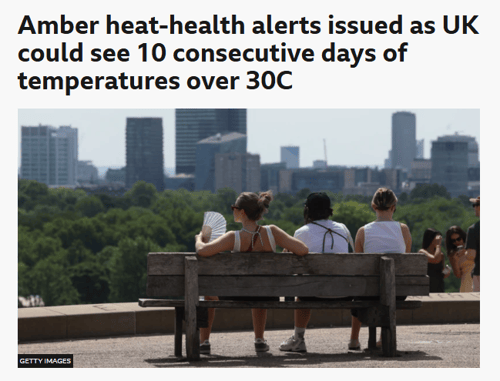
With the Climate Change Committee proposing this year that schools, care homes, and hospitals should be fitted with air conditioning within the next 10 years, we're all looking for ways to escape the heat and keep our rooms cool. The trouble is that UK buildings aren't designed for 40C temperatures, and it's not always easy to find a cool space to work, relax, or sleep in.
The good news is that you don't need an expensive air conditioning system to keep your house cool in this heatwave.
Here are 10 evidence-backed tips for keeping your house cool when temperatures climb.
1. Live in an old house
If you're lucky enough to live in one, homes made with older building materials are incredibly effective at keeping rooms cool during heatwaves. Modern lightweight construction with high levels of insulation works well in winter, but these buildings have little thermal mass (storage of cold-ness). Homes made using dense materials like brick and stone absorb heat slowly throughout the day and release it at night, acting as a natural buffer against rising outdoor temperatures.
2. Block out all the sunlight
It sounds counterintuitive, but during a heatwave it's more energy-efficient to use LED lighting indoors than to let direct sunlight stream through the glass. Solar gain through unshaded windows is one of the fastest ways to heat a room. If you can, block the sunlight out early in the morning and prevent the heat from warming your indoor space. Preventing the room from ever heating up is usually the best way to keep the room cool during heatwaves.
3. Use blinds with a reflective white surface
A white or silver reflective blind, fitted snugly within the window reveal, is far more effective than dark curtains loosely hung across the opening. Dark fabric absorbs radiant heat and re-radiates it into the room. During a heatwave, all that energy floods your house and quickly heats it up from the inside, even if the windows are closed. A well-fitted reflective blind bounces solar energy back out before it has a chance to warm your rooms.
4. Open windows at night (Querlüften)
Night-time is your opportunity to flush stored heat out of the building fabric and bring cooler air in. To do this safely, consider fitting window restrictors or security stays, which allow ventilation while limiting the opening to a few inches. If it's safe and possible to do so, you can open several doors and windows throughout your house to let the colder night-time air blow through and remove all the hot air your space has accumulated throughout the day. This works especially well if you have windows on opposite sides of the house.
The Germans have a word for this: Querlüften. It means to "air out" your space by opening windows on opposite sides of the house at the same time to generate a strong breeze. It's a standard practice over there to reduce mould and to bring in fresh air, and it's perfect for eliminating hot air during our UK heatwaves.
5. Open loft hatches after dark
Hot air rises, and your loft is often the hottest space in the house. Opening the loft hatch at night creates a natural stack effect, drawing warm air upward and out. As the hot air rises into the loft, cooler air rushes to fill that space.
Important caveat: only do this once the sun is off the roof. Opening the hatch while the roof is baking hot will push that heat downward into your living spaces as the daytime heat radiates through your roof.
6. During the day, only leave windows open if it’s cooler outside than inside
This is the most overlooked rule of passive cooling. Heat generated inside your home — from appliances, cooking, and occupants — is minimal compared to the heat load carried by hot outdoor air.
Use a simple indoor thermometer alongside a weather app to track external temperatures, and only open windows when the air outside is genuinely cooler than the air inside.
In practice, this often means closing windows early in the mornings, before you leave for work, and waiting until the evenings to ventilate. For many of us, this means the windows and blinds are drawn at around 7am-8am and only opened again around 8pm-9pm.
7. Crack windows open slightly when using internal blinds
When a blind is closed, a pocket of superheated air builds up in the gap between the glass and the fabric. Left sealed, this heat conducts through the blind and into the room. Opening the window by just a centimetre or two allows that trapped hot air to escape through natural buoyancy — a simple but effective strategy worth trying.
8. Consider fitting external shading
Stopping sunlight before it reaches the glass is significantly more effective than trying to manage it once it's inside. An awning, canopy, or brise-soleil on south and west-facing walls can dramatically reduce solar gain through those elevations during the hottest parts of the day during a heatwave.
9. Grow climbing plants on sunny walls
A well-established climber — ivy, Virginia creeper, wisteria — creates a living insulating layer between direct sunlight and your brickwork. This shades the thermal mass of the wall, slowing its rate of heat absorption during the day. As a bonus, deciduous climbers drop their leaves in winter, allowing the sun to warm the wall when you want it to.
10. Go French! External shutters look great
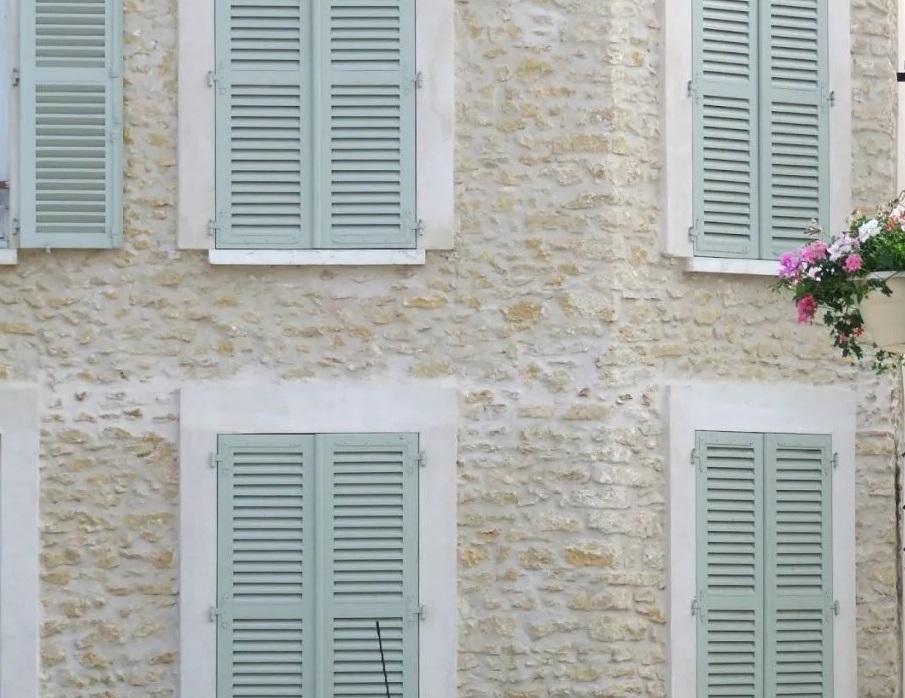
External shutters are the most effective passive shading solution available, and they're commonplace across southern Europe for good reason. By intercepting sunlight before it reaches the glass, they prevent heat gain at source rather than trying to manage it inside the room. They also add security, weather protection, and a great deal of character to a building's façade.
Talk to us about HVAC and Air Conditioning
If your existing ventilation system needs some TLC or you're looking to install a new unit altogether in a non-residential building, get in contact with us today. We'll discuss the best-suited solutions to keep your space cool in these warmer months.
If you're lucky enough to have an HVAC system but it isn't cooling the space as well as you think it should, a number of issues could be the cause, including dust-blocked filters or ductwork, or incorrect airflow balancing due to a building layout change. It's best to get in touch with us for an HVAC assessment to identify the problem and get your space back down to temperature. Business owners and facilities managers should read more on our blog Workplace HVAC Not Cooling? Causes, Consequences, and What to Do Next.
See more: HVAC Servicing, New AHUs.

![Your Guide to Indoor Air Quality Testing [2026]](https://www.arm-environments.com/hubfs/iaq%20testing%20in%20an%20office%20(1).webp)