CO2 Monitoring in Schools Isn't Working: Here's why
The government spent millions distributing CO2 monitors to schools across England between 2021 and 2023. It was a well-intentioned response to a genuine problem — classrooms packed with children are among the most poorly ventilated spaces in any building stock in the country. But here's the uncomfortable truth: for the vast majority of schools, those monitors are gathering dust in a cupboard somewhere, and the air quality in British classrooms is no better understood today than it was before a single device was handed out.
This isn't a criticism of teachers. It's a criticism of a programme that handed schools a tool without the training, context, or ongoing support to use it meaningfully. And it matters — because poor air quality in the education sector doesn't just make children uncomfortable, it measurably affects their ability to learn, concentrate, and stay healthy.
Take action today with our Indoor Air Quality Monitoring service.
Read more about the impacts of poor air quality on cognition and productivity.
Why the DfE's CO2 Monitor Programme Fell Short
The Department for Education's CO2 monitor rollout was reactive — driven by the urgent need to manage COVID-19 transmission risk through better ventilation. Schools received basic, single-unit monitors designed to act as a prompt: CO2 goes high, open a window. Job done.
Except the job was never done. It was barely started.
The guidance accompanying those monitors was limited. There was no meaningful framework for interpreting readings, no protocol for systematic monitoring across different spaces, and critically, no ongoing support once the initial distribution was complete. When monitors broke, developed faults, or simply ran out of battery, the DfE confirmed it would not be replacing or repairing them. Schools were on their own.
The result?
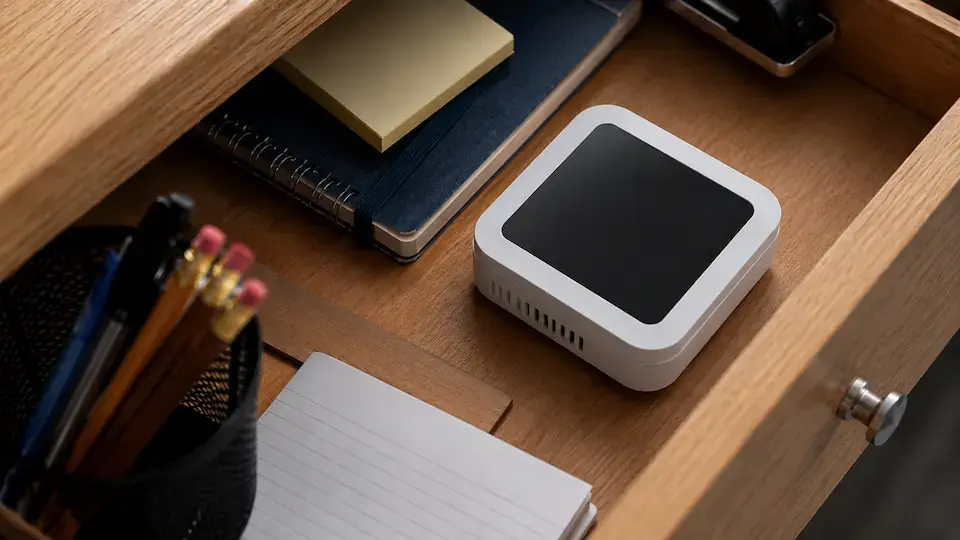
Most of those monitors are now sat in drawers, unused. The ventilation behaviours they were meant to instil — opening windows at the right time, understanding how air moves through a space — never fully took hold. Teachers know the device exists. But without context, training, or a proper system, it became just another piece of equipment that was briefly used and quietly forgotten.
The problem it was meant to solve, however, has not gone anywhere.
Read more on government guidance for managing school air quality.
A Single Sensor in the Corner Doesn't Tell You Anything Useful
Let's be honest about what a single CO2 monitor actually tells you. It tells you that CO2 is rising — or falling — at one specific point in one specific room at one specific moment. That's it.
That might sound like useful information, but it tells you almost nothing about why CO2 is rising, where the air is moving, whether opening a window on one side of the room is actually exchanging air effectively, or what's happening in the corridor outside, the staffroom, or the hall where students eat lunch.
Understanding the air quality of a school building requires multiple sensors distributed intelligently across the space. You need data from different zones within a classroom — near the door, near the window, at the back of the room — not just a single reading from the corner where the monitor happened to be placed. And you need that data over time, so you can identify patterns: the spike that happens every Tuesday afternoon in the science lab, the chronic baseline elevation in the basement music room, the corridor that never clears between lessons.
Without that network of data, you're not monitoring air quality. You're guessing at it.
What Good Air Quality Monitoring in Schools Actually Looks Like
There's a clear hierarchy when it comes to CO2 monitoring and indoor air quality monitoring in schools, and it's worth understanding what each tier actually delivers.
The Basic CO2 Monitor: A Starting Point, Not a Solution
The monitors distributed by the DfE were, at best, a prompt. Most used NDIR (Non-Dispersive Infrared) sensors — the right technology in principle — but they were consumer-grade devices designed for simplicity rather than accuracy. They measure CO2 and, in some cases, temperature. They give a traffic light reading. They have no connectivity, no data logging, no ability to export readings for analysis, and no way to integrate into a wider monitoring network.
If you still have one working and you're using it, it's better than nothing. But it is the minimum possible intervention, and the guidance around it was never sufficient to turn that prompt into genuine ventilation practice.
IoT-Connected Monitors: Where Monitoring Becomes Meaningful
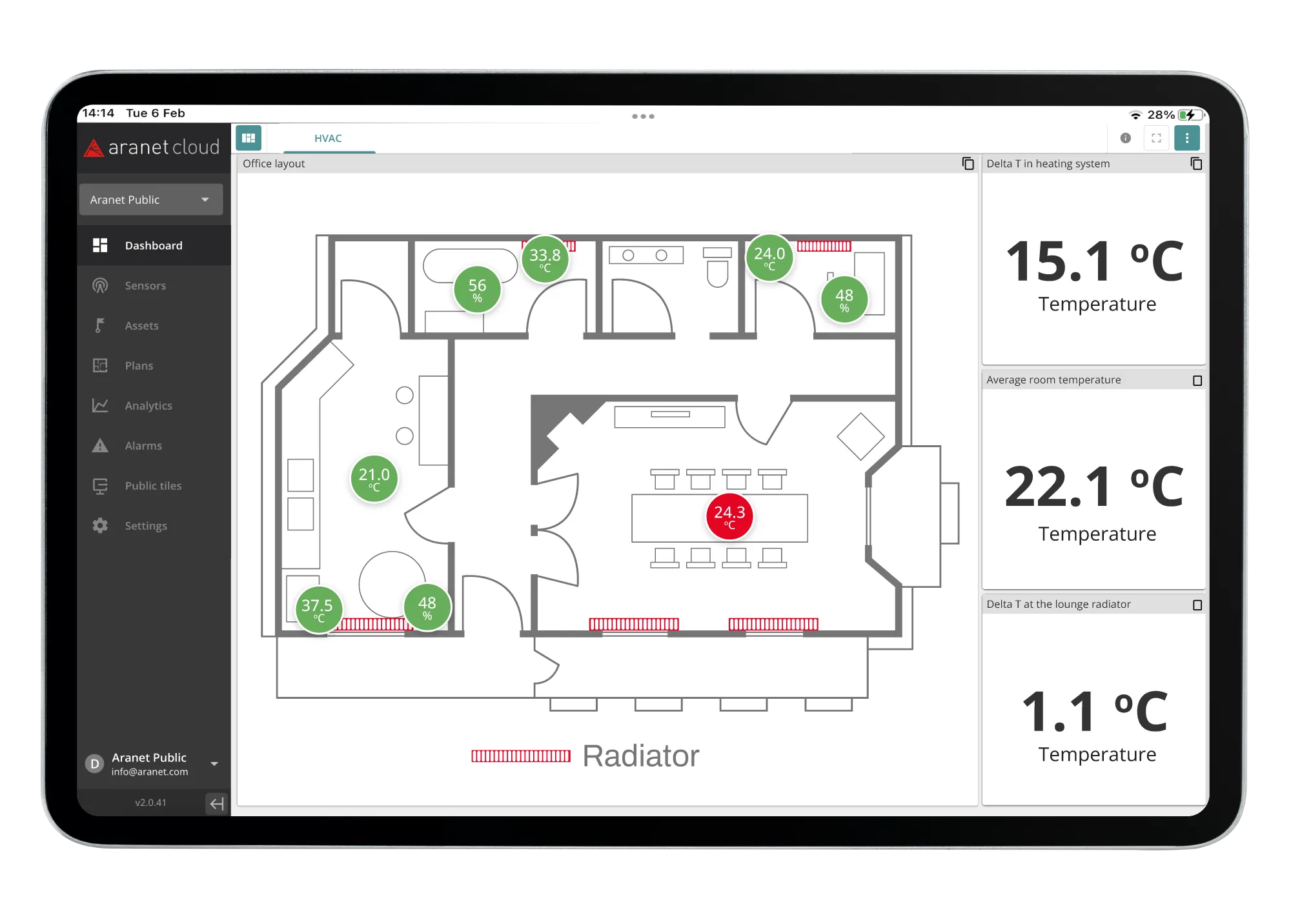
Devices like the Aranet4 and similar IoT-enabled air quality monitors represent a significant step forward. These are professional-grade sensors with accurate NDIR CO2 measurement, wireless connectivity, and the ability to send continuous data to a cloud dashboard. You can deploy multiple units across a building, set alerts, export historical data, and actually analyse what's happening to the air in your school over time.
This is where monitoring starts to become genuinely actionable. A teacher doesn't need to glance at a traffic light; the facilities team can see from a dashboard that Room 14 consistently hits 2,000ppm by lunch time every day, and that's the conversation that leads to a real ventilation intervention.
When specifying monitors for schools, look for:
- NDIR CO2 sensors — not cheaper electrochemical alternatives, which drift and give unreliable readings
- Wireless connectivity — Bluetooth or LoRaWAN for flexible deployment without cable runs
- Cloud dashboard access — so data can be reviewed, trended, and shared with decision-makers
- Multi-parameter measurement — CO2 alone is useful, but temperature, humidity, particulates and VOC readings add important context
- Long battery life — a sensor that needs charging every two days will be ignored within a week
- Calibration transparency — know how often the device self-calibrates and what its stated accuracy is
Our air quality monitoring service uses professional IoT sensors that tick all of these boxes, deployed in configurations that actually map the air quality of your building rather than spot-checking one room. We can deploy these sensors in-person or deliver them via postage to anywhere in the UK.
CO2 Is Not the Only Pollutant You Should Be Worried About
Here's the part that almost every school-focused conversation about air quality misses entirely: CO2 is an indicator of ventilation adequacy. It tells you whether enough fresh air is getting in. But it tells you nothing about what's actually in that air once it arrives.
Schools contain a surprising range of indoor air pollutants that CO2 monitors will never detect:
- Volatile Organic Compounds (VOCs) — from cleaning products, art materials, adhesives, new furniture, and floor coverings. Some VOCs are known carcinogens.
- Particulate matter (PM2.5 and PM10) — from outdoor traffic, chalk dust, cooking in canteens, and general activity. Fine particles penetrate deep into the lungs.
- Formaldehyde — off-gassed from MDF furniture, carpets, and some paints. Particularly prevalent in newer builds and recently refurbished classrooms.
- Mould spores and biological contaminants — common in older school buildings with damp problems or poorly maintained HVAC systems.
- Nitrogen dioxide (NO2) — particularly relevant in schools near busy roads, or those with gas-fired heating.
Opening a window more when CO2 is high doesn't protect against any of these. In fact, it can sometimes make things worse — pulling in more pollution from local roads, construction sites, or industrial processes.
Understanding what staff and pupils are breathing in your school starts with indoor air quality testing — not just monitoring.
See more on indoor air pollutants.
Managing Director & IAQ Expert, Adam Taylor, on schools and pollution reduction involving filtration and bipolar ionisation to improve learning outcomes for students.
IAQ Testing vs Monitoring: Understanding the Difference
This is a distinction that's often blurred, and it matters. Monitoring and testing are complementary, not interchangeable.
Air quality monitoring is continuous and ongoing. Sensors sit in your spaces and collect data over days, weeks, and months. This is how you track trends, identify problem areas, and measure whether interventions are working.
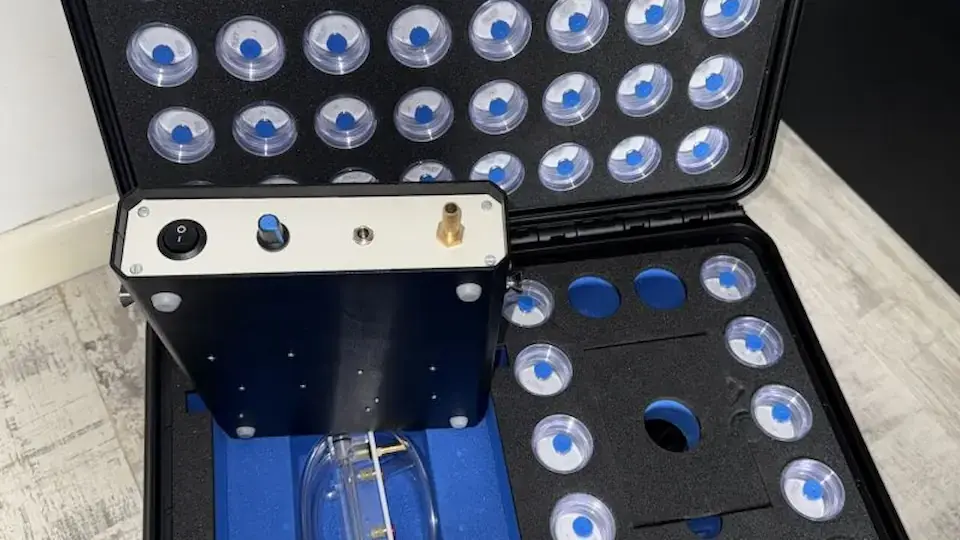
IAQ testing is a point-in-time professional assessment. A specialist visits your building, takes air samples using calibrated laboratory-grade equipment, and analyses them for a comprehensive range of pollutants. This is how you find out what's actually in your air — not just whether CO2 is within an acceptable range, but whether there are VOCs, particulates, biological contaminants, or other hazards present that no standard monitor would ever flag.
Both services are part of our broader air quality monitoring and indoor air quality testing offering for the education sector. If you're worried about lingering smells, our VOC testing service might be the best fit.
Comparing Your Options: CO2 Monitors, IoT Monitors, and Professional IAQ Testing
| Basic CO2 Monitor | IoT Air Quality Monitor (e.g. Aranet) | Professional IAQ Testing | |
|---|---|---|---|
| What it measures | CO2 only (sometimes temp) | CO2, temp, humidity, VOCs, PM | Full pollutant spectrum inc. formaldehyde, NO2, biological contaminants, PM2.5 |
| Sensor accuracy | Consumer-grade NDIR | Professional-grade NDIR | Laboratory-calibrated instruments |
| Data logging | None | Continuous cloud logging | Point-in-time with full report |
| Multi-room coverage | One device, one room | Scalable across whole building | Whole-building assessment |
| Actionable insights | Traffic light prompt only | Trend data, alerts, dashboards | Expert analysis, root cause identification, remediation recommendations |
| Identifies pollution sources | No | Partial (flags elevated readings) | Yes — pollutants can usually be traced back to source |
| Ongoing utility | Very limited | High | Essential baseline; repeat periodically |
| Best used for | Basic CO2 awareness | Continuous operational monitoring | Compliance, concern investigation, new builds, refurbishments & layout changes |
| Cost tier | Free (if you still have one), or very cheap to replace (<£100) | Mid-range investment (£150-200 per room, plus installation and software access) | Mid-range investment (anywhere from £500 to £2000, depending on building size and testing methods used) |
The honest answer for any school that takes its duty of care seriously is that you need both ongoing monitoring and periodic professional testing. They answer different questions, and the combination is the only way to build a genuinely complete picture of what your students and staff are breathing.
What Schools Should Do Next
The DfE programme is over. The monitors it provided are inadequate for the task of understanding air quality in a school building, and the guidance was never enough to make meaningful ventilation improvement happen. That doesn't mean the problem goes away — it means schools need to take ownership of it.
Here's a practical starting point:
- Don't rely on a single monitor. If you're still using a COVID-era DfE device or a cheap CO2 sensor, treat it as a supplementary prompt, not a reliable monitoring system.
- Commission a professional IAQ test to establish what's actually in your air. This is particularly important if you've had any concerns raised by staff or parents, if your building is older, recently refurbished, or near a busy road. See more: IAQ Testing service.
- Deploy a network of IoT sensors across your key spaces — classrooms, staffrooms, corridors, and eating areas — and review the data regularly. See more: IAQ Monitoring service.
- Use BB101 and government guidance as your benchmark — our 2026 guide for air quality in schools explains the criteria your school should be meeting to keep staff and students safe.
- Talk to a specialist. Not because it's complicated, but because a fresh pair of expert eyes on your building will identify things that aren't obvious from the inside. Take action today: get expert advice for your school.
Our team works with schools and educational facilities across the UK. We understand the budget pressures, the building constraints, and the duty of care you have to the people inside your building.
We can help you understand your air, identify any risks, and put the right monitoring and ventilation approach in place — without unnecessary cost or complexity. Get in touch with us today.
Case Study: Indoor Air Quality Testing in a Surrey School
We were contacted by a school in Surrey to assess their indoor air quality during a teacher's health declined with 'long COVID', leaving them reliant on a wheelchair. The school's management team brought us in to assess their air quality due to the high risk associated with high levels of pollutants and existing respiratory conditions. To make sure everyone was safe, we conducted a range of indoor air quality tests and deployed professional-grade air quality monitors throughout the school, and provided them a full breakdown of their air quality with recommendations. Continue reading: Indoor Air Quality Testing in a Surrey School.
Find more resources like this on our Education Sector page.