Air Quality Limits for Plastics Manufacturers: A Guide to Working with Plastic Fumes
Plastics manufacturing typically produces significant amounts of indoor pollution which can cause health problems and lead to compliance breaches when not dealt with correctly. With several new reports of the Health and Safety Executive (HSE) cracking down on air quality in industrial workplaces recently, it's vital to know, and act upon, your responsibilities as a facilities manager for an industrial or manufacturing facility.
Whether you run an injection moulding facility, an extrusion line, or a blow moulding operation, the thermal processing of plastic resins releases airborne contaminants that pose a genuine risk to worker health — and also a clear compliance obligation under UK law.
This guide covers the pollutants created by plastics processing, the legal exposure limits that apply under WEL, how to detect and control them, and what HSE inspectors actually look for when they visit your site.
Related: COSHH Compliance Checklist for Plastics Manufacturing.
What HSE Inspectors Look for in Plastics Manufacturing Facilities
When HSE inspectors visit a plastics or injection moulding facility, they are primarily assessing whether you have met your duties under the Control of Substances Hazardous to Health Regulations 2002 (COSHH).
In practice, this means they may request to see:
- A current, documented COSHH assessment that identifies the specific plastics and additives you process and the fumes they can produce
- Evidence that exposure to hazardous substances is being adequately controlled — typically through local exhaust ventilation (LEV)
- Records showing that LEV systems are being maintained and tested at the required frequency
- Air monitoring data from different areas around the facility
- Operator training records demonstrating that workers understand the hazards and the controls in place
HSE's sector-specific guidance for the plastics industry — particularly PPIS13: Controlling fume during plastics processing — is a document inspectors actively reference.
Which Pollutants Are Created During Plastics Processing and Injection Moulding? (PPIS13)
The fumes produced during plastics processing aren't a single substance — they're a complex and variable mixture that depends on the polymer being processed, its additives, the processing temperature, and the amount of time in the barrel.
According to HSE guidance PPIS13, common pollutants produced by different plastics include:
- PVC — hydrogen chloride
- Fire-retarded ABS — styrene, phenol, butadiene
- Polypropylene — formaldehyde, acrolein, acetone
- Acetals (e.g. POM) — formaldehyde (particularly hazardous; acetal processing can cause a 'blowout' event releasing large quantities of formaldehyde if the material overheats)
- Low-density polyethylene — butane and other alkanes and alkenes
- Polystyrene — styrene and aldehydes
Beyond the base polymer, additives — including flame retardants, pigments, stabilisers, and fillers — can themselves produce hazardous breakdown products. This makes it essential to obtain and review safety data sheets (SDS) for every formulation you run, not just the base resin.
Plastics fumes can act as respiratory sensitisers, irritants, and in some cases carcinogens. Immediate effects can include severe irritation to the eyes, nose, and lungs. Prolonged or repeated exposure can cause occupational asthma and, in some cases, irreversible lung damage.
Can You Detect Plastic Fumes Without Testing Equipment?
In some cases, yes — but not reliably, and certainly not in a way that satisfies your legal obligations.
Some fumes are detectable by smell or visible as a haze above machinery. Styrene, for example, has a characteristic sweet odour. Hydrogen chloride from PVC has an acrid, pungent smell. A sharp or unusual odour during processing is a useful early warning that something is wrong — typically that material is overheating or the wrong grade is being run.
However, relying on sensory detection alone is not a compliant approach. If your COSHH assessment indicates that hazardous fumes may be present, you need quantitative data — and that requires professional air quality testing.
View our Industrial Fume Testing Page for tailored information and advice.
Common Air Quality Problems in Manufacturing Facilities
Beyond the specific chemical hazards of plastics processing, manufacturing environments frequently present a range of air quality challenges:
Inadequate LEV capture
Extraction hoods positioned too far from the fume source, or with insufficient face velocity, allow contaminated air to enter the worker's breathing zone before it is captured. This is one of the most common failures identified during LEV testing and can put your workers at severe risk.
Degraded filter performance
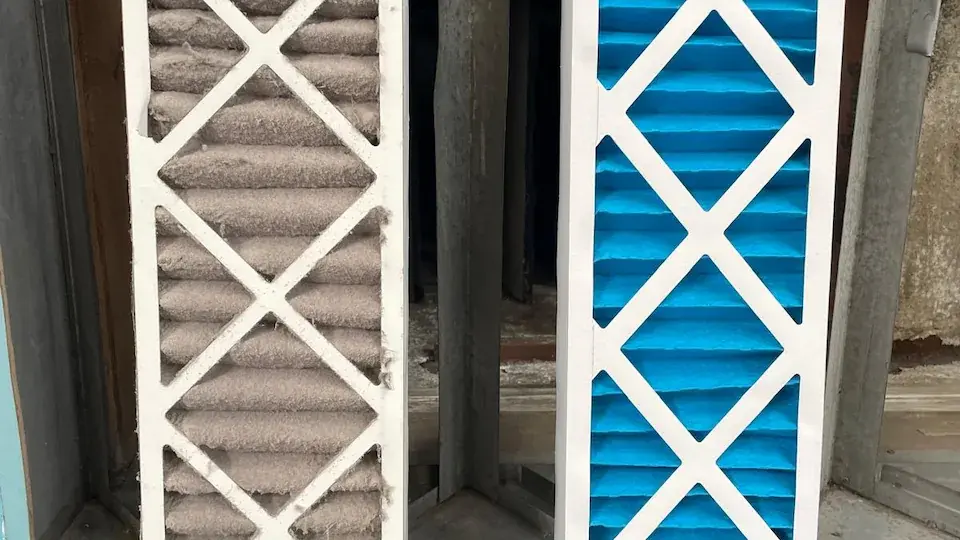
Filters that are overdue for replacement restrict airflow and reduce the effectiveness of the extraction system — sometimes without triggering any visible warning.
Smart filtration management solves this by tracking system performance in real time rather than relying on fixed schedules to save money and reduce waste. Take a look at our Filters Replacement service if your filters are starting to get blocked or haven't been changed in a while. Blocked filters are an easy fix but are often overlooked and cause much bigger issues down the line.
General ventilation dilution only
Some facilities rely entirely on general dilution ventilation rather than source capture. This approach can reduce average concentrations across the space, but it doesn't prevent workers near the fume source from being exposed at peak concentrations.
Material grade changes without COSHH review
Switching to a new formulation (even within the same polymer family) can change the fume hazard profile significantly. HSE guidance specifically highlights undisclosed grade changes as a common cause of unexpected fume problems.
Purging and maintenance activities
Routine tasks like purging, clearing blockages, and burning out blocked nozzles generate far higher fume concentrations than normal production. These activities need dedicated extraction and, in some cases, a separate risk assessment.
What Are the Workplace Exposure Limits for Plastic Fumes?
Workplace Exposure Limits (WELs) in Great Britain are set by the HSE and published in EH40/2005 Workplace Exposure Limits (currently the fourth edition, 2020, with subsequent amendments). They are legally binding under COSHH — exceeding a WEL is a breach of law.
WELs are expressed as:
- Long-term exposure limit (LTEL): the concentration averaged over an 8-hour working shift (8-hour TWA)
- Short-term exposure limit (STEL): the maximum concentration allowed over any 15-minute period
Both limits apply simultaneously. For substances classified as carcinogens, mutagens, or respiratory sensitisers, the legal duty goes further: exposure must be reduced to as low as is reasonably practicable (ALARP), even if it remains below the WEL.
Key WELs relevant to plastics processing include:
|
Substance |
8 hour TWA |
15 min STEL |
Notes |
|
Styrene |
100ppm |
250ppm |
Also a respiratory sensitiser |
|
Formaldehyde |
2ppm |
2ppm |
Carcinogen; ALARP duty applies |
|
Hydrogen Chloride |
1ppm |
5ppm |
From PVC processing |
|
Acrolein |
0.02ppm |
0.05ppm |
Very low limit; highly irritating |
|
Phenol |
2ppm |
4ppm |
Skin absorption also a risk |
|
Acetone |
500ppm |
1500ppm |
Lower toxicity but flammable |
*Always verify against the current edition of EH40, as limits are subject to revision.
Inhalable and respirable dust WELs also apply where particulate matter is present. General inhalable dust has a WEL of 10 mg/m³ (8-hr TWA) and respirable dust 4 mg/m³, though specific polymers or additives may have lower substance-specific limits.
The only way to know whether your workers' exposures are within these limits is through professional WEL exposure testing. See our industrial fume testing page for information specific to the manufacturing industry.
What Is LEV Testing in the Manufacturing Sector?
Local exhaust ventilation (LEV) is the primary engineering control for managing fume exposure in plastics manufacturing. An LEV system captures contaminated air at or near its source — before it reaches the worker's breathing zone — and extracts it safely away from the facility.
Under COSHH Regulation 9, every LEV system must be thoroughly examined and tested at least once every 14 months by a competent person. The formal process is known as a Thorough Examination and Test (TExT), and it must be carried out in accordance with HSG258: Controlling airborne contaminants at work.
A TExT for plastics manufacturing typically includes:
- Airflow and face velocity measurements at hoods and capture points
- Duct velocity readings to verify transport velocity is sufficient
- Fan performance assessment
- Filter condition checks
- Control effectiveness review — confirming that the system actually captures contaminants as designed
- Photographs and a written report with any identified defects and recommended actions
Records of each test must be retained for a minimum of five years and must be made available to HSE on request.
In higher-risk processes, or where risk assessment identifies faster performance degradation, testing more frequently than 14 months may be required. For plastics processing involving particularly hazardous substances, tighter intervals should be considered.
Competent LEV testing engineers typically hold BOHS P601 qualification (or equivalent), which covers the thorough examination of LEV systems in line with HSG258.
Find out more about our WEL exposure testing services.
How to Demonstrate Air Quality Compliance to HSE
Compliance isn't just about having the right controls in place, it's about being able to show that they work, and that you have a systematic approach to maintaining them. HSE inspectors are looking for a documented management system just as much as they’re looking for functional equipment.
The core elements of demonstrable compliance for a plastics manufacturer are:
-
A current COSHH assessment - This must identify every substance you process, the fumes it can produce, and the controls required. It must be reviewed whenever materials or processes change, and we recommend this is complete at least annually.
-
Air monitoring data - WEL exposure testing provides quantitative evidence that airborne concentrations are within legal limits. This is particularly important for carcinogens and sensitisers, where the ALARP duty requires ongoing demonstration that you are driving exposure as low as possible.
-
LEV examination records -Your most recent TExT certificate, along with at least five years of historical records, must be available. Any defects identified must have been actioned, with a clear timeline.
-
Ongoing monitoring - For continuous processes, indoor air quality monitoring provides real-time visibility of conditions on the factory floor, enabling you to identify drift before it becomes a compliance issue or a health incident.
-
Maintenance records - Daily, monthly, and annual checks on LEV systems and temperature control equipment, as set out in PPIS13, should be recorded and retained.
-
Training records - Evidence that machine operators have been trained in safe processing procedures is a standard expectation, including purging, handling alarm conditions, and emergency procedures.
If you are facing an HSE inspection, or simply want confidence that your current compliance position is sound, an independent indoor air quality assessment provides an honest baseline and a clear record that you are taking your duties seriously.
Talk to the ARM Environments team about compliance in your facility by getting in touch, or read more on our Industrial Sector page.