Preventative Maintenance Guide for HVAC Systems
Ventilation systems are easy to overlook — until something goes wrong. When a system fails, the impact is immediate: poor air quality, uncomfortable environments, and the potential for costly emergency repairs. Suddenly, you've got unpleasant odours, skyrocketing energy expenditure, and uncontrollable temperatures to deal with. Preventative maintenance exists to stop that from happening.
This guide covers what preventative maintenance involves for ventilation systems across various sectors, why it matters, and what building managers should be doing to stay ahead of problems. Maintaining consistent air quality is easier — and sometimes cheaper, too — when we work proactively rather than reactively.
What Is Preventative Maintenance for Ventilation?
Preventative maintenance means carrying out regular, scheduled checks and servicing on your ventilation and HVAC systems — before faults develop into failures. Rather than reacting to problems, you're identifying and addressing them early.
For ventilation systems, this typically includes filter replacements, ductwork inspections, AHU servicing, and performance checks to ensure air is being moved at the right rate and quality.
The goal isn't just to keep the system running. It's to keep it running well — protecting both the people inside the building and the efficiency of the equipment itself.
Find out more about our services.
Air Handling Unit Servicing
Preventative Ventilation Maintenance
Preventative ventilation maintenance is the scheduled, proactive upkeep of extract, supply, and air handling equipment — carried out before problems start affecting air quality or system performance. It sits at the centre of any credible facilities management strategy, covering everything from filter changes to full AHU servicing and ductwork inspections.
Rather than waiting for a fault to show up as a comfort complaint or an unexplained spike in energy use, preventative ventilation maintenance catches wear, contamination, and airflow shortfalls early. For most buildings, that means combining fixed-interval servicing with condition-based checks, so effort and budget go where they're actually needed rather than against a generic calendar.
Why Preventative Maintenance Matters
A neglected ventilation system doesn't just underperform — it can actively harm the people using a building. Dirty filters, blocked ductwork, and poorly maintained components all contribute to the build-up of pollutants indoors. Consistent ventilation maintenance is what stops these small issues compounding into something that affects occupant health or building compliance.
Poor indoor air quality has been linked to reduced concentration, increased sick days, and in more serious cases, health conditions caused by prolonged exposure to contaminants. In regulated environments like healthcare or food production, the consequences of inadequate ventilation can be particularly severe.
Beyond occupant health, there's the financial case. Systems that aren't maintained draw more energy, wear out faster, and are more likely to need expensive reactive repairs. Regular servicing is almost always cheaper than emergency replacement.
Learn more about the cognitive effects of poor air quality.
Key Areas of a Preventative Maintenance Programme
1. Filter Replacements
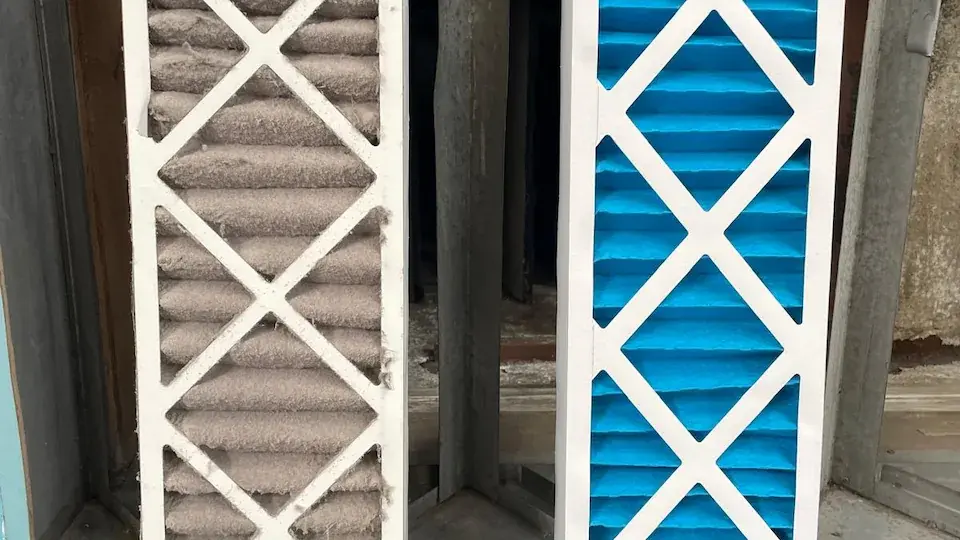
Filters are the first line of defence against airborne pollutants. Over time they become blocked, restricting airflow and forcing the system to work harder. Regular replacements — ideally timed to actual system conditions rather than arbitrary schedules — keep efficiency high and air quality consistent.
View our Filter Replacement service
2. AHU Servicing
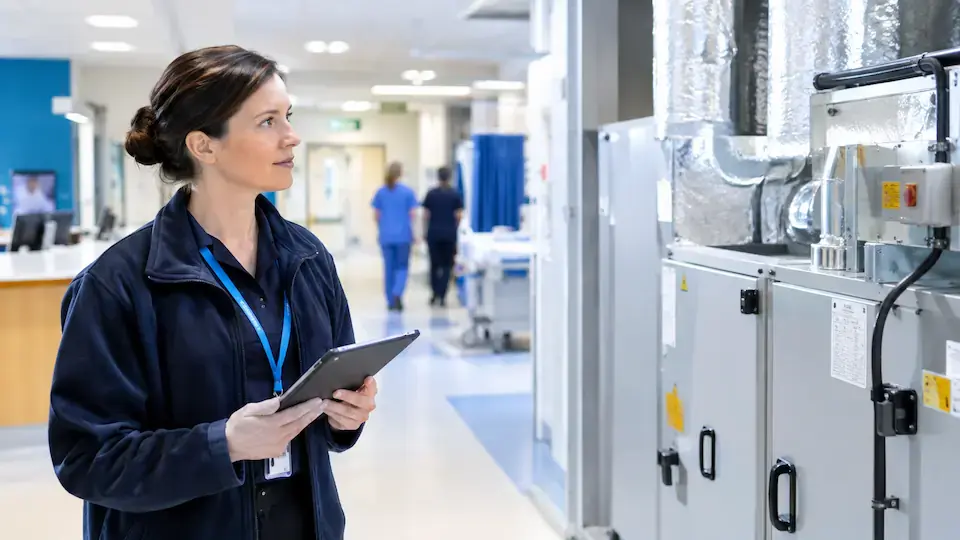
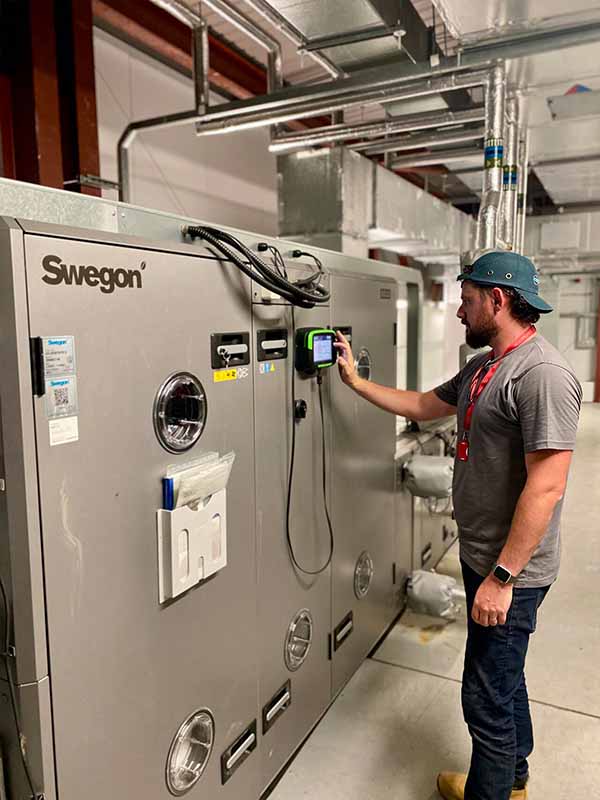
The Air Handling Unit is the heart of most ventilation systems. Regular servicing covers components like fans, coils, belts, and drainage — catching wear and contamination before it causes a breakdown. An annual condition report gives a clear picture of where the system stands and what attention it needs.
View our AHU Condition Reports or AHU Maintenance Service.
3. Ductwork Cleaning
Over time, ductwork accumulates dust, biological growth, and debris. This reduces airflow, degrades air quality, and in some environments creates a serious hygiene risk. Regular cleaning is essential for both performance and compliance.
Learn about our Ductwork Cleaning service
4. Fire Damper Testing
Fire dampers are a life-safety component of any ventilation system. They must be tested regularly to confirm they will operate correctly in an emergency. This is a legal requirement detailed in BS 9999 and The Regulatory Reform (Fire Safety) Order 2005 — and one that is frequently overlooked.
View our Fire Damper Testing service
5. Ventilation Validation
Maintenance isn't only about the physical components, it's also about confirming the system is delivering the right amount of fresh air. Ventilation validation tests whether airflow rates meet the design specification and regulatory requirements, flagging shortfalls before they become compliance issues.
View our Ventilation Validation service
Preventative Maintenance of Air Handling Units
The Air Handling Unit is usually where a preventative maintenance programme earns its keep fastest. AHUs are complex, mechanically active, and central to everything the ventilation system is trying to do — which means they're also where deferred maintenance shows up first as reduced performance, higher energy draw, or an unplanned breakdown.
A proper preventative maintenance regime for an AHU covers fans, motors, belts, coils, filters, dampers, and drainage — checking each for wear, contamination, and correct operation rather than waiting for one of them to fail outright. Coils in particular are easy to overlook: a dirty coil forces the fan to work harder to move the same volume of air, quietly increasing energy costs long before anyone notices a comfort issue.
An annual AHU condition report is the best way to keep this under control. It gives you a documented, honest picture of where each unit stands, flags anything approaching end-of-life, and turns ad-hoc servicing into a planned programme you can budget against.
How Often is Ventilation Maintenance Required?
There's no single answer, because it depends on the system type, the environment it serves, and how hard it's working. A commercial kitchen will need more frequent attention than a quiet office. Healthcare environments have their own specific guidance under HTM standards.
As a general principle, filters should be checked at least quarterly, AHUs serviced annually, and ductwork cleaned every two to five years depending on usage. Fire dampers should be tested annually in line with current guidance.
If you're unsure where your system stands, an AHU condition report is a good starting point — it gives you an honest assessment of current condition and a clear maintenance roadmap.
Read more about HVAC Condition Reports

What Does an HVAC Maintenance Plan Look Like?
A maintenance plan isn't a single visit — it's a structured programme that sets out what needs to be done, how often, and by whom. In practice, most plans are built around a combination of scheduled tasks and condition-based checks. Getting this right is the difference between ventilation maintenance that actually prevents problems and a box-ticking exercise that just delays them.
A typical plan will include:
- Quarterly — filter condition checks, visual inspections, basic performance monitoring
- Bi-annually — more detailed system checks, coil cleaning where required, drainage inspections
- Annually — full AHU service, fire damper testing, ventilation performance checks
- As needed — ductwork cleaning, reactive works flagged through monitoring or condition reports
The plan should be tailored to your building. A single-tenancy office block has different demands to a hospital ward or a school with a busy dining hall. A good maintenance provider will build the programme around your system, not hand you a generic schedule.
Documentation matters too. A well-run maintenance plan produces a paper trail — service records, test certificates, and condition reports — that demonstrates compliance and supports future decisions about system upgrades or replacement.
Healthcare Sector
Healthcare environments operate under some of the most stringent ventilation requirements of any sector. HTM 03-01 sets out detailed guidance on ventilation in hospitals and healthcare premises, covering everything from filter grades to pressure relationships between spaces. Maintenance here isn't just about comfort — it directly affects infection control. Lapses in filter management or AHU servicing can have serious clinical consequences.
View our Healthcare sector page
Education Sector
Schools present a unique challenge: high occupancy, variable use patterns, and budgets that are often under pressure. CO₂ levels in classrooms are a well-documented issue, and poor ventilation has a measurable impact on pupil concentration and attendance. Maintenance in education needs to be planned around term times and holiday periods, with minimal disruption during the school day.
View our Education sector page
Commercial Office Sector
For offices, ventilation maintenance increasingly intersects with ESG targets and occupant wellbeing. Tenants and employees are more aware of air quality than they used to be, and building certifications like BREEAM and WELL require documented evidence of system performance. Landlords and facilities managers face growing pressure to demonstrate that their buildings are well maintained.
View our Commercial Offices sector page
Hospitality Sector
Hotels and restaurants operate continuously, often with systems running around the clock. Kitchen environments in particular generate grease-laden air that accumulates rapidly in ductwork, creating both a hygiene risk and a fire hazard. Maintenance intervals in hospitality are generally shorter than in other sectors, and grease duct cleaning is a regulatory requirement rather than an optional extra.
View our Hospitality sector page
Industrial Sector
Industrial environments often deal with airborne contaminants — dust, fumes, chemical vapours — that place significant strain on ventilation systems. Workplace Exposure Limits (WELs) are a legal concern, and ventilation systems are a primary control measure. Maintenance in industrial settings needs to account for the specific nature of the contaminants involved, and validation testing is often needed to confirm that extraction is performing to the required standard.
View our Industrial sector page
Recommended Ventilation Maintenance Schedules
| Sector | Key Maintenance Considerations | Typical Requirements |
|---|---|---|
| Healthcare (hospitals & clinics) | Ventilation is critical for infection control and clinical safety. | Filter management, AHU servicing, pressure relationship checks, ventilation performance testing, HTM 03-01 compliance |
| Education (schools) | High occupancy and fluctuating use make ventilation particularly important. | CO₂ monitoring, filter checks, AHU servicing, ventilation performance checks, maintenance during holidays where possible |
| Commercial Offices | Focus on occupant wellbeing, system performance, and documented compliance. | Filter checks, AHU servicing, ventilation performance testing, condition reporting, BREEAM/WELL evidence |
| Hospitality | Systems often operate continuously, with kitchens creating additional grease and fire risks. | Frequent filter checks, AHU servicing, grease extract cleaning, ductwork cleaning, fire safety inspections |
| Industrial (factories) | Systems must manage specific airborne contaminants and protect workers. | Filter checks, extraction performance testing, ductwork cleaning, contaminant-specific maintenance, WEL compliance |
Note: Maintenance frequencies should always be tailored to the building, ventilation system, occupancy, usage, and sector-specific requirements.
The Role of Smart Technology in Preventative Maintenance
Traditional maintenance schedules are based on time intervals. The problem is that a filter in a busy urban building might need replacing in three months, while the same filter in a lower-traffic environment could last considerably longer.
Smart filtration management solves this by using sensor data to track system performance in real time, triggering maintenance only when it's actually needed. This reduces waste, lowers costs, and ensures the system is always performing at its best.
Find out more about Smart Filtration Management
Build a Preventative Maintenance Programme Today
If your ventilation system hasn't had a structured maintenance review, now is a good time. A condition assessment will tell you exactly where you stand — what's in good shape, what needs attention, and what can be planned in over the coming months.
ARM Environments provides the full range of ventilation maintenance services, from filter changes and AHU servicing through to ductwork cleaning, fire damper testing, and performance validation. We work across commercial, healthcare, education, and industrial environments throughout the UK.
Talk to our team to discuss the best place to start.
FAQs
What sort of maintenance is required for ventilation systems?
Ventilation systems need a mix of scheduled and condition-based work: regular filter replacements, AHU servicing (fans, coils, belts, and drainage), ductwork cleaning, fire damper testing, and periodic ventilation validation to confirm airflow rates still meet design and regulatory requirements. Most buildings need all of these to some degree — the frequency and priority just shifts depending on the sector and how hard the system works.
What happens if a ventilation system isn't maintained?
Air quality degrades as filters clog and ductwork accumulates dust, debris, and biological growth. The system draws more energy to compensate, components wear out faster, and the likelihood of a costly reactive repair or full breakdown increases. In regulated environments, a lack of maintenance can also mean falling out of compliance with fire safety, HTM, or Workplace Exposure Limit requirements — with the health and legal consequences that follow.
How often should ventilation filters be replaced?
There is no universal replacement interval for ventilation filters. Filter life depends on factors such as outdoor air quality, occupancy, operating hours, and the type of filter being used. Filters should be inspected regularly and replaced when their condition or pressure drop indicates that they are no longer performing effectively. Smart filtration monitoring can help determine when replacement is actually needed rather than relying solely on a fixed calendar schedule.
How do I know if my ventilation system needs maintenance?
Warning signs include unusual noises, poor airflow, persistent odours, uncomfortable temperatures, rising energy consumption, visibly dirty filters, condensation, and recurring occupant complaints about air quality. A drop in measured airflow can also indicate problems with filters, fans, coils, dampers, or ductwork. Regular condition inspections can identify these issues before they develop into major failures.
What should be included in an HVAC maintenance plan?
A ventilation maintenance plan should identify the systems and equipment being maintained, the required inspection and servicing intervals, responsibilities, testing requirements, and the records that need to be retained. It should typically cover filters, AHUs, fans, coils, dampers, ductwork, drainage, fire dampers, and ventilation performance. The programme should then be adjusted according to the building's specific risks, occupancy, and operating conditions.
What records should be kept for ventilation maintenance?
Maintenance records should document servicing, inspections, repairs, filter replacements, cleaning, testing, and any identified defects. Depending on the building and system, this may include AHU condition reports, fire damper test certificates, ventilation test results, ductwork cleaning records, and filter replacement records. Keeping these documents together provides an audit trail for compliance and helps inform future maintenance, refurbishment, and replacement decisions.