HVAC Airflow Testing in Poole: Case Study
Sometimes occupants know something isn't right before the data confirms it. Staff and students at a university facility in Poole had been reporting stuffy, uncomfortable conditions — the kind of heavy, stale air that makes concentration difficult and hours feel longer than they are. On the face of it, this should not have been a problem. A contractor had recently completed upgrade and adjustment works on the building's ventilation system. If anything, conditions should have improved.
They hadn't. If anything, the client suspected things had gotten worse.
Rather than take the contractor's word that the system was functioning as intended, they called in ARM Environments to carry out an independent ventilation validation — a systematic assessment of whether the HVAC system was actually delivering what the building needed.
Key Challenges
- Post-works performance uncertainty: The recent contractor intervention gave no guarantee of improved performance. Without independent validation, there was no way to know whether the works had been effective, ineffective, or actively counterproductive.
- Occupied building during COVID: With the assessment taking place in May 2021, adequate ventilation was not simply a comfort issue — it was a direct health and safety concern. Poorly ventilated spaces were understood by this point to present a significantly elevated risk of airborne transmission.
- No baseline data: The client had no pre-works IAQ or airflow records to compare against, meaning we were assessing current performance without a reference point.
Airflow Testing Investigation
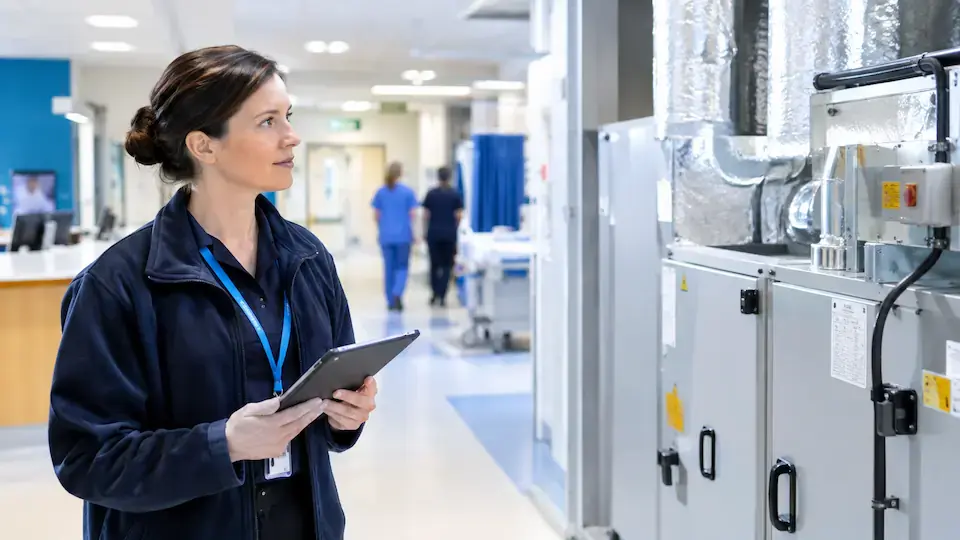
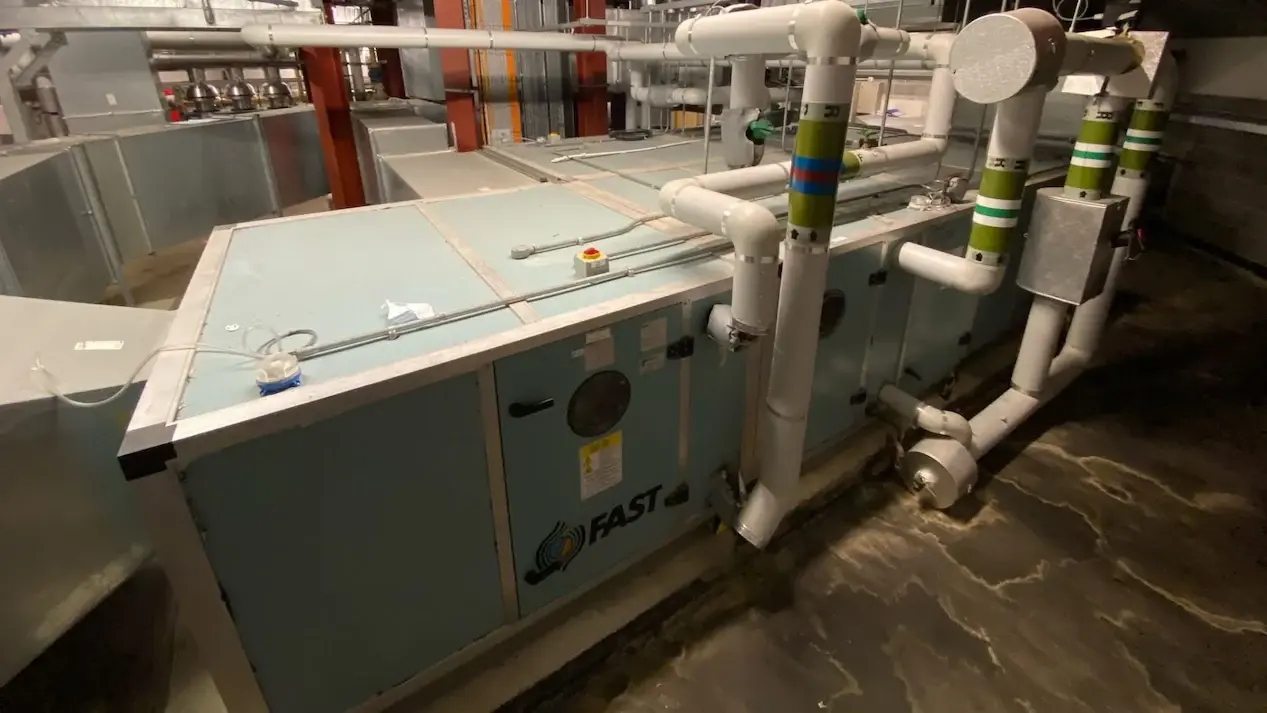
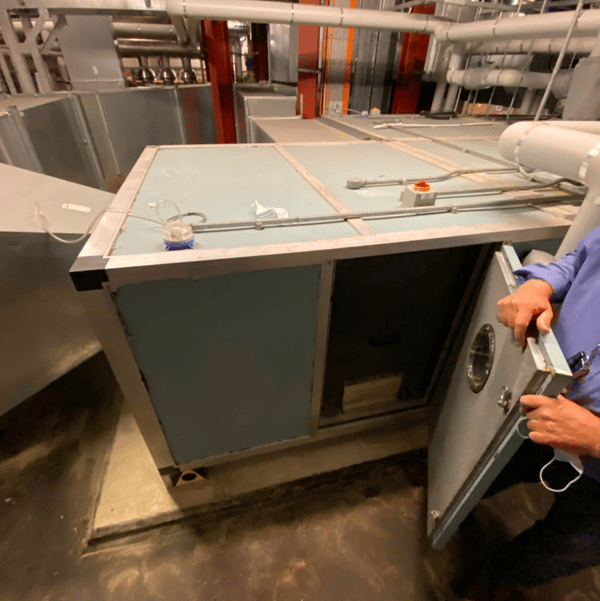
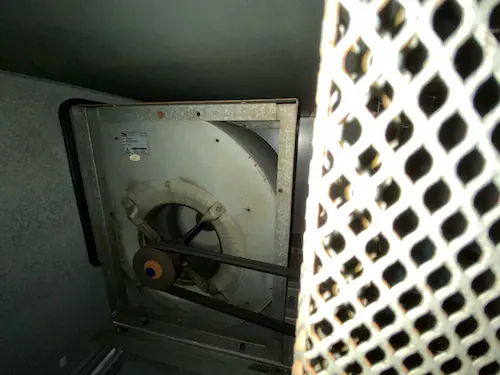
Our engineers examined the AHU and carried out airflow measurement across the system's supply and extract points. The mechanical performance of the unit itself was not the problem — but what we discovered in the control system was.
The AHU's safety interlock — a control mechanism designed to protect the system and its components under abnormal conditions — had been left in a tripped or incorrectly configured state following the contractor's works. Safety interlocks in HVAC systems are typically triggered by fault conditions such as a fire alarm signal, a smoke detector activation, a pressure alarm, or a damper that has failed to prove its open position. When an interlock fires, it is designed to shut the system down or restrict its operation. In this case, the interlock had not fully reset after the works were completed, meaning the AHU was running in a permanently restricted state — supplying a fraction of the designed airflow to the occupied spaces above.
The system wasn't broken in any dramatic sense. Fans were spinning, the BMS showed no active alarms, and to a casual visual inspection everything appeared operational. But the building was receiving significantly less fresh air than it should have been — and nobody had noticed, because nobody had measured it.
See more: Ventilation Validation Service
The Outcome
Once the interlock issue was identified and correctly reset, the system returned to its designed operating parameters. Airflow rates were re-measured and confirmed to be delivering adequate air changes across the occupied zones.
The client's instinct had been right. And the lesson was one we see repeated across commercial and educational buildings with some regularity: HVAC systems can appear to be running while quietly failing to perform. A contractor completing upgrade works does not automatically validate that those works have achieved the intended result. That validation requires independent measurement.
In 2021, with a pandemic still very much in progress, the stakes of that distinction were unusually high. Ventilation is one of the most effective tools available for reducing airborne transmission risk in occupied spaces — but only if it is actually working.
"This is exactly why we advocate for post-works validation as standard, not optional. The interlock issue here was a straightforward fix once identified — but without measurement, it would have remained invisible indefinitely. The occupants would have continued breathing stale, under-ventilated air with no idea why."
Adam Taylor, CEO
Ventilation Validation in Poole and Dorset
If your building has recently had HVAC works completed, or if occupants are reporting conditions that don't match expectations, independent ventilation validation provides the objective evidence you need. ARM Environments delivers ventilation validation and IAQ assessments across Poole, Bournemouth, Dorset, and the South of England.