.webp)
MVHR Air Filter Changes in Central London: Case Study
Why a Central London New-Build Struggled to Meet Part F Building Regulations
Central London's air quality is, to put it plainly, poor. The concentration of road traffic, rail infrastructure, and construction activity means that harmful gases and particulate matter — Nitrogen Dioxide (NO₂), Carbon Dioxide, PM2.5, PM10 — are consistently elevated across much of the city. For most occupied buildings, this is a background concern. For a new residential development trying to open its doors, it can become a serious compliance obstacle.
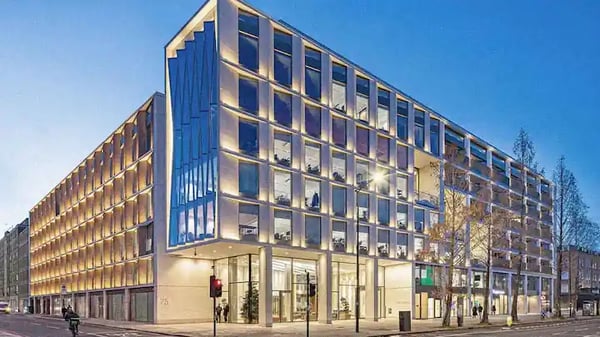
Our client's newly-constructed mixed-use block sits in one of London's most challenging air quality locations: tightly bounded by Euston train station, an active construction project, and the junction of the A501 and Tottenham Court Road. To meet Approved Document F of the Building Regulations 2010, a building either needs to demonstrate that outdoor pollutant exposure levels fall below defined thresholds — or it must install sufficient filtration to keep indoor air clean regardless of what's happening outside.
From the outset, it was clear this building was unlikely to rely on the outdoor air route.
Key challenges:
- Severely poor outdoor air quality from road, rail, and construction sources
- Repeated difficulty passing Building Regulations outdoor air quality thresholds
- A need to install heavy-duty filtration without disrupting carefully designed MVHR airflow
Outdoor Air Testing: Two Failed Attempts
Our first step was to model the outdoor air quality around the building. The results were not encouraging. We estimated Nitrogen Dioxide concentrations at just under 40 µg/m³ — close enough to the regulatory limit that the council did not consider the modelled result sufficient to proceed with opening the building for residential use.
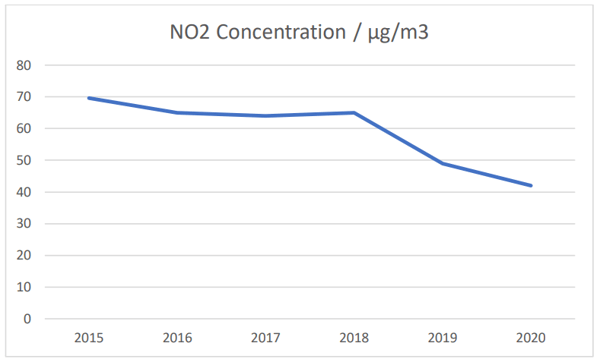
Modelled annual NO2 concentrations at 1.5m above ground at the site
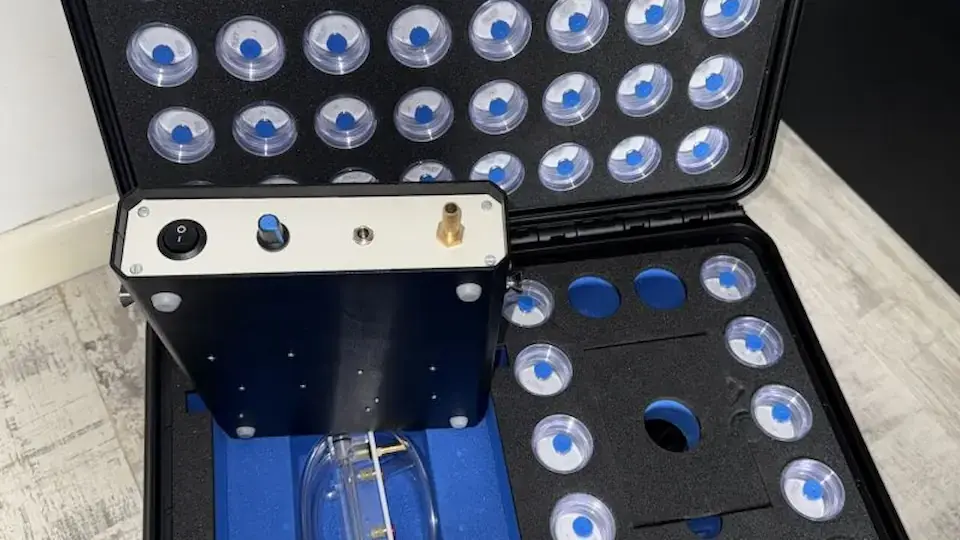
We then installed passive diffusion tubes across the exterior façade to gather real-world measured data. Passive sampling of this kind requires time to be considered statistically reliable — in this case, six months of monitoring. When the results came back, the NO₂ levels were again above the threshold.
The client was understandably frustrated. Further outdoor testing was unlikely to yield a different result: the pollution sources around this site weren't going anywhere. We advised them that, under Approved Document F, technologies may be used to minimise the intake of external air pollutants — meaning the regulations explicitly provide for a filtration-based compliance route when outdoor conditions are genuinely beyond the building's control. The path forward was clear: cleanse the indoor air rather than rely on outdoor air quality that could not be improved.
The Solution: ePM10 and Molecular Filters in the MVHR Units
The building's Nuaire MVHR units were already a carefully engineered component of the building's environmental design, specified to supply 55 litres per second (l/s) of air and extract 40 l/s from the kitchen and 15 l/s from the toilet extractor. Any filter upgrade would need to deliver meaningful pollutant capture without restricting airflow enough to destabilise the system.
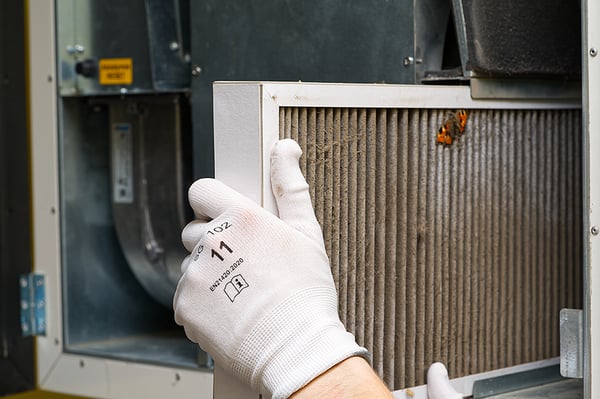
We installed two filter types within the Nuaire MVHR units:
-
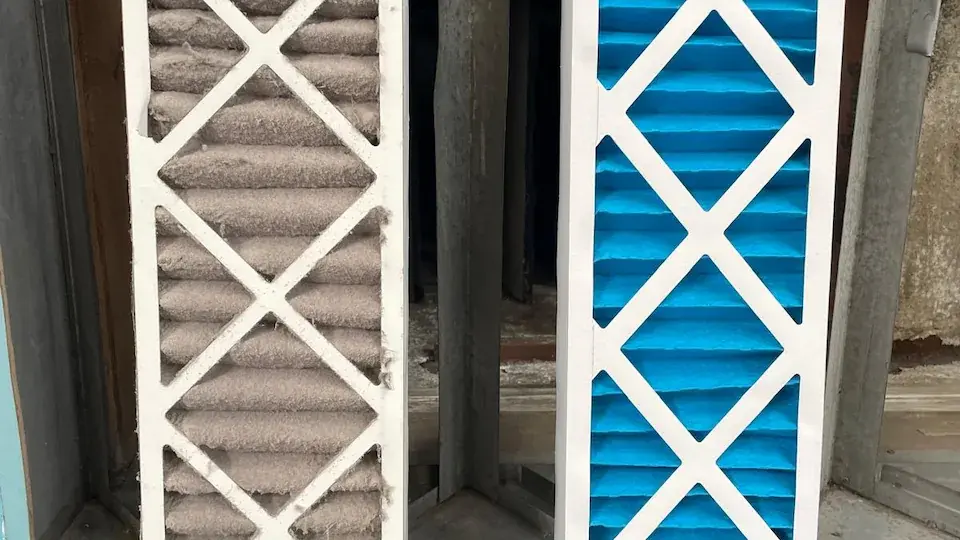
ePM10 filters capture between 50–90% of all PM10 particulate matter — the particles generated by road traffic, the adjacent construction site, and diesel trains at Euston. Removing this fraction of particulate from the incoming air supply is critical in a location where outdoor PM concentrations are persistently elevated.
-
Molecular filters were installed to address the gaseous pollutants, specifically the NO₂ that had caused the building to fail its outdoor air tests on both previous attempts. Molecular filtration works by adsorbing harmful gases from the airstream rather than simply capturing particles, making it the appropriate solution where gas-phase pollutants are the primary compliance barrier.
Following installation, we carried out ventilation validation to confirm that the new filters had not compromised airflow. The measured results were: supply at 58 l/s, kitchen extract at 40 l/s, and toilet extract at 15 l/s — both extract figures identical to their design volumes, and the supply running at 118% of its design volume. The filters had not obstructed the system; if anything, the unit was performing better than its original specification.
With clean indoor air confirmed and airflow validated, the building was finally approved to open for residential occupation.
Find out more about our ePM10 and Molecular Filter supply and installation service.
Results: A Building Finally Open — and Ongoing Support
The client was relieved. After months of testing, modelling, and regulatory back-and-forth, their residents could finally move in — safe in the knowledge that the air inside the building was being actively protected from the pollution surrounding it on all sides.
Given the severity and permanence of the outdoor air quality challenge at this location, we recommended filter changes every 6–12 months as part of an ongoing maintenance programme. ARM Environments continues to supply ePM10 and molecular filters to this building to this day — ensuring that the compliance achieved at opening is maintained, and that residents continue to breathe clean air long after the initial installation.
For residential developers working in areas of elevated urban pollution, this case study carries a straightforward message: if outdoor air quality is the problem, filtration is the solution — but it needs to be the right filtration, installed correctly, and maintained consistently.
ARM's Smart Filter Management programme takes the administration out of ongoing filter maintenance.
"This building's proximity to the A501 and Euston station meant that inevitably the outdoor air quality would be particularly poor — and when your outdoor air is polluted, your indoor air can quickly become unsafe too. What we found, worryingly, was that the NO₂ levels outside this client's building exceeded Building Regulations and EU limits. This poses a challenge because you can't rely on the tried-and-tested method of flushing out the indoor air by introducing clean outdoor air. We were relieved to overcome this issue with the use of Molecular Filters, which work well to capture any harmful gases within the space and didn't significantly impact airflow, either."
Adam Taylor, CEO
Developing or managing a residential or mixed-use building in Central London or another high-pollution area? ARM Environments provides ePM10 and molecular filter installation, MVHR filter supply, and ventilation validation to support Approved Document F compliance. Contact us to discuss your project.
See next: Air Quality Monitoring in Salisbury: Case Study.