Fitwel Air Quality Testing in Central London Office: Case Study
Why this Client Sought Fitwel Air Quality Testing for their Office
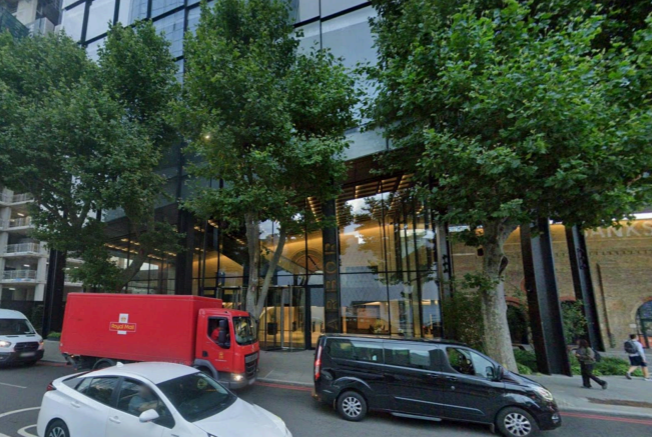
In 2024, a company preparing to move into their new office space in the Arbor Building on Blackfriars Road, London, set their sights on achieving Fitwel certification before the move was fully complete. Fitwel is an internationally recognised healthy buildings standard, and for this client, pursuing it early was a deliberate signal — to their staff, to potential investors, and to the wider market — that they take the health, wellbeing, and productivity of their people seriously.
They contacted ARM Environments to conduct the Fitwel testing for the office space. What happened when we walked through the door made for an instructive case study before the sampling had even begun.
Learn more about our Fitwel Air Quality Testing service here. Or, read our Indoor air quality testing guide.
Key challenges:
- A recently occupied office full of VOC-emitting paints, furnishings, and new materials
- Unintentional introduction of additional VOC sources by the client
- A large office space requiring thorough, non-intrusive sampling
What We Found on Arrival at the Blackfriars Office
The first thing we noticed when we entered the office was a pleasant, distinctive scent — several reed diffusers had been placed around the space. The intention was understandable. Freshly painted walls, new furniture, and recently fitted flooring all off-gas VOCs that produce an unpleasant 'new office smell', and the diffusers were doing a reasonable job of masking it.
The problem is that reed diffusers, scented candles, and similar fragrance products are themselves sources of VOCs. Rather than improving the air quality, they were adding to the Total Volatile Organic Compound (TVOC) load on top of the emissions already present from the fit-out materials. The net effect is that one set of pollutants was being masked by another — making the space smell better while making the air measurably worse.
We discussed this with the client, and the diffusers were promptly moved to another room before testing began.
It's a common scenario in newly fitted offices, and the principle is worth stating plainly: the safest indoor environment is typically the one you can't smell at all. Fragrance in the air — pleasant or otherwise — is almost always a sign that something is being added to it.
How We Conducted the Fitwel Indoor Air Quality Testing
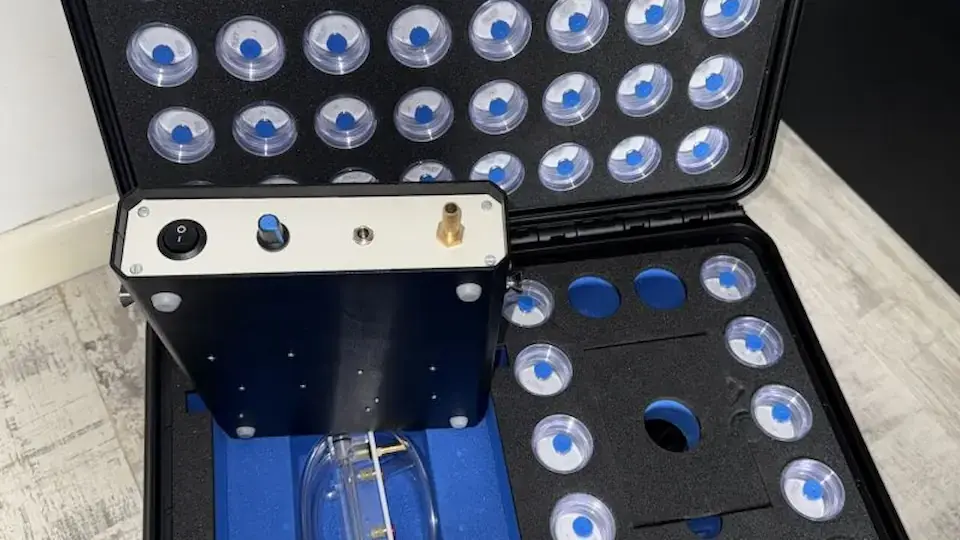
With the diffusers removed, we carried out indoor air quality testing using passive sampling tubes — a method well suited to an occupied office environment. Passive samplers are non-intrusive, silent, and require no power or ongoing attention once positioned. They collect airborne pollutants through natural diffusion over time, building up a representative picture of the air quality across the sampling period rather than capturing a single snapshot moment.
The tubes were strategically placed throughout the office space and left in position for two weeks, after which we returned to collect and assess the samples.
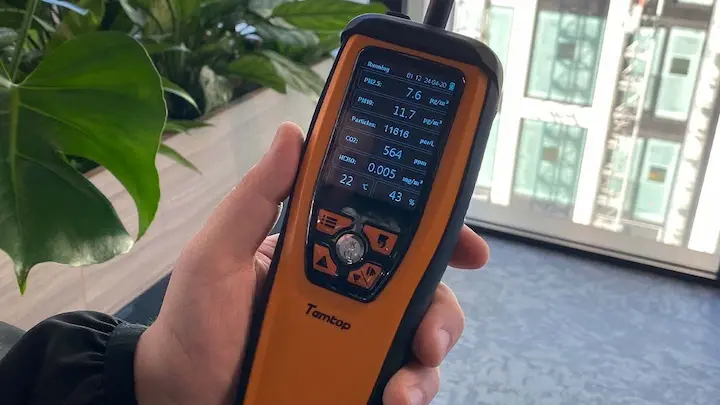
We also used a handheld Active Sampler by Temtop which measures PM2.5, PM10, CO2, Formaldehyde, humidity, and temperature almost immediately. This provides us with an accurate snapshot of the air quality in the office achieved simply by walking around with the device and taking measurements. The downside to Active Sampling methods, however, is that the data collected shows just one point in time.

With both of these methods combined, we would have a thorough understanding of the office space's air quality.
The results showed that TVOC levels and other key pollutants across the office were well within healthy limits, indicating a safe and well-ventilated environment — even accounting for the ongoing off-gassing typical of a recently fitted-out space.
Results: 2-Star Fitwel Certification and a Lasting Record
With the air quality assessment confirming that the office met the required standard, our results formed a key part of the client's Fitwel certification submission. The client was awarded a 2-star Fitwel certification — a strong outcome that recognises genuine commitment to occupant health rather than a minimum-compliance tick.
Beyond the certification itself, we provided the client with a detailed report to keep on file. This creates a baseline — a documented record of their indoor air quality at a specific point in time — against which future tests can be compared. If air quality changes over time due to new equipment, changes in occupancy, HVAC performance issues, or even the reintroduction of scented products, that baseline makes it immediately clear.
It also simplifies the process of evaluating interventions: whether that's assessing the impact of a new or refurbished AHU, a filter replacement programme, or simply understanding the effect of decisions made at office level.
For the business itself, the certification carries value well beyond the internal health benefits. A Fitwel-certified office is a demonstrable signal to the outside world — to prospective employees evaluating employers, and to investors and landlords appraising the space — that this is a company that takes its responsibilities to its people seriously. In a market where ESG credentials are increasingly scrutinised, that signal has real commercial weight.
"When you're measuring air pollution, the best smell is often no smell at all. In this case, the staff were covering the smell of pollutants with other pollutants, increasing the risk of respiratory harm. If you need advice on how to decrease levels of VOCs in newly fitted out buildings, please get in touch."
Adam Taylor, CEO
Fitwel Air Quality Testing in Central London: Look to ARM Environments
Planning a Fitwel, BREEAM, or WELL certification for your London office or commercial space? ARM Environments provides Fitwel testing, BREEAM IAQ testing, and indoor air quality assessments to support healthy building certifications across the UK.
Contact us to discuss your project.
See next: Mould Survey in Salisbury for a School: Case Study