The PANDORA database: Why open access to IAQ matters
PANDORA (a comPilAtioN of inDOor aiR pollutAnt emissions) is a free, open-access database of indoor air pollutant sources, covering 747 emission sources across categories like construction materials, furniture, and cleaning products. It's used by architects, building planners, property managers, and researchers to make evidence-based decisions about materials and ventilation.
How are attitudes changing around IAQ?
In the past decade, indoor air quality (IAQ) has moved from being a niche concern for environmental scientists to a central pillar of healthy building design. Yet despite mounting awareness, much of the world’s IAQ data remains securely held in the hands of the researchers – held by private organisations, consultants, or manufacturers. IAQ data can be valuable, and so it can be understandably difficult to get everyone to work together towards a common goal.
Open access to IAQ data, as championed by initiatives like PANDORA, is beginning to change that. We can anticipate a strong future of IAQ research and more accurate modelling in the near future, potentially informing policy, aiding healthcare, and scaffolding research into pollutants.
If you're looking to better understand your air quality, you can learn more on our indoor air quality testing page.
Why does open-access IAQ data matter?
Indoor air quality affects every one of us, every day. We spend around 90% of our lives indoors, yet we often have less visibility into the air we breathe inside than we do into the weather outside. Without open access, air quality data remains fragmented — stored in isolated spreadsheets, proprietary systems, or unpublished reports. This lack of transparency limits our collective ability to identify patterns, compare building performance, and take evidence-based action.
Open data allows researchers, consultants, and building operators to collaborate more effectively. When datasets are shared, we gain the power to see trends at scale: how ventilation performs across building types, how pollutant levels fluctuate seasonally, and how interventions actually affect occupant wellbeing.
What is the PANDORA database?
Started in 2009, PANDORA is the biggest IAQ database currently accessible freely. Thanks to countless researchers and organisations sharing their data, the database is built upon decades of IAQ studies, figures, and equations. This air quality database follows earlier versions, including the SOPHIE, CIWMB, MEDB-IAQ, and BUMA data banks. The issue with these, however, is that funding eventually dries up and projects get wrapped up once they reach their end date, effectively suspending the useful, but incomplete, data forever within these individual projects. PANDORA bridges these gaps between datasets by storing all accessible information on one database and keeping its doors open to the public.
What PANDORA creates is a continuously-updated library of valuable indoor environment data – one that helps everyone understand and improve their indoor air quality. With data shared rather than hoarded, bigger questions are finally able to be answered:
- Why might schools require different air quality strategies than offices?
- Are seasonal variations in Particulate Matter more pronounced in certain building types?
- How should we design air quality policy around new constructions and refurbishments?
The PANDORA system currently (as of 2025) holds data on 747 sources of pollution which are all carefully categorised into the following groups: construction and decoration materials (354), furniture (38), cleaning products and air fresheners (123), occupants and occupant activities (134), heating and cooking appliances (48), electrical equipment (40), whole room or building (6), and others (4).
|
Category |
Number of sources |
|---|---|
|
Construction and decoration materials |
354 |
|
Occupants and occupant activities |
134 |
|
Cleaning products and air fresheners |
123 |
|
Heating and cooking appliances |
48 |
|
Electrical equipment |
40 |
|
Furniture |
38 |
|
Whole room or building |
6 |
|
Other |
4 |
|
Total |
747 |
Who benefits from open-access IAQ data?
Most importantly, the PANDORA database provides occupants, tenants, and communities to make informed decisions about where they live, work, and study. With the database’s open access policy, knowledge is shifted from the few to the many, meaning individuals can confidently make healthier changes to their lifestyles and living conditions. Schools can improve their ventilation in classrooms most affected by pollutant-emitting materials, hospitals can be more informed about which materials they should avoid in health-sensitive rooms, and offices can create a robust ventilation schedule to keep the most harmful pollutants outside their building, but most importantly it prevents corporations and organisations from selling ineffective air quality solutions or high-emission materials. It ensures people are held accountable because it provides knowledge to everyone.
It’s a step forward for legislation, policy, and sustainability efforts. With PANDORA, we’re more informed about how we keep spaces healthy and green. Governments can use this data to form and adjust legislation, like Control of Substances Hazardous to Health (COSHH) and Workplace Exposure Limits (WELs). It supports policy change like Awaab's Law (2025) which puts more power in the hands of people who actually have to breathe the air of a space every single day — this database gives residents access to data which they can use to fight for higher standards and safer spaces.
Fostering independent education on health
Being open access, anyone can read the data held on the database. This means that individuals concerned about their household pollution, for example, can quickly be informed about the effects of cooking or burning candles on their health. Cleaners can read about the effects of cleaning chemicals on their health and effectively campaign for better PPE or working conditions. We can extract valuable snippets of information from the database, such as cooker hoods (extractor fans) effectively reducing indoor pollution by up to 90% – that’s an incredibly useful piece of knowledge for many people and it’s a societal benefit that this information is open access and not locked behind a business’s paywall.
What's next for IAQ databases?
The movement toward open indoor air quality data is still in its early stages, but momentum is steadily building. For decades, IAQ information was treated as something technical and proprietary — confined to closed systems, consultancy reports, or corporate dashboards. That approach is beginning to change. Projects like the Pandora IAQ Database are demonstrating that collaboration across organisations, sectors, and disciplines is not only possible, but proves that we can create something truly empowering and societally beneficial when we combine our efforts.
Concerned about your IAQ?
We have a range of testing services available, including Indoor Air Quality Testing for general IAQ concerns, WEL testing for workplace compliance, and Healthy Buildings assessments including BREEAM, WELL, and FitWel. If you're not sure where to start, contact an expert here.
FAQs:
What is Pandora?
Pandora is a large open-access database holding information on indoor pollutant sources, including furniture and building materials. This database can be used to make healthier decisions when building, renovating, furnishing, or ventilating a space.
What does PANDORA stand for?
The database PANDORA stands for 'a comPilAtioN of inDOor aiR pollutAnt emissions'. The naming might be a bit of a stretch, but the acronym PANDORA is certainly memorable.
Who can access the PANDORA database?
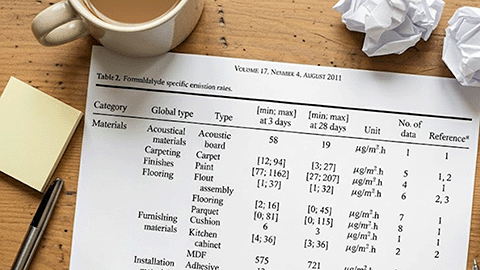
PANDORA is open-access, meaning anyone can use it. The easiest way to learn more about PANDORA is via this link, or you can dig in deeper and read a research paper by Abadie & Blondeau (2011) currently hosted on ResearchGate. The people who might use PANDORA the most include architects, building planners, interior designers, property managers, and those informing legislation, as this data is key to understanding which materials emit the most pollution.
How many pollutant sources are there?
In the PANDORA database, there are currently 747 listed sources of emissions, including gaseous and particulate pollutants commonly emitted from different materials. Construction and Decoration materials constitute the largest section of materials within PANDORA's database, but other categories include Furniture, Cleaning Products, and Occupant Activities.
Is PANDORA free to use?
Yes. PANDORA is entirely open-access; there's no paywall, subscription, or login requirement to view the underlying data.
How is PANDORA different from earlier IAQ databases like SOPHIE or MEDB-IAQ?
Earlier databases such as SOPHIE, CIWMB, MEDB-IAQ, and BUMA were typically tied to project funding, so their data became frozen or inaccessible once funding ended. PANDORA consolidates data from these and ongoing sources into one continuously updated, permanently open database.
Does PANDORA cover UK-specific pollutant sources?
PANDORA draws on international research contributions, so coverage isn't limited to a single country, though the relevance of any given source depends on how closely it matches UK building materials and practices.