IAQ Testing in Blackfriars
- Energy Efficiency Improved
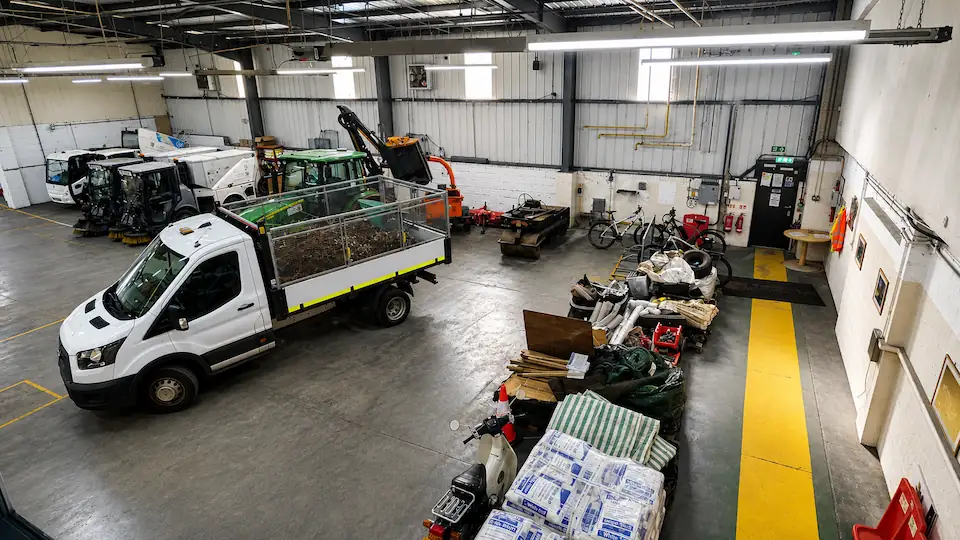
- Vehicle Emissions Risk Identified
- TVOCs Monitored

Measure indoor air quality across your office, identify likely pollutant sources, and get a clear report with practical recommendations for ventilation, filtration, and next steps.
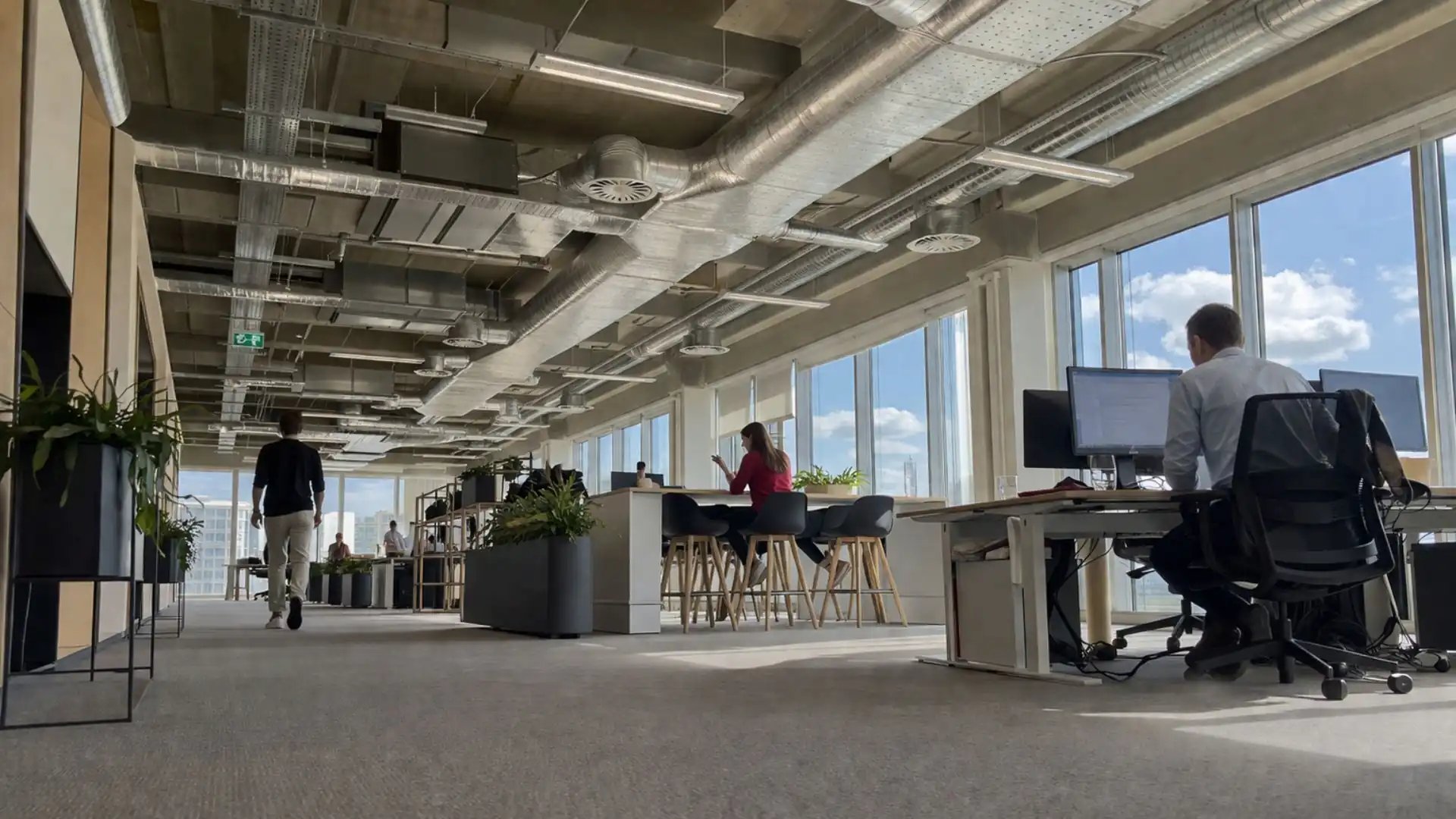
Test indoor air quality in your office, understand what's affecting it, and receive a clear report with practical next steps.
Office air quality is shaped by occupancy density, ventilation rates, furnishings, cleaning products, and how well a building's HVAC system is maintained. Poorly ventilated offices trap CO2, VOCs, and particulates that build materials, printers, carpets, and people themselves release into the space.
Many facilities managers only look into indoor air quality testing for offices once staff start reporting headaches, drowsiness, or stuffy conditions, or once a certification body asks for evidence. By that point, air quality problems are usually well established.
working days are lost to work-related ill health each year
Office air quality testing is useful when you need clearer evidence about ventilation performance, occupant complaints, refurbishment emissions, or whether your indoor environment is supporting occupant wellbeing.
Staff complaining of headaches or stuffy meeting rooms. High CO2 or VOC readings on a consumer monitor you can't explain. A faulty or ageing HVAC system you suspect isn't coping. Mould, damp, or a lingering smell you can't pin down. A recent refit or change in occupancy density. A certification like BREEAM or WELL that needs IAQ evidence. If any of that sounds familiar, it's time to test. We identify the source and give you a clear plan to fix it.
Get the data without guessing at the cause, and identify what's driving poor air quality with a professional office IAQ assessment.
Step 1
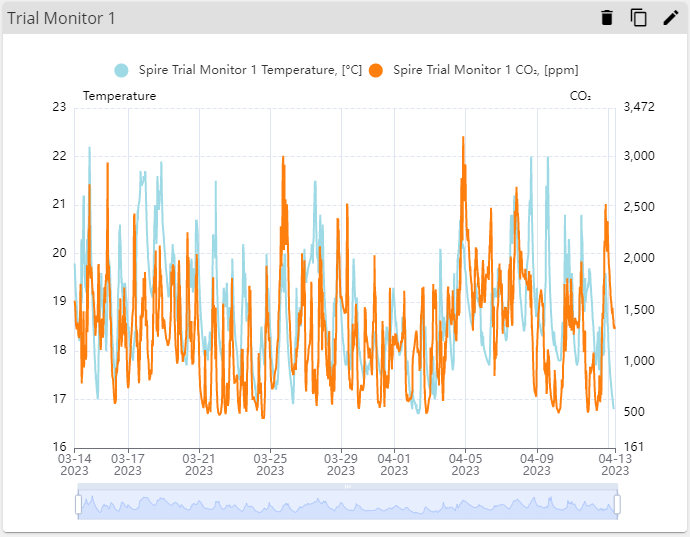
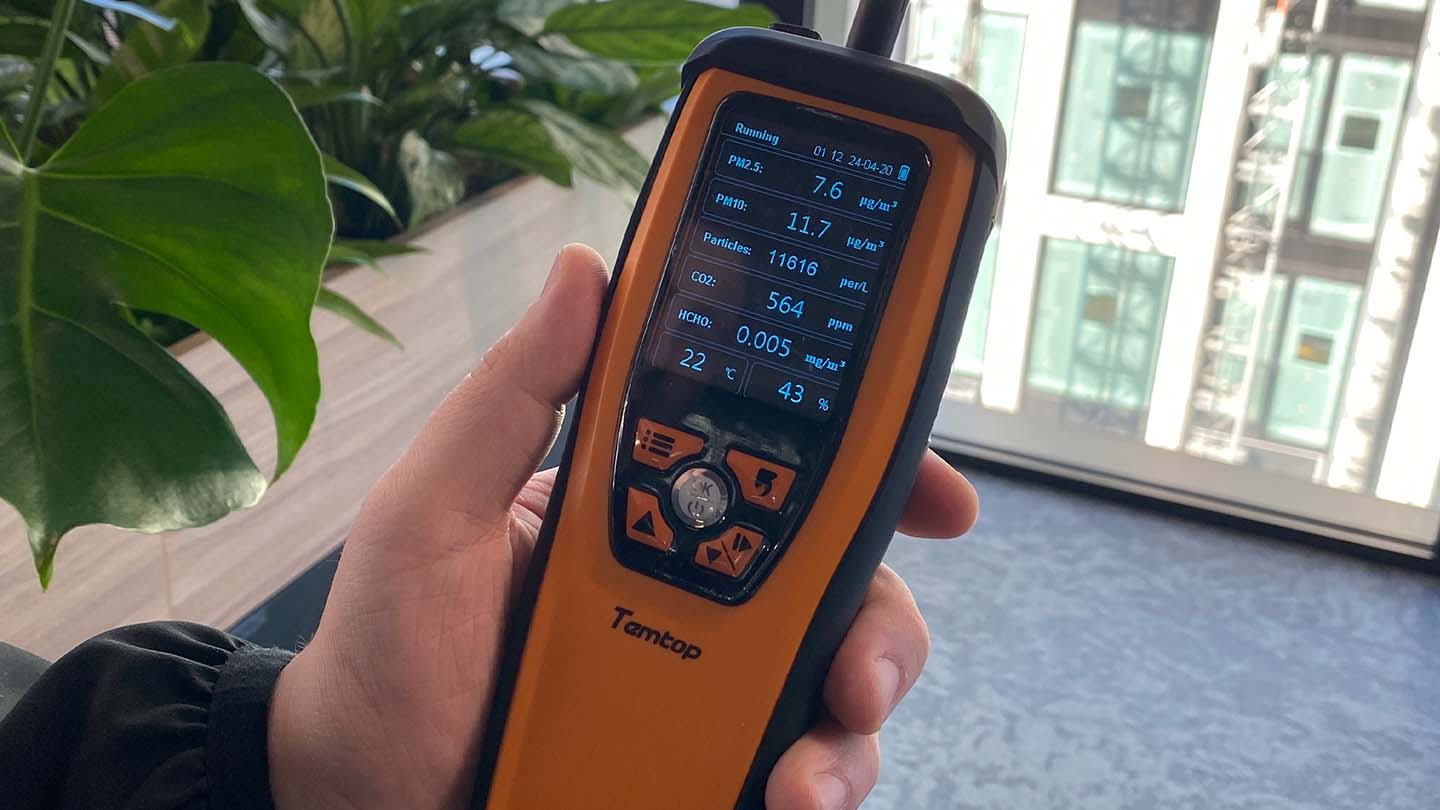
Rather than a single snapshot reading, our monitoring tracks CO2, VOCs, particulates, temperature, and humidity against actual occupancy patterns, so results reflect how the office is really used.
Step 2
Our pollutant experts interpret sensor and lab data alongside a site walkthrough to identify likely causes: inadequate fresh air supply, occupancy density, cleaning products, or something else entirely.

Step 3
A tailored office air quality report with practical recommendations, such as adjusted ventilation rates, targeted remediation, or ongoing monitoring where conditions need to be tracked over time.
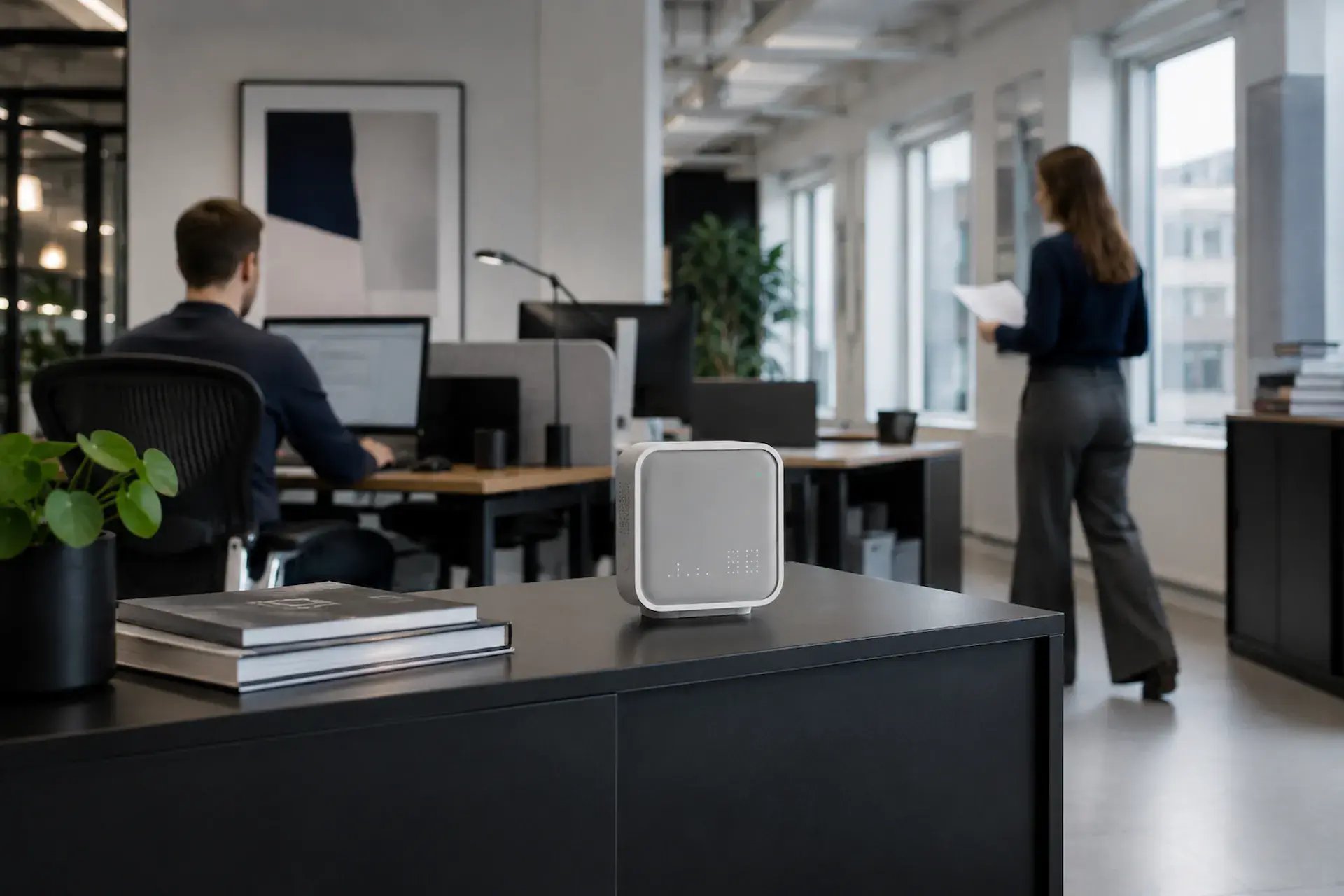
Office air quality testing typically combines short-term spot checks with longer continuous monitoring. A spot check gives an immediate read of CO2, VOCs, temperature, humidity, and particulates at a point in time, while continuous monitoring using placed IAQ sensors captures how conditions shift across a working day, including peak occupancy.
CO2 concentration is one of the most useful office air quality indicators because it tracks so closely with ventilation performance. Elevated CO2 signals that fresh air isn't reaching occupants fast enough to dilute what they, and the building itself, are releasing into the space. Alongside CO2, testing typically covers TVOCs, particulate matter (PM2.5/PM10), temperature, and relative humidity, since these together give a full picture of how an office is performing.
Office air quality affects comfort, concentration, and confidence in the workspace. We help you test indoor conditions and understand which improvements are worth making.
Office air quality testing with ARM Environments usually combines a spot check, an on-site assessment measuring CO2, VOCs, particulates, temperature, and humidity at a point in time, with continuous monitoring using placed sensors over several days. This shows how conditions change across the working day rather than relying on a single reading. Portable consumer monitors can give a rough indication, but they don't offer the accuracy or compound-level detail needed to diagnose a problem or evidence compliance.
There's no single UK standard covering every pollutant. Employers have a general duty under the Workplace (Health, Safety and Welfare) Regulations 1992 to provide "effective and suitable" ventilation, some individual pollutants carry legally enforceable Workplace Exposure Limits (WELs) under COSHH and HSE's EH40 guidance, and certifications like BREEAM and WELL apply their own voluntary benchmarks. Testing against the right combination of these is what an assessment verifies.
There's no single legal CO2 limit for offices in England and Wales, but CO2 is widely used as a proxy for ventilation adequacy.
As a general guide, CO2 readings that consistently sit well above outdoor background levels in occupied meeting rooms and open-plan areas usually point to insufficient fresh air supply for the number of people present. Testing establishes what your office's actual levels are, rather than working from a generic figure.
Common signs include stuffiness or a "stale" feel in meeting rooms, persistent odours, staff reporting headaches, fatigue, or difficulty concentrating, and symptoms that ease once people leave the building. These are worth investigating promptly, since they often point to inadequate ventilation, elevated VOCs, or excess CO2 building up during peak occupancy.
A consumer monitor can be a useful ongoing indicator, particularly for tracking CO2 trends across the day, but it typically can't identify individual VOCs or match the accuracy of calibrated, professionally maintained equipment. Many facilities managers use both: a monitor for day-to-day tracking, and a professional assessment when they need to diagnose a problem or evidence compliance.
There's no fixed legal interval. As a general approach, we'd recommend testing after any refit, HVAC change, or occupancy increase, and again if complaints resurface after remediation.
Offices with ongoing sensitivity, such as those working towards a certification, often add periodic continuous monitoring on top of a baseline assessment.
Yes, ARM Environments are highly experienced in testing offices during and after refurbishment works, when new materials, furnishings, and finishes are most likely to elevate VOC and particulate levels.
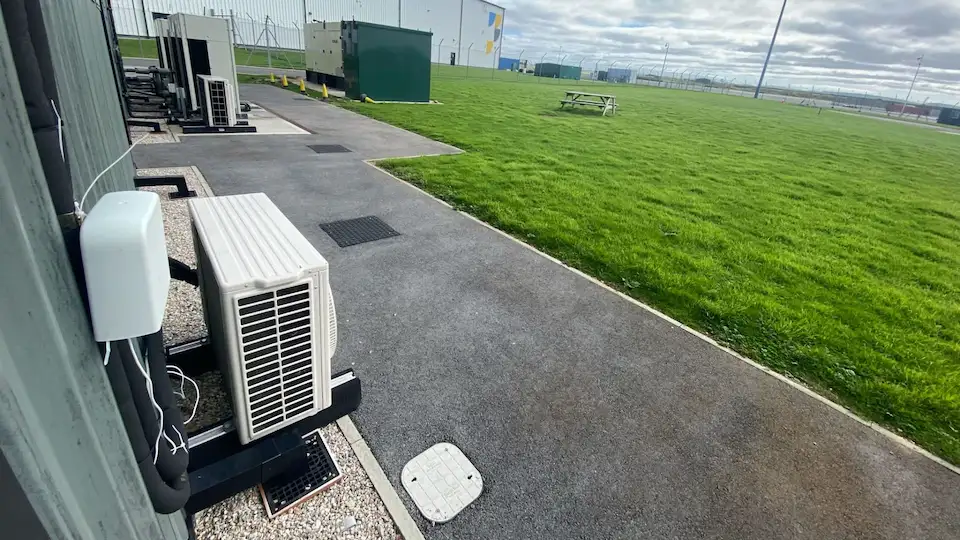
We've carried out office air quality assessments following fit-outs and odour complaints, including a TVOC investigation for a Cornwall office affected by nearby airport fumes.
Cost depends on office size, the number of rooms tested, and whether you need a spot check or continuous monitoring over several days. We scope this to your building rather than quoting a flat rate, so get in touch with some basic details and we'll come back with a proposal.
We're based across Wiltshire and Hampshire and can service most of the South East and South West of England, including key cities:
+44 (0)1722 710312
22 High St, Alderbury, Salisbury SP5 3DU