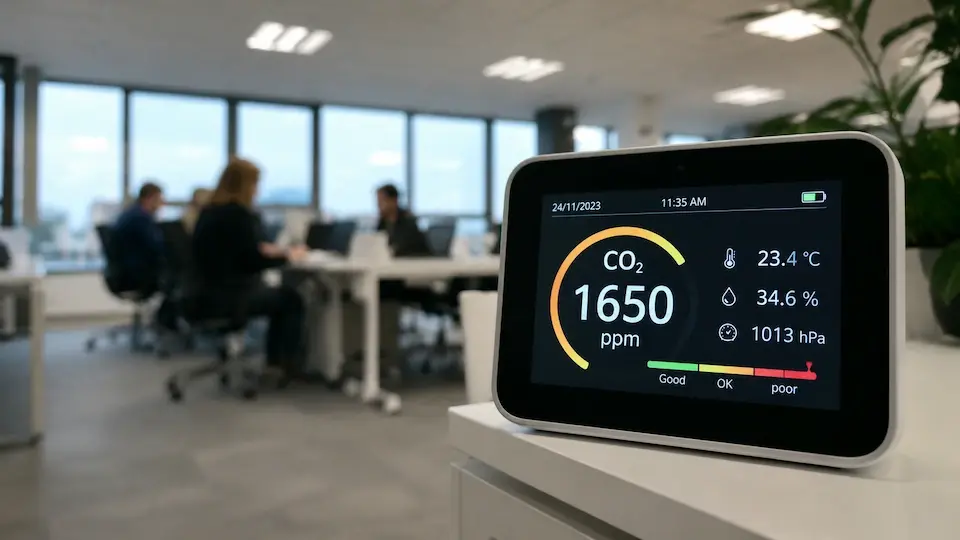

A Summary of AQN – Air Quality Neutral London Plan Guidance
On Wednesday 8th February 2023, the AQN was released. It sets a benchmark for all new developments to be air quality neutral. New developments will be required to undertake an Air Quality Neutral assessment to demonstrate that the creation of the building in question will not worsen London's air quality.
The buildings impact on air quality will be assessed on two main aspects
1. Buildings Emissions Benchmark (BEB): Emissions from systems used to supply heat and energy to the building.
2. Transport Emissions Benchmark (TEB): Emissions from private vehicles travelling to and from a development.
Certain small developments are excluded due to their limited impact, such as:
- Developments of 1-9 dwellings
- Small sites of less than 0.5 hectares
- Developments with a floorspace of less than 1000m2
We welcome all new guidance designed to limit worsening air pollution. The timing is ideal, as the recent surge in electricity prices has put pressure on the heat pump sector. Many central London office buildings had started to go all-electric, and this should help strengthen that transition.
Although Air Quality Neutral (AQN) assessments are separate from BREEAM Hea 02 assessments, the two often complement one another on new developments; both encourage designers and building owners to reduce the environmental impact of buildings while creating healthier indoor spaces. Achieving AQN demonstrates that a development will not make local air pollution worse, whereas BREEAM rewards projects that deliver high standards of indoor environmental quality, including effective ventilation and good indoor air quality. Independent indoor air quality testing can help verify that ventilation systems are performing as intended and support BREEAM air quality credits, providing confidence that a building is both environmentally responsible and healthy for its occupants.

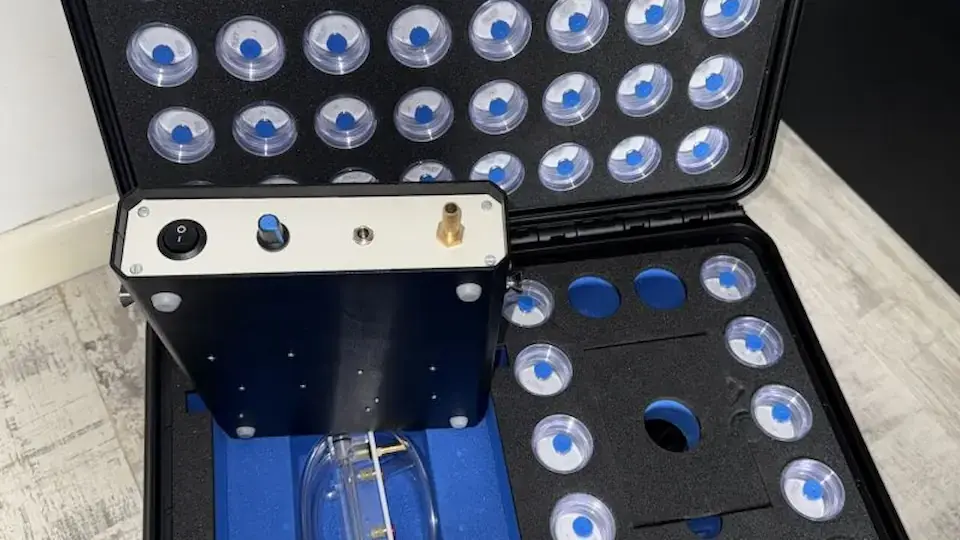
![Your Guide to Indoor Air Quality Testing [2026]](https://www.arm-environments.com/hubfs/iaq%20testing%20in%20an%20office%20(1).webp)