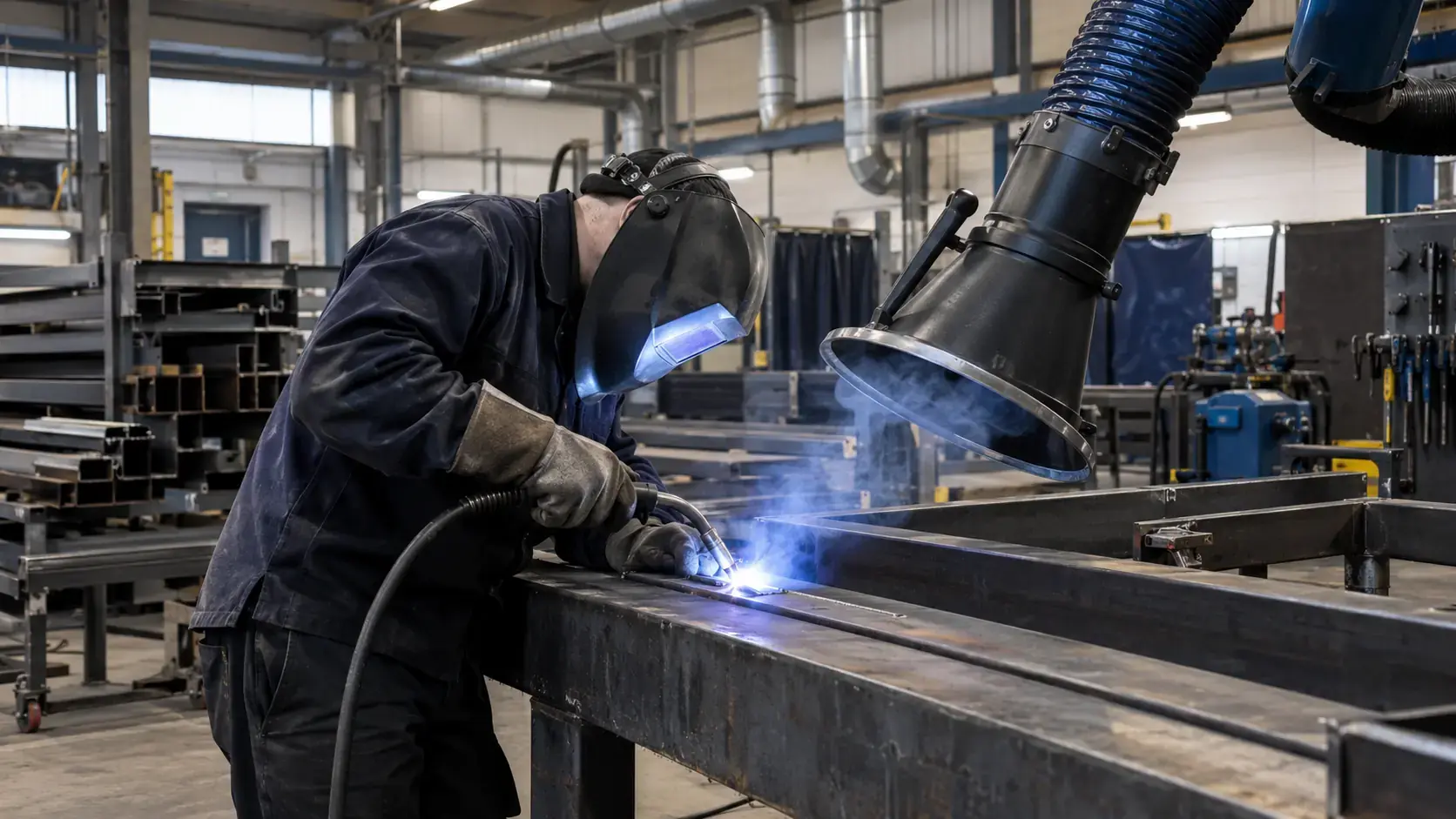
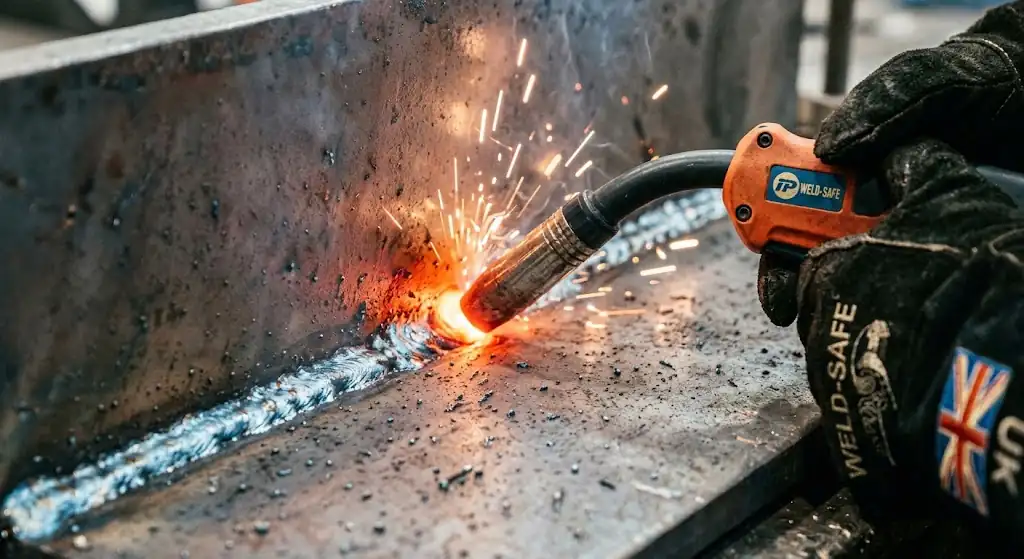
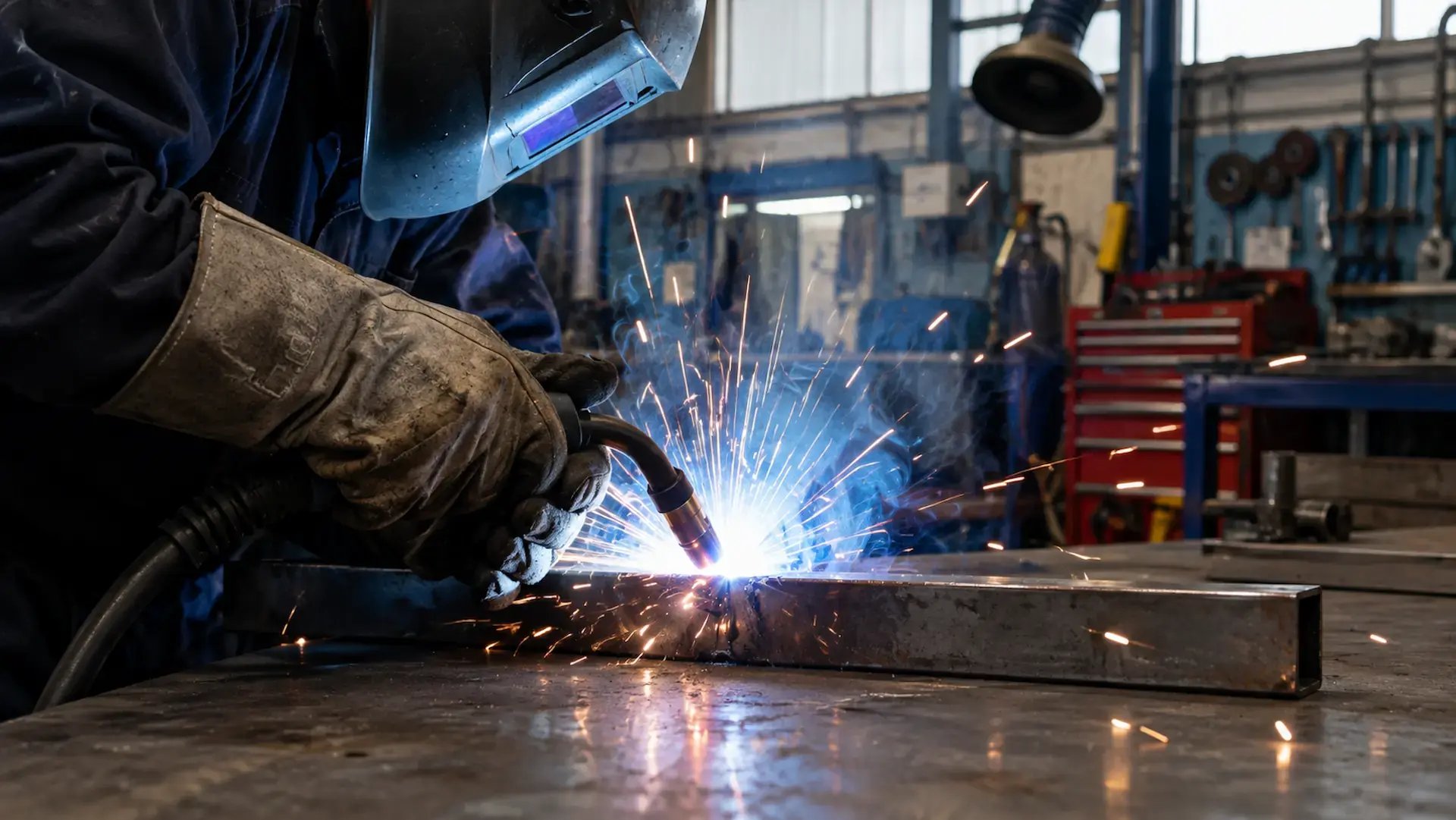
Welder using a MIG welding torch to join steel in an industrial workshop, producing welding fumes and sparks indoors

Welding fume exposure testing

Measure welder exposure to manganese, chromium (VI), nickel and other metal fume against EH40 workplace exposure limits, and get clear evidence for your COSHH assessment.

Accredited By
Awards From
ASHRAE Technology Award
HVR Awards 2023
H&V News Awards 2021
Post-Assessment Report & Breakdown
Quick Response & Fast Turnaround
BESA & SafeContractor Accredited

What is welding fume WEL testing?

Welding fume WEL testing measures how much metal fume a welder breathes in at work and compares the result with the EH40 workplace exposure limits (WELs) for the metals in that fume, such as manganese, chromium (VI) and nickel. Welding fume as a whole has no single WEL in EH40 Table 1, but HSE treats all of it as a carcinogen, so testing is used to check the individual metals against their limits and to show that controls such as local exhaust ventilation (LEV) are working.


In EH40, "fume" means solid particles generated by chemical reactions or condensed from the gaseous state, usually after metal has been vaporised from a melt. It does not mean gases and vapours. That is why welding fume testing looks at particulate metals, and why gases such as ozone and nitrogen dioxide are assessed separately against their own limits.

Local exhaust ventilation extracting welding fumes from the personal breathing zone of a worker

Work-related illness UK statistics

1.9m

workers suffer from work-related ill health in Great Britain

11,000

new cases of occupational lung disease are reported annually

40m

working days are lost to work-related ill health each year

Welding fume WEL at a glance


Substance

Long-term limit (8-hour TWA)

Short-term limit (15 minutes)

Notes

Manganese and inorganic compounds (as Mn)

0.2 mg/m³ inhalable; 0.05 mg/m³ respirable

None listed

Neurological effects

Chromium (VI) compounds (as Cr)

0.01 mg/m³; 0.025 mg/m³ where process generated, such as welding fume

None listed

Carc, Sen, BMGV

Nickel and inorganic compounds (as Ni)

0.1 mg/m³ water-soluble; 0.5 mg/m³ insoluble

None listed

Sk, Carc (oxides, sulphides), Sen (sulphate)

Iron oxide, fume (as Fe)

5 mg/m³

10 mg/m³

 -

Copper fume (as Cu)

0.2 mg/m³

None listed

 -

Cadmium oxide fume (as Cd)

0.025 mg/m³

0.05 mg/m³

Carc

Ozone

None listed

0.2 ppm (0.4 mg/m³)

Notably from TIG welding

Nitrogen dioxide

0.5 ppm (0.96 mg/m³)

1 ppm (1.91 mg/m³)

Generated by most arc welding

Carbon monoxide

20 ppm (23 mg/m³)

100 ppm (117 mg/m³)

BMGV

Figures from EH40/2005 (fourth edition, 2020)

Who needs welding fume WEL testing?

Any employer whose workers weld, cut or braze metal should know what those workers are actually breathing in. HSE says its welding fume rules apply to specialist welders and to workers who do some welding, no matter how small the amount.


Where welding fume testing matters most:

  • Fabrication and engineering workshops

  • Manufacturing, automotive, rail and shipbuilding sites

  • Maintenance welders working inside factories and plant

  • Stainless steel and alloy fabrication (chromium and nickel)

  • Mild steel structural and production welding (manganese)

  • Colleges, schools and training centres running welding workshops

  • Checking that LEV and RPE are controlling fume as intended

What does HSE expect?

  • Engineering controls (LEV) for all indoor welding
  • Suitable RPE for residual fumes where LEV is not enough
  • Controls that are correctly used, maintained, and tested
  • Risk assessments reflecting these expectations

Common welding fume metals

Manganese in welding fume

Manganese

Present in mild steel welding fume. HSE says regular exposure can cause neurological effects similar to Parkinson’s disease, and the respirable WEL of 0.05 mg/m³ is highly likely to be exceeded without effective controls.
Chromium in welding fume

Chromium

Present in stainless steel fume, especially from MMA welding. It can cause occupational asthma and carries a Carc notation. The WEL is 0.01 mg/m³, or 0.025 mg/m³ for process-generated exposure.
Nickel in welding fume

Nickel

Also in stainless steel fume. Nickel and chromium released during welding can cause allergic contact dermatitis, and HSE lists nickel and cobalt alongside chromium (VI) as causes of occupational asthma in welders.

Welding indoors with extraction, or outdoors with RPE?

Measure what your welders actually breathe in with real data and a full report for evidencing compliance.

Do you need a COSHH assessment for welding fume?

Yes. Welding fume is subject to COSHH, and the assessment must identify the controls needed. Air monitoring supports that assessment by showing what exposure really is, instead of what you estimate it to be.


Under COSHH, control is only adequate if good control practice is applied, any WEL is not exceeded, and exposure to carcinogens is reduced as low as is reasonably practicable. For welding fume, which HSE treats as a carcinogen with no known safe level, meeting individual metal limits is the minimum, not the finish line.

Welding fume coshh assessment with a qualified professional

What welding fume WEL testing delivers

  1. Personal metalworking fumes exposure sampling in the breathing zone Step 1

    Personal exposure data

    Samples are taken in the breathing zone of the welder across representative welding tasks, then analysed for the relevant metals and reported as 8-hour time-weighted averages (TWAs) against their EH40 limits.

  2. Reviewing welding fume wel data against eh40/2005 limits Step 2

    Task and control review

    We look at the welding processes, materials and consumables, and at whether LEV, fume-reducing techniques and RPE are doing their job, so results can be traced back to specific tasks.

  3. Industrial metalworking setting with controlled fume levels and LEV Step 3

    A clear next step

    A tailored report with results against the WEL, the calculation behind them, and practical recommendations such as improved extraction, process changes, RPE selection and re-testing after changes.

How is welding fume exposure testing carried out?

Welding fume exposure testing uses personal air sampling. The employee wears a small pump that draws air through a sampling head designed to collect the fume fraction, usually across a full shift or a representative part of it, then a laboratory analyses the sample for metals. The result is calculated and reported as an 8-hour TWA.


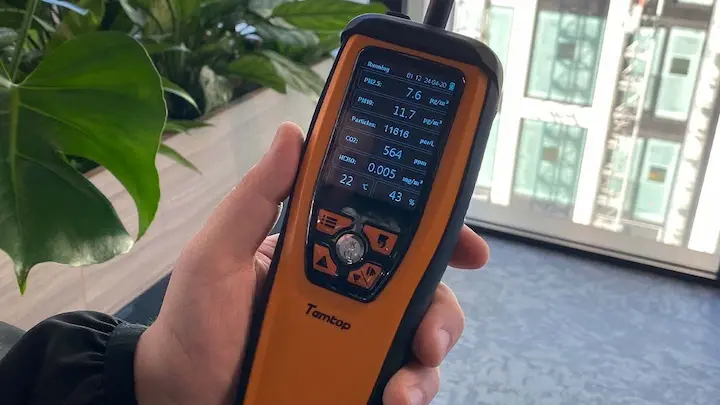
We can also deploy a range of monitors and sensors to remotely view the overall air quality and ventilation effectiveness in the building.

Handheld air quality monitor for carbon dioxide, TVOC, PM, RH

Relevant Case Studies

IAQ Monitoring in Retail Store

  • ✓ Energy Efficiency Improved
  • ✓ Vehicle Emissions Risk Identified
  • ✓ TVOCs Monitored

Newquay Office TVOC Testing

  • ✓ Odour Complaint from Local Airport Fumes
  • ✓ VOC Types Identified
  • ✓ Solutions Provided

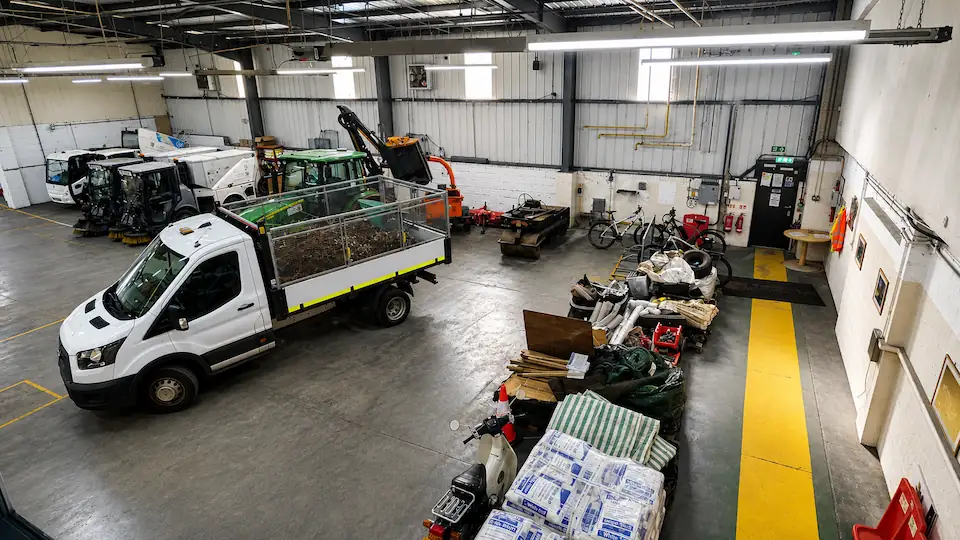
Wiltshire Vehicle Depot IAQ Monitoring

  • ✓ Two Sampling Types Deployed
  • ✓ Airflow Rates Professionally Measured
  • ✓ High TVOC Issue Identified

Understanding your responsibilities under COSHH and EH40

Employers must prevent or control exposure to hazardous substances under COSHH. For welding fume that means engineering controls first, RPE for residual fume, and keeping individual metal exposure below the WEL. Where workers are regularly exposed, health surveillance may also be required. HSE's welding guidance covers health surveillance for welders.

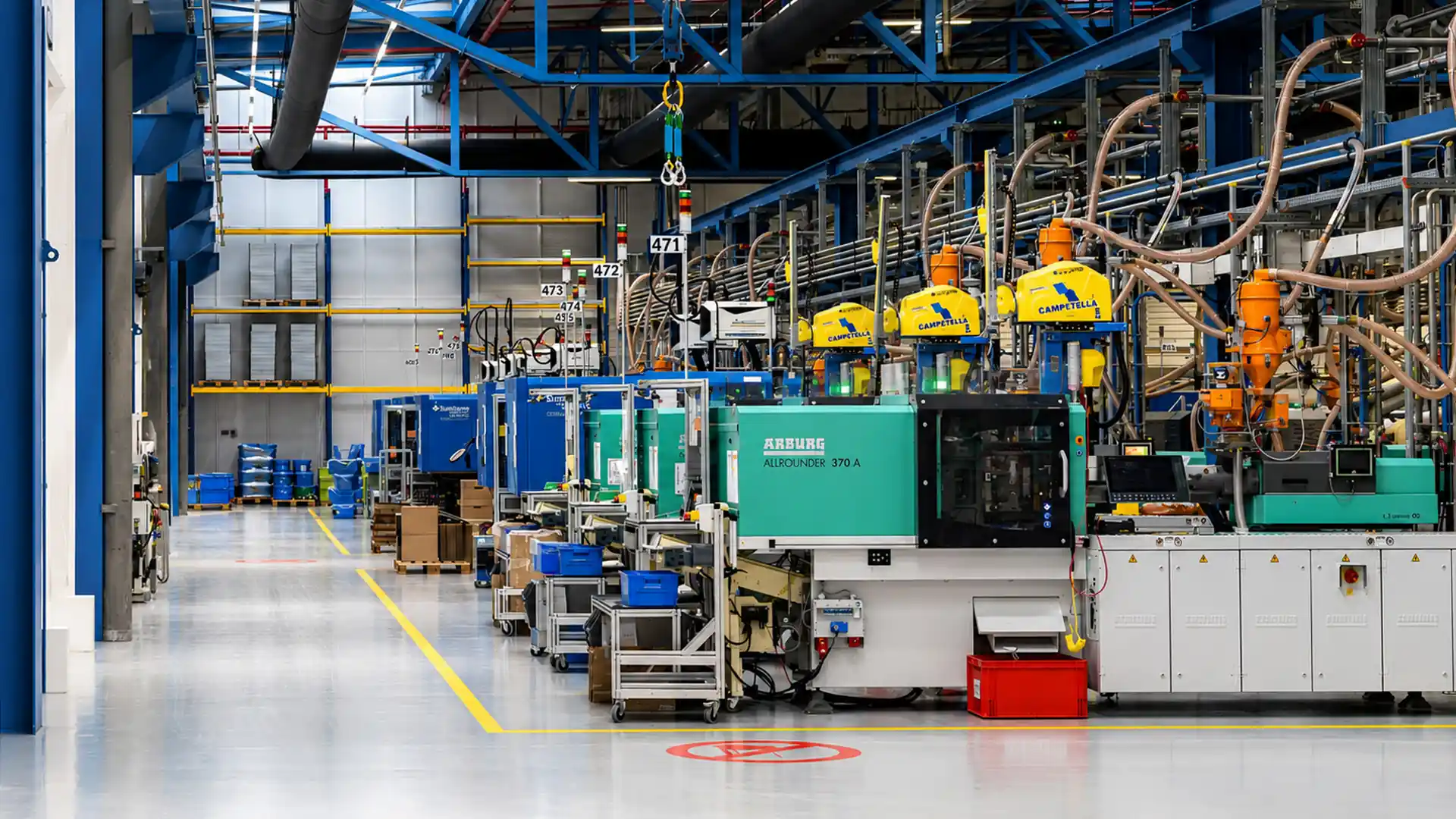
Metal joining in a metalworking workshop factory in Poole, England

Why choose ARM for welding fume workplace exposure testing?

We don't just measure welding fume. We trace exposure back to the processes, materials and controls behind it, then report in plain English with next steps you can act on. We are air quality specialists, using current best-practice frameworks to guide every assessment.


We're SafeContractor and BESA certified, and we play an active role in shaping UK standards like BS 40102. Whether you need a one-off welding fume exposure assessment or ongoing monitoring support, we deliver clear results you can act on.

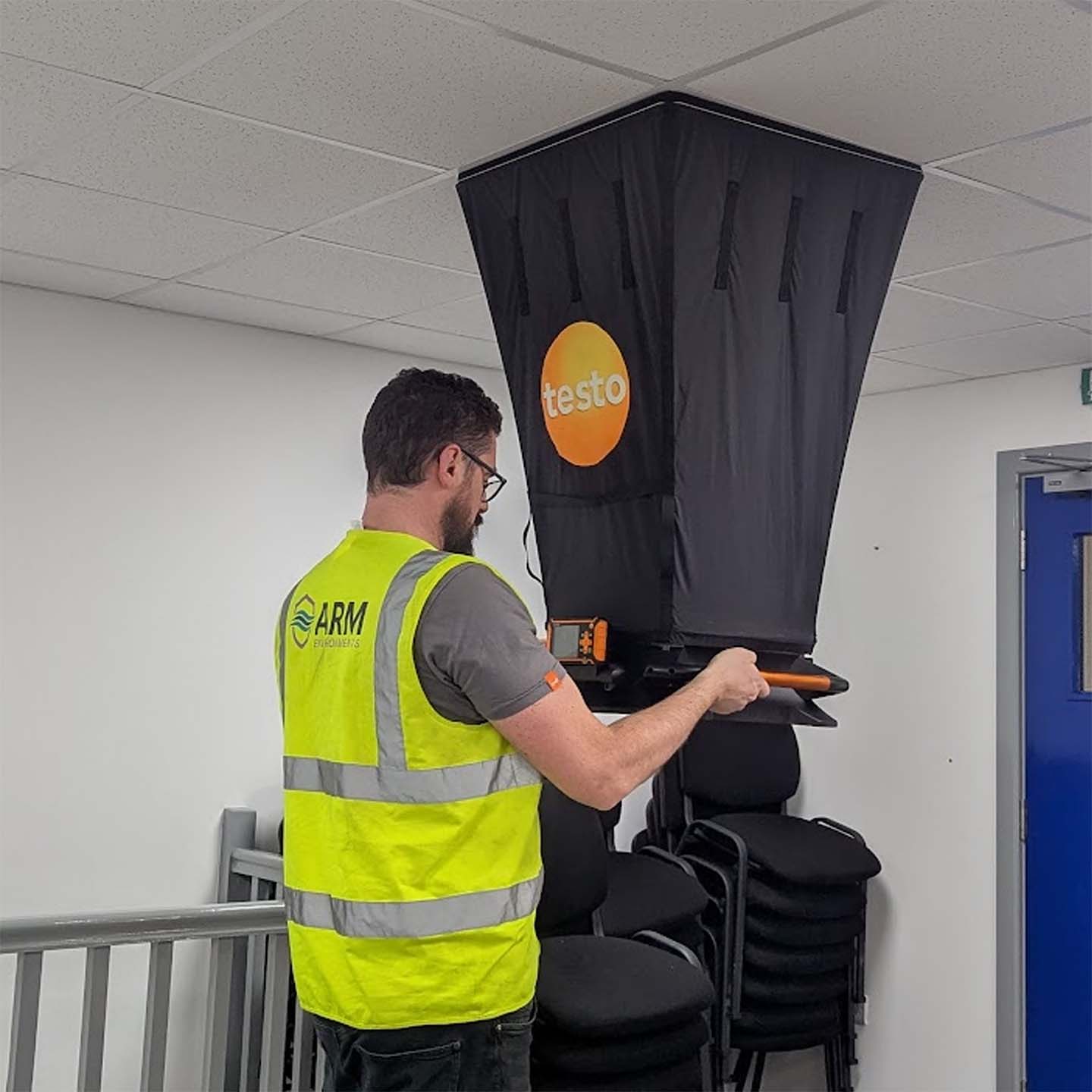
ARM Environments accredited contractor performing airflow testing

Need more information?

Talk to one of our air quality hygiene experts today about testing your exposure to welding fumes under EH40/2005.

Frequently Asked Questions

Is there a workplace exposure limit for welding fume in the UK? ↓

EH40 Table 1 has no single limit for welding fume as a whole, but the metals in it have their own WELs, such as manganese, chromium (VI) and nickel. HSE treats all welding fume as a carcinogen with no known safe level, and expects controls whatever the duration of the work.

Is mild steel welding fume dangerous? ↓

Yes. IARC classifies all welding fume as a Group 1 carcinogen, and HSE's February 2019 safety alert extended its enforcement expectations to mild steel welding fume. Mild steel fume also contains manganese, which can cause neurological effects.

What is the WEL for manganese in welding fume? ↓

The EH40 limits are 0.2 mg/m³ for the inhalable fraction and 0.05 mg/m³ for the respirable fraction, as 8-hour averages. HSE says the respirable limit is highly likely to be exceeded during many welding activities unless effective controls are used properly.

What is the WEL for chromium (VI) in welding fume? ↓

The limit is 0.01 mg/m³ as an 8-hour average, with 0.025 mg/m³ for exposures generated by a work process such as welding fume. Chromium (VI) carries Carc and Sen notations, and a biological monitoring guidance value of 10 µmol chromium per mol creatinine in urine applies.

How do you test welder exposure to welding fume? ↓

Welder exposure is tested by personal air sampling: the welder wears a pump and sampling head that collects fume during their shift, and a laboratory analyses it for metals. The results are calculated as 8-hour time-weighted averages and compared with the EH40 limits.

Do I need LEV for welding? ↓

HSE expects suitable engineering controls, typically LEV, for all indoor welding, with RPE for any residual fume. Outdoors, HSE expects suitable RPE.

LEV must be maintained and thoroughly examined and tested where required, and air monitoring shows whether exposure is controlled in use.

Do I need a COSHH assessment for welding? ↓

Yes. Welding fume is subject to COSHH, and the assessment must identify the controls required. This applies to specialist welders and to anyone who does some welding, however small the amount.

How often should welding fume exposure be monitored? ↓

EH40 does not set one fixed interval. COSHH regulation 10 requires monitoring in certain specified situations, and the frequency should follow your risk assessment. Re-test when materials, processes or controls change, or when previous results were close to a limit.

Is metalworking fluid mist covered by a workplace exposure limit? ↓

No. EH40 Table 1 (2020 edition) lists no WEL for metalworking fluid mist. COSHH still requires exposure to be controlled, and HSE publishes COSHH essentials guidance for machining with metalworking fluids.

How much does welding fume testing cost? ↓

Typical metalworking and welding fume WEL assessments carried out by ARM Environments cost in the region of £750 to £2000, depending on the location and scale of the survey.

Talk to a specialist and obtain a free quote for your workplace.

Speak to a specialist

Share your concerns and compliance requirements. Our team will respond promptly to discuss how we can help you keep your workers safe.

Terms & Conditions | Privacy Policy
©2026 ARM Environments. All Rights Reserved.

safecontractor approved accreditation certificate
ARM Environments is BESA accredited
ukas inspection certificate
SSIP member certificate

+44 (0)1722 710312
22 High St, Alderbury, Salisbury SP5 3DU