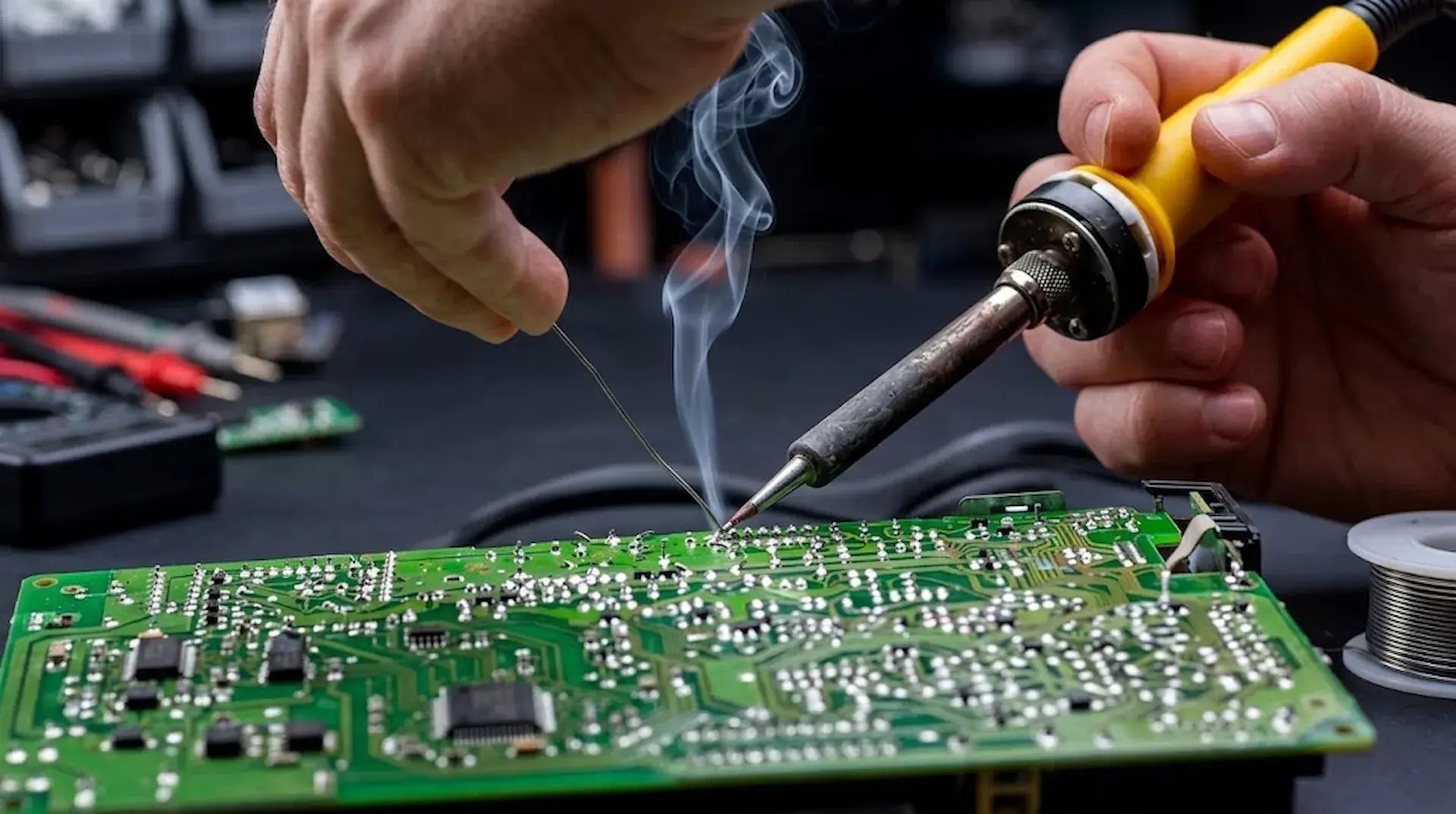
Soldering circuitboard without local exhaust ventilation lev

Soldering fume exposure testing

Understand your employees’ exposure during soldering and desoldering. Rosin colophony surveys measure solder flux fume against EH40 workplace exposure limits and provide evidence to support your COSHH assessment.

Accredited By
Awards From
ASHRAE Technology Award
HVR Awards 2023
H&V News Awards 2021
Post-Assessment Report & Breakdown
Quick Response & Fast Turnaround
BESA & SafeContractor Accredited

What is soldering fume exposure testing?

Rosin-based solder flux fume is a pollutant listed in EH40/2005 with a Long-term exposure limit of 0.05mg/m³ and a Short-term exposure limit of 0.15mg/m³.

When you heat rosin-containing flux, soldering releases fumes near the workpiece. Rosin, also called colophony, can cause occupational asthma. Your exposure depends on the flux, temperature, task duration and how effectively extraction captures fume before it reaches the breathing zone.

A soldering fume WEL test, or a rosin colophony survey, combines representative personal air sampling with a review of your soldering tasks and controls. Results are compared with the EH40 limits for rosin-based solder flux fume.
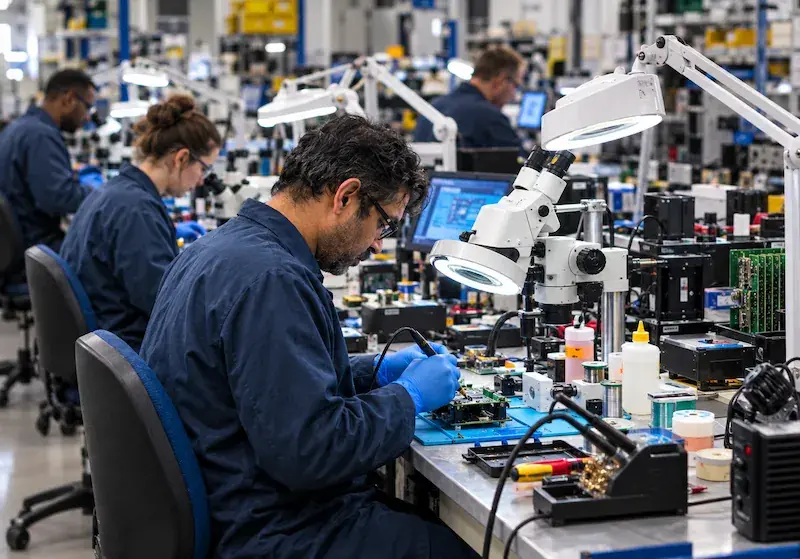
hand soldering electronics and printed circuit boards

Work-related illness UK statistics

1.9m

workers suffer from work-related ill health in Great Britain

11,000

new cases of occupational lung disease are reported annually

40m

working days are lost to work-related ill health each year

Soldering fume WEL at a glance


Substance

Long-term limit (8-hour TWA)

Short-term limit (15 minutes)

Notes

Rosin-based solder flux fume

0.05 mg/m³

0.15 mg/m³

Respiratory sensitiser (Sen)


These limits apply to rosin-based solder flux fume, not every constituent of soldering emissions.

Figures from EH40/2005 (fourth edition, 2020)

When should you assess soldering fume exposure?

If you manage soldering benches, electronics assembly or repair work, your COSHH assessment should account for the people carrying out the work and others nearby. Representative exposure testing can help where you need to verify control performance or investigate uncertainty about exposure.

  • Production soldering and PCB assembly

  • Electronics repair, rework and desoldering

  • Tinning and intermittent maintenance tasks

  • Changes to fluxes, workstation layouts or extraction

  • Training workshops using rosin-containing flux

What should a rosin assessment consider?

  • Flux composition and safety data sheets
  • Task duration, frequency and soldering temperature
  • Extraction position and operator posture
  • Other people exposed in the work area
  • Maintenance, training and health surveillance needs

Check exposure during your soldering tasks

Share your flux types, bench layout and extraction arrangements so we can discuss a representative rosin colophony survey.

Do you need a COSHH assessment for rosin?

Yes, under the Control of Substances Hazardous to Health Regulations 2002 (as amended), you must assess the risks and prevent exposure where reasonably practicable. Where prevention is not possible, use appropriate controls, maintain them and ensure your employees understand how to use them.

Rosin-based solder flux fume is an asthmagen. Adequate control requires good control practice, compliance with the applicable WELs and reduction of exposure as low as reasonably practicable. Exposure testing supplies evidence for your assessment; it does not replace the assessment or establish compliance on its own.

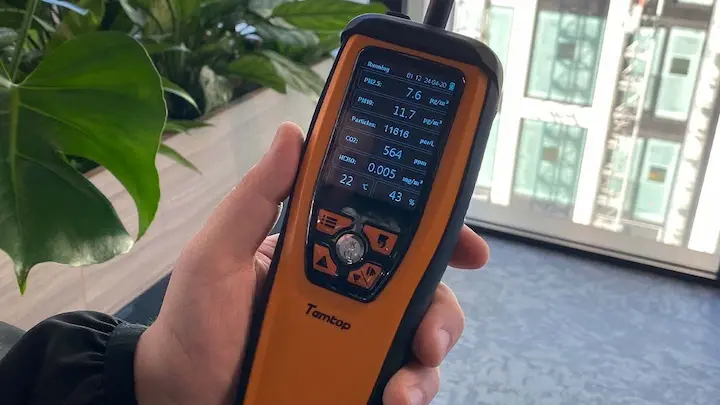
Colophony coshh assessment with a qualified professional

What colophony surveys deliver

  1. Personal soldering fumes exposure sampling in the breathing zone Step 1

    Personal exposure data

    Samples are taken in the breathing zone of the welder across representative soldering tasks, then analysed for rosin and relevant chemicals and reported as 8-hour or 15-minute averages against their EH40 limits.

  2. Reviewing soldering fume wel data against eh40/2005 limits Step 2

    Task and control review

    We look at the soldering processes, materials and consumables, and at whether LEV, fume-reducing techniques and RPE are doing their job, so results can be traced back to specific tasks.
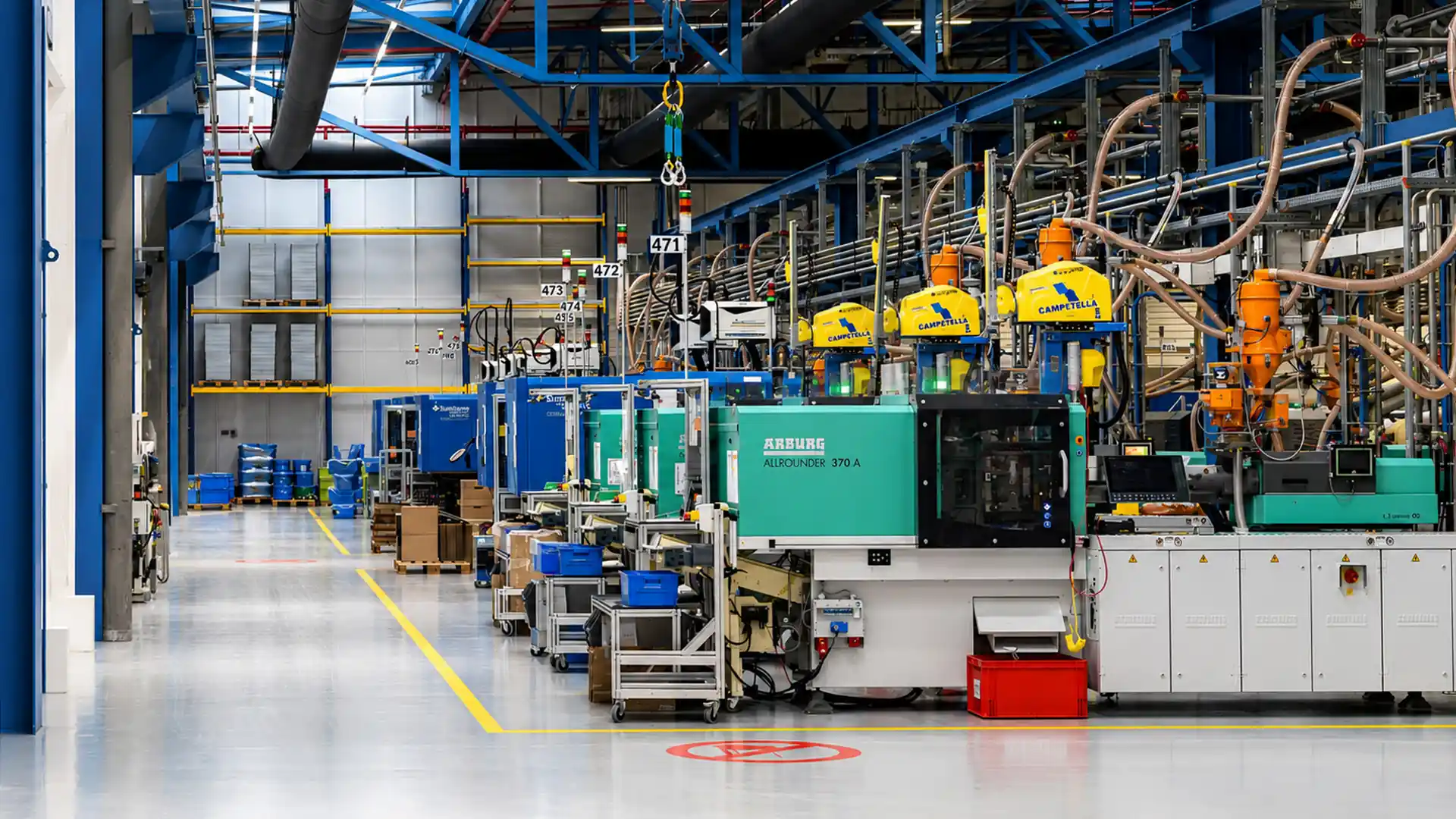
  3. Industrial soldering setting with controlled fume levels and LEV Step 3

    A clear next step

    A tailored report with results against the WEL, the calculation behind them, and practical recommendations such as improved extraction, process changes, RPE selection and re-testing after changes.

How is soldering fume exposure testing carried out?

A personal sampling pump draws a measured volume of air through a filter positioned close to your employee’s breathing zone during representative work. The laboratory determines resin acid content, rather than relying on a general dust or TVOC reading.
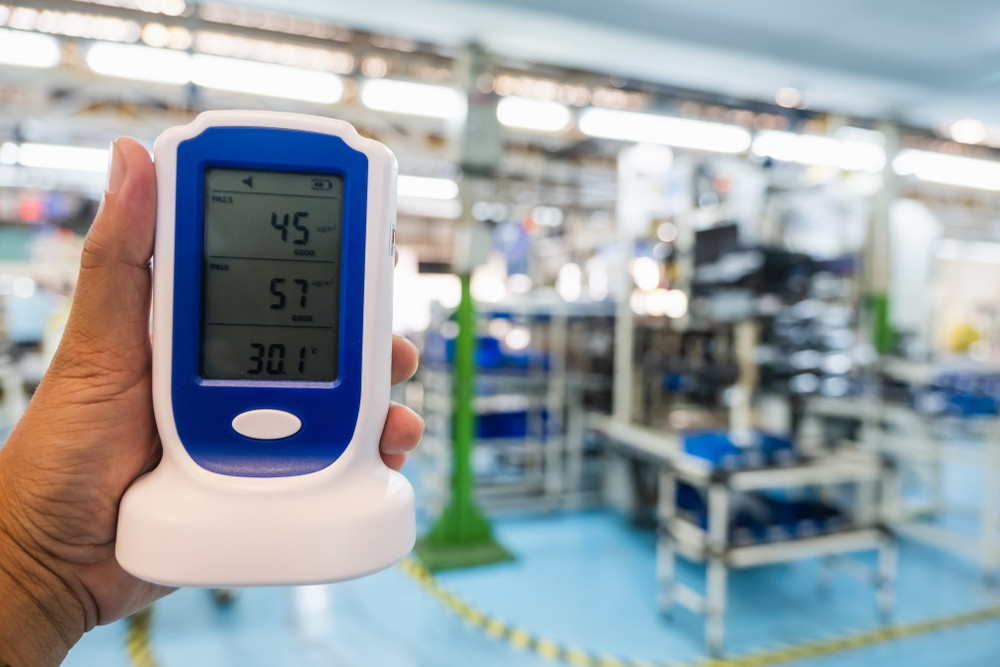
Air Quality Testing monitor in a laboratory

Relevant Case Studies

IAQ Monitoring in Retail Store

  • ✓ Energy Efficiency Improved
  • ✓ Vehicle Emissions Risk Identified
  • ✓ TVOCs Monitored

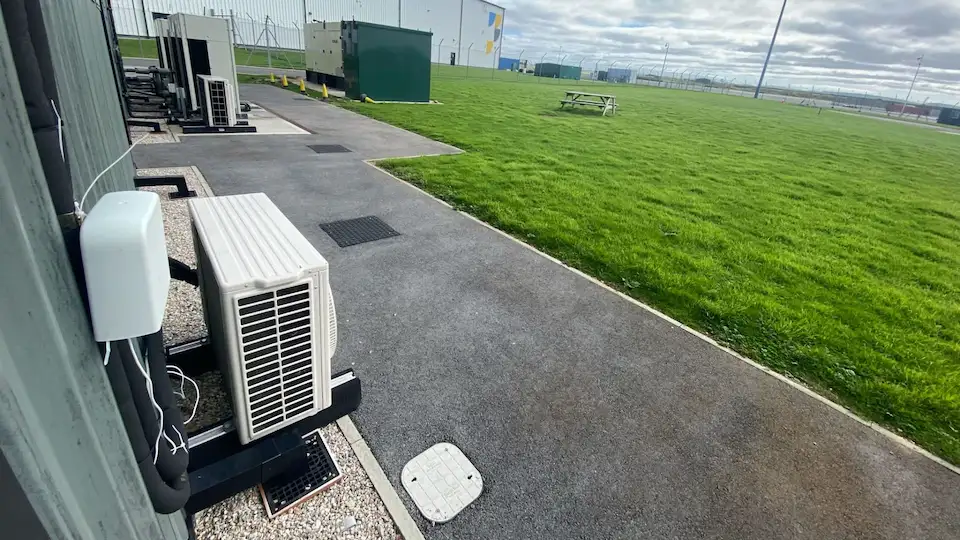
Newquay Office TVOC Testing

  • ✓ Odour Complaint from Local Airport Fumes
  • ✓ VOC Types Identified
  • ✓ Solutions Provided

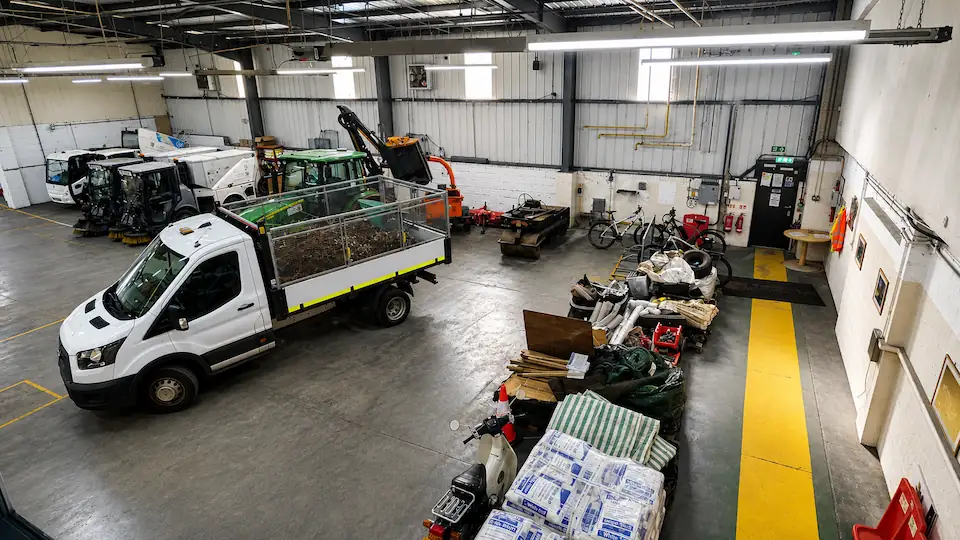
Wiltshire Vehicle Depot IAQ Monitoring

  • ✓ Two Sampling Types Deployed
  • ✓ Airflow Rates Professionally Measured
  • ✓ High TVOC Issue Identified

Understanding your responsibilities under COSHH and EH40

Under COSHH, employers are legally required to prevent or adequately control exposure to hazardous substances. When dealing with soldering — specifically colophony-based flux fumes, which are a known cause of occupational asthma —you must prioritise engineering controls like local exhaust ventilation (LEV).

Respiratory protective equipment (RPE) should only be used as a back-up for residual risks, and individual exposure must stay well within the WEL set out in EH40. If your staff are regularly exposed, health surveillance (such as routine lung function checks) is a legal requirement.
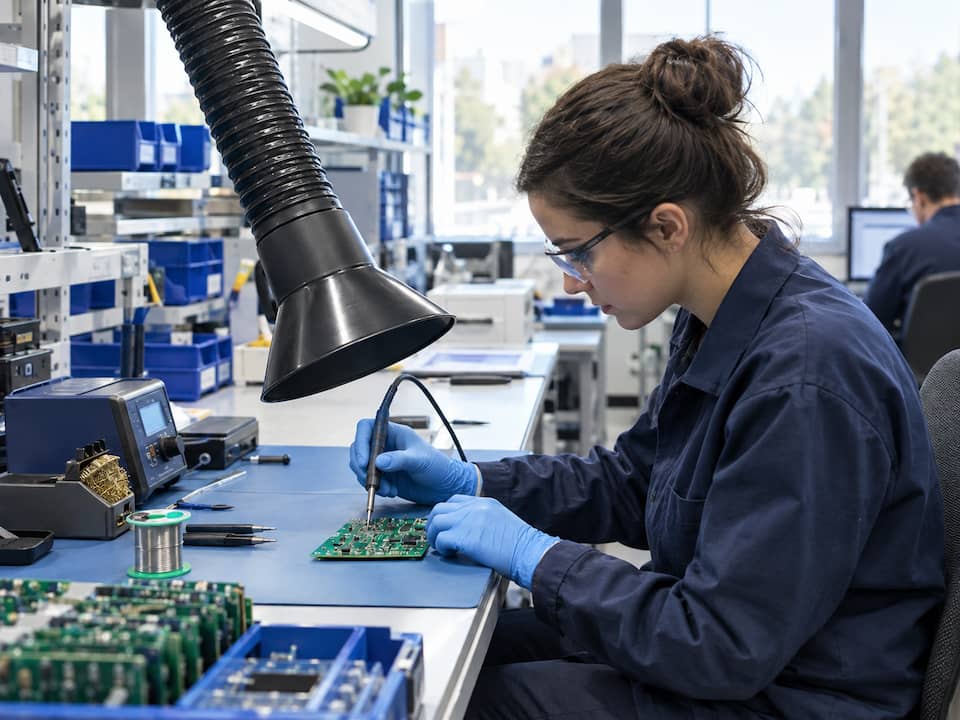
Woman soldering with PPE in a professional workshop with adequate LEV

Why choose ARM for solder fume workplace exposure testing?

We don't just measure solder fume. We trace exposure back to the processes, materials and controls behind it, then report in plain English with next steps you can act on. We are air quality specialists, using current best-practice frameworks to guide every assessment.


We're SafeContractor and BESA certified, and we play an active role in shaping UK standards like BS 40102. Whether you need a one-off soldering fume exposure assessment or ongoing monitoring support, we deliver clear results you can act on.
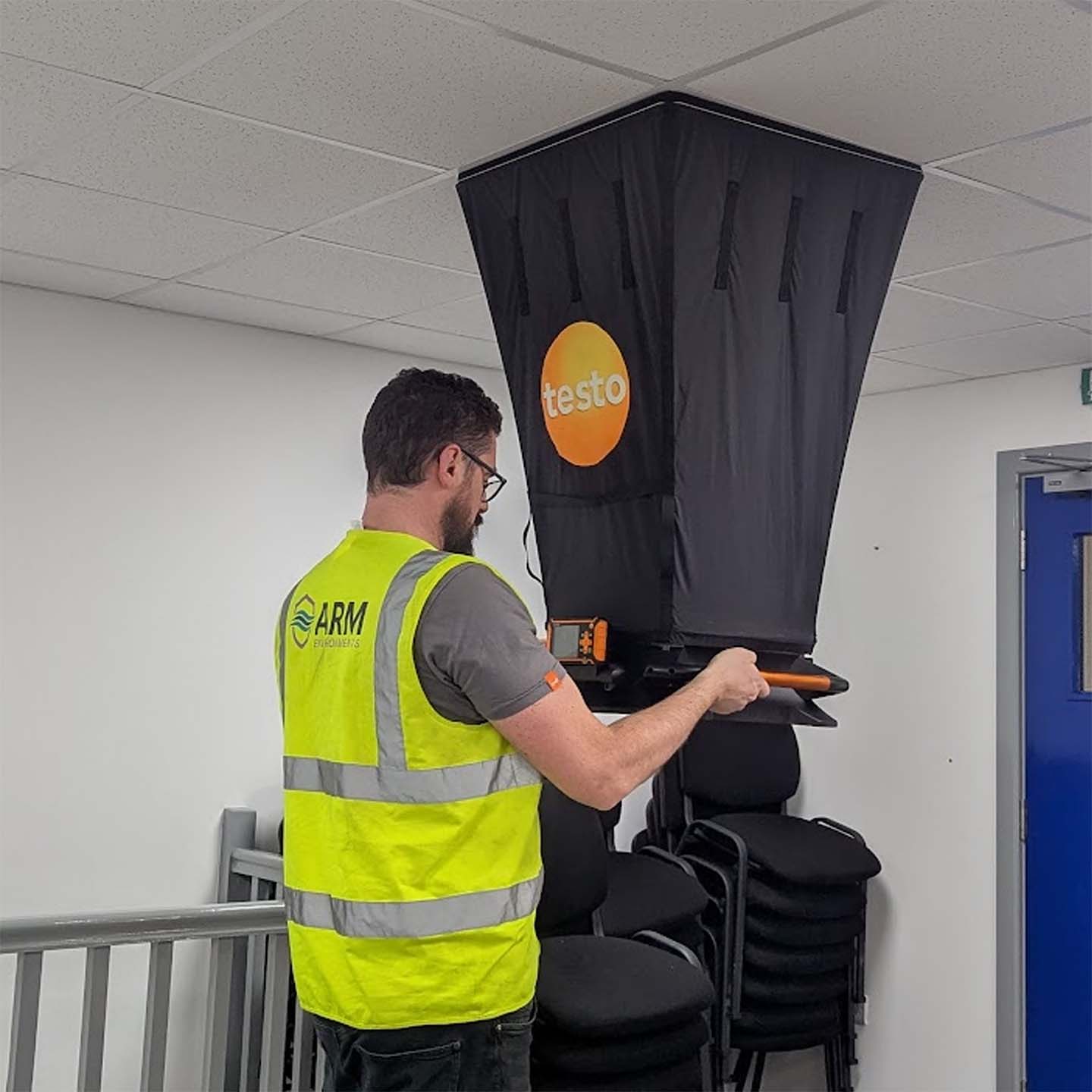
ARM Environments accredited contractor performing airflow testing

Plan your rosin colophony survey

Tell us where soldering takes place, which fluxes you use and how your extraction is arranged. We can discuss the exposure evidence your workplace needs.

Frequently Asked Questions

What are the EH40 limits for rosin solder flux fume? ↓

EH40/2005 lists 0.05 mg/m³ as an 8-hour time-weighted average and 0.15 mg/m³ as a 15-minute time-weighted average for rosin-based solder flux fume.

The Sen notation identifies a respiratory sensitiser. Your controls must also reduce exposure as low as reasonably practicable below these limits.

Are rosin and colophony the same substance? ↓

Rosin and colophony are alternative names for the resin used in some solder fluxes. When heated during soldering, rosin-containing flux releases fume that can cause occupational asthma. Check your product’s safety data sheet to identify its composition and the hazards relevant to your process.

Does lead-free solder remove the rosin fume risk? ↓

Lead-free describes the solder alloy, not the flux formulation. Your lead-free solder may still contain rosin-based flux, so its fume needs assessment. Review the safety data sheets for both solder and flux, then consider the emissions produced under your working temperatures and task conditions.

How do you measure personal exposure to rosin fume? ↓

Personal sampling collects air through a filter near the employee’s breathing zone during representative work. HSE MDHS83/3 describes laboratory analysis of resin acids by gas chromatography. Sampling duration and task records allow comparison with the 8-hour and, where appropriate, 15-minute workplace exposure limits.

Can a room air quality sensor demonstrate compliance? ↓

A general particulate or TVOC sensor does not specifically quantify the resin acids in rosin-based solder flux fume. Room readings may help describe ventilation or emissions trends, but personal exposure assessment requires a suitable sampling and analytical method, interpreted alongside your tasks and control measures.

Do I need extraction for production soldering? ↓

HSE states that LEV is needed for most production soldering. Suitable options include extracted enclosures, capturing hoods and on-tip extraction, selected for your work. Capture effectiveness depends on positioning, airflow and maintenance. RPE should not replace LEV in production soldering workplaces.

Does an exposure survey replace my LEV examination? ↓

No. Exposure monitoring assesses what employees breathe during the sampled work; a thorough examination and test assesses the extraction system’s performance. HSE soldering guidance requires competent LEV examination and testing at least every 14 months. Maintain the system and check its operation between formal examinations.

How much does a rosin colophony survey cost? ↓

Request a quote based on your site location, the number of employees and workstations, task duration and the sampling needed. Share your flux safety data sheets, extraction information and previous results. These details help define a representative survey and the laboratory analysis required for your workplace.

Typical surveys can cost anywhere between £750 and £2500 plus VAT.

Speak to a specialist

Share your concerns and compliance requirements. Our team will respond promptly to discuss how we can help you keep your workers safe.

Terms & Conditions | Privacy Policy
©2026 ARM Environments. All Rights Reserved.

safecontractor approved accreditation certificate
ARM Environments is BESA accredited
ukas inspection certificate
SSIP member certificate

+44 (0)1722 710312
22 High St, Alderbury, Salisbury SP5 3DU